

MegaTTS 3, a voice cloning technology once announced by ByteDance but failed to gain traction due to a missing key component, has been revitalized thanks to the efforts of the open-source community. This article will take you through the story behind this technology and show you how to experience its powerful voice cloning effects firsthand.
The Long-Awaited Voice Cloning Technology is Finally Complete
Have you heard of MegaTTS 3? This Text-to-Speech (TTS) model, developed by ByteDance, shocked the entire AI community upon its release with its astonishing voice cloning capabilities. Imagine being able to perfectly replicate anyone’s voice from just a short audio clip, mimicking everything from tone and emotion to subtle accents.
Unfortunately, for various reasons, ByteDance did not release the crucial component necessary for the voice cloning feature—the WavVAE encoder. It was like buying a top-tier sports car without the keys to start it. This disappointed many eager developers and AI enthusiasts, and the powerful potential of MegaTTS 3 remained locked away.
The Open Source Community’s Final Push: The Birth of a Compatible Encoder
The turning point came recently. A developer named “ACoderPassBy” published a WavVAE encoder compatible with MegaTTS 3 on ModelScope, China’s AI model community. The news immediately caused a stir within the community.
The appearance of this encoder was like finding the lost key to the sports car, finally allowing MegaTTS 3’s engine to roar to life. Initial test results were stunning, proving that this community-contributed encoder could indeed work perfectly with MegaTTS 3 to achieve high-quality voice cloning.
- Model Page on ModelScope: ACoderPassBy/MegaTTS-SFT
This event once again demonstrates the power of the open-source community. When commercial companies hold back, it is these passionate developers who, with their knowledge and effort, fill the technological gaps and push the entire industry forward.
Experience it Yourself! Easily Play with Voice Cloning on Hugging Face
For most non-technical users, operating on ModelScope might still be a bit of a hurdle. Don’t worry, enthusiastic developers quickly integrated this complete model and uploaded it to a more well-known AI platform—Hugging Face.
Now, you can find the model named “mrfakename/MegaTTS3-VoiceCloning” on Hugging Face, and there’s even an interactive interface (Hugging Face Spaces) that you can use directly in your web browser. This means anyone can easily experience the magic of MegaTTS 3 voice cloning.
- Hugging Face Model: mrfakename/MegaTTS3-VoiceCloning
- Online Demo Space: MegaTTS3-Voice-Cloning Space
The process is very simple. You just need to upload an audio file of the target voice (the voice you want to clone), then enter the text you want it to say, and the model will generate a speech segment spoken in that voice. The overall effect is quite impressive and makes one excited about the future development of this technology.
Frequently Asked Questions (FAQ)
Q1: What is MegaTTS 3?
MegaTTS 3 is an advanced Text-to-Speech (TTS) model developed by ByteDance. Its most notable feature is high-quality Voice Cloning, which can generate a highly similar voice from just a short reference audio clip.
Q2: Why was the voice cloning feature of MegaTTS 3 previously unusable?
When ByteDance initially released MegaTTS 3, they did not include the necessary “WavVAE encoder” for the voice cloning function. The absence of this key component prevented the community from realizing its full voice cloning potential.
Q3: Where can I experience this technology now?
Thanks to the contributions of the open-source community, you can now find the integrated model on the Hugging Face platform. You can easily try it out through the web interface at MegaTTS3-Voice-Cloning Space by uploading an audio file and text.
Q4: What are the potential applications of this technology?
Voice cloning technology has a wide range of applications. From personalized voice assistants, audiobook recording, and video dubbing to restoring voices for those who have lost them, the potential is enormous. Of course, this also brings up discussions about voice misuse and ethics, which is a challenge society must address collectively.
Overall, the completion of MegaTTS 3’s voice cloning technology through community efforts is not just a technical breakthrough but also a victory for the spirit of open-source collaboration. We can finally glimpse the full picture of this powerful technology, making us even more excited for the future of AI voice generation.
DMflow.chat
DMflow.chat: Your intelligent AI partner for exceptional customer engagement.
Learn More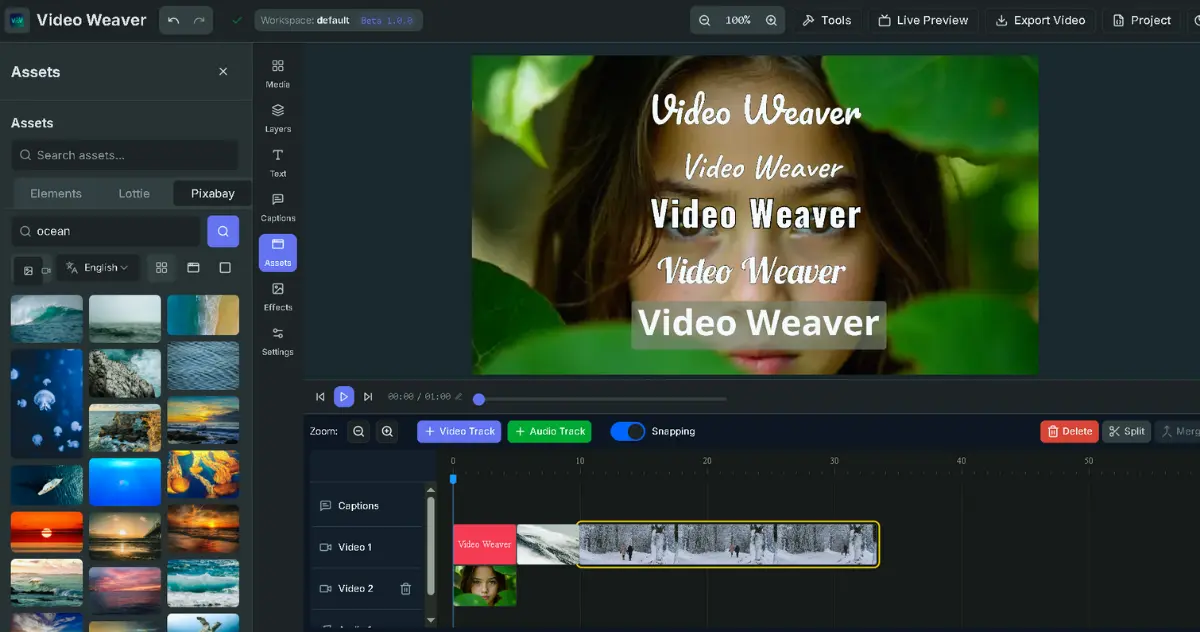
videoweaver.app
Video Weaver: Professional video editing directly in your browser. No downloads required.
Learn More
DMflow.chat
Discover DMflow.chat and unlock the new era of AI-powered customer service.
Learn MoreDMflow.chat
DMflow.chat: Your intelligent AI partner for exceptional customer engagement.
Learn Morevideoweaver.app
Video Weaver: Professional video editing directly in your browser. No downloads required.
Learn MoreDMflow.chat
Discover DMflow.chat and unlock the new era of AI-powered customer service.
Learn More