

2026 has just begun, and the atmosphere in the tech world has become somewhat subtle. On one side, giants have launched more powerful models in healthcare and personal assistants, as if sci-fi plots are coming true; on the other, heart-wrenching news comes from the open-source community. When AI truly starts taking over our work and lives, who exactly benefits, and who is paying the price?
There is a lot of news this week, so let’s focus on a few key points truly worth watching.
OpenAI Officially Enters Healthcare: GPT-5.2 Puts on a White Coat
If previous AI was just a doctor’s assistant, it is now attempting to become the hospital’s infrastructure. OpenAI officially released OpenAI for Healthcare on January 8th. This is not just a chatbot, but a complete solution compliant with HIPAA (Health Insurance Portability and Accountability Act) standards.
This is important because the administrative burden in the healthcare industry has reached a breaking point. Doctors often spend more time writing reports than seeing patients. The core of OpenAI’s product launch includes ChatGPT for Healthcare, built specifically for medical workflows, and behind it lies the highly anticipated GPT-5.2 model.
According to OpenAI’s official announcement, this system has already been implemented in top institutions like Boston Children’s Hospital and Stanford Medicine Children’s Health. What can it do? It can not only help draft medical records but also provide compliant clinical recommendations by combining with internal hospital policy documents. More crucially, it solves the “hallucination” problem most criticized in medical AI—all answers come with peer-reviewed literature sources, complete from titles to publication dates. This means doctors can trust AI answers like consulting a textbook, rather than worrying about it talking nonsense.
Gmail Welcomes Gemini 3: Your Inbox Knows Life Better Than You
Remember how much time we used to spend organizing emails? Google clearly doesn’t want us to worry about that anymore. Google just announced the introduction of Gemini 3 into Gmail, marking the official transformation of our email into a “proactive” personal life assistant.
This isn’t just simple “auto-reply.” According to Google’s latest demo, the new Gmail can help you manage life’s trivia, not just process messages. Imagine, Gemini 3 will actively analyze your email content, help you plan your schedule, organize bills, and even remind you before you forget an important appointment. This might mean we are one step closer to the end of “email anxiety.”
Tech Frontier: Alibaba Qwen3’s Multimodal Retrieval Breakthrough
In the underlying architecture of the tech world, Alibaba’s Qwen team also dropped a bombshell. They open-sourced the latest Qwen3-VL-Embedding and Qwen3-VL-Reranker models. This might sound a bit technical, but in the world of search technology, this is big news.
Simply put, in the past, when we searched for images or documents, accuracy was never high enough. Qwen3, through a “two-stage retrieval process,” first uses the Embedding model to quickly fish out candidate data, then uses the Reranker model for fine sorting, greatly improving search precision. According to the Qwen team’s tech blog, in authoritative evaluations like MMEB-v2, these 2B and 8B parameter models even outperformed many existing baseline models. For developers who need to process massive amounts of visual documentation, this is undoubtedly a powerful new tool.
The Shadow Behind Prosperity: Tailwind CSS and the Developer’s Dilemma
However, the narrative of technological progress is not always glamorous. Just as AI tools make coding easier than ever, maintainers of open-source tools face an existential crisis.
Adam Wathan, creator of the well-known CSS framework Tailwind CSS, recently posted a heartbreaking GitHub comment. Although Tailwind is more popular than ever, their revenue has plummeted by nearly 80%, and they even had to lay off 75% of their engineering team.
What is the reason? AI.
In the past, developers would visit documentation sites to learn how to use frameworks, which brought traffic and opportunities for conversion to paid customers. But now, developers ask AI directly, and AI gives code directly after “absorbing” knowledge from the documentation. Documentation traffic dropped by 40%, and the business model was completely broken. Adam bluntly stated: “If you AI companies don’t buy us, I’m going to push out a bunch of breaking changes so that all your generated code fails.”
Although these words carry emotion, they point out an extremely serious problem: when AI uses the wisdom of the open-source community for free but cuts off the livelihood of original creators, how can the future open-source ecosystem be maintained? This is perhaps a topic we should all ponder in 2026.
However, this survival battle seems to have taken a dramatic turn. Shortly after Adam issued the threat of “breaking updates,” Google AI Studio head Logan Kilpatrick publicly announced that Google officially became a sponsor of Tailwind CSS. This may be an attempt by giants to repair the ecosystem, but as many in the community discussed: Is this a long-term cure, or just paying “protection money” to prevent AI-generated code from failing?
FAQ
Q1: Is OpenAI’s ChatGPT for Healthcare safe? Will patient privacy be leaked? This is a critical question. OpenAI specifically emphasized that ChatGPT for Healthcare is HIPAA compliant. This means patient data and Personal Health Information (PHI) remain under the control of the healthcare institution. The system supports data residency options, audit logs, and customer-managed encryption keys. More importantly, OpenAI promises not to use this medical conversation data to train their models, which gives hospitals a shot of confidence in adopting AI.
Q2: What is the difference between Embedding and Reranking mentioned by Qwen3? Think of search as finding a book in a library. Embedding is like a librarian quickly scanning the entire library and moving all books that “look related” to a table; this step seeks “speed” and “completeness.” Reranking is sitting down and flipping through the books on the table one by one, picking out the ones that truly meet your needs and ordering them by relevance; this step seeks “precision.” Qwen3’s breakthrough lies in its ability to “read” images and visual documents very precisely.
Q3: What impact does Tailwind CSS’s situation have on ordinary developers? This is not just about one company. If mainstream open-source projects like Tailwind cannot maintain operations under the AI impact, we may see more and more open-source tools stop maintenance or turn to more closed commercial licensing models in the future. In the long run, this may lead to fewer choices for development tools or higher usage costs. Adam’s warning is actually reminding the entire ecosystem: the convenience brought by AI should not be built on destroying the foundation of creators.
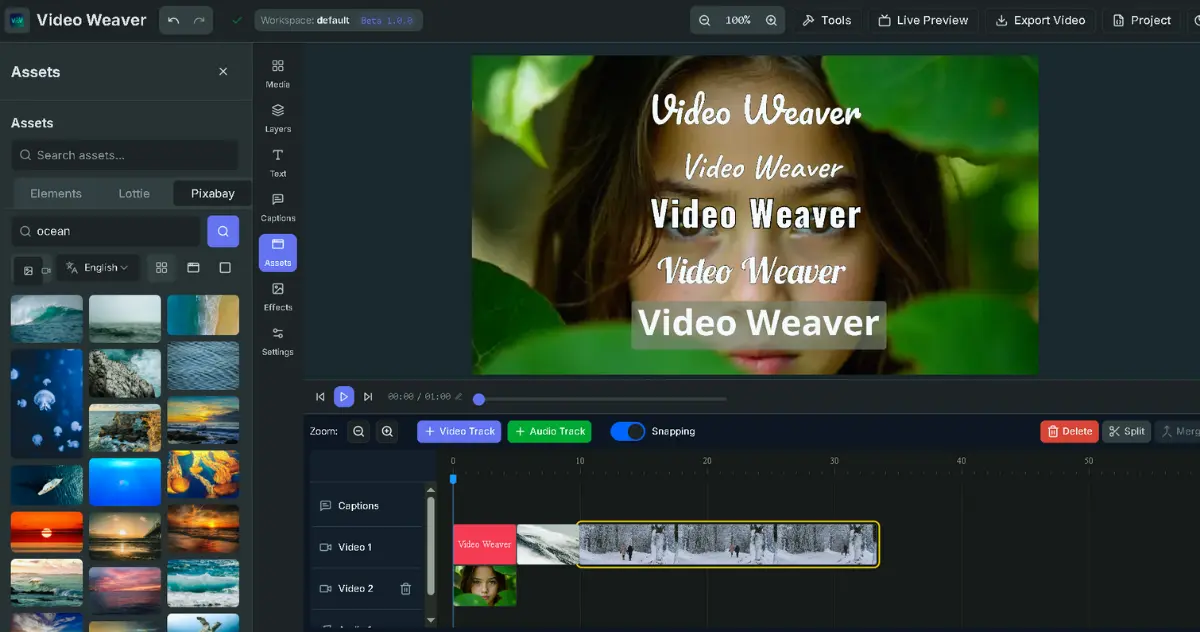
videoweaver.app
Video Weaver: Professional video editing directly in your browser. No downloads required.
Learn More
DMflow.chat
Discover DMflow.chat and unlock the new era of AI-powered customer service.
Learn More
DMflow.chat
DMflow.chat: Your intelligent AI partner for exceptional customer engagement.
Learn Morevideoweaver.app
Video Weaver: Professional video editing directly in your browser. No downloads required.
Learn MoreDMflow.chat
Discover DMflow.chat and unlock the new era of AI-powered customer service.
Learn MoreDMflow.chat
DMflow.chat: Your intelligent AI partner for exceptional customer engagement.
Learn More