


Every time you open your computer, you’ll find that the tech world has brought unexpected surprises. To be honest, the constant emergence of new technologies is truly dazzling. People are becoming increasingly accustomed to seamlessly integrating various smart tools into their daily work. Let’s explain a few noteworthy highlights that are quietly changing the development and creative patterns for many.
Further Evolution of Language Models: GPT-5.4 Quietly Debuts
Did you know? While everyone was still getting used to previous models, OpenAI officially launched GPT-5.4. This update doesn’t just bring more refined semantic understanding; it marks the beginning of a new era of “Native computer-use” for AI.
GPT-5.4 can now, like a human, issue mouse and keyboard commands by observing screenshots to automatically complete complex workflows across different applications. In benchmarks testing computer operation capabilities, it even surpassed the human baseline of 72.4% with a 75.0% success rate.
For professionals, this is definitely a significant upgrade. The model is specifically optimized for spreadsheet analysis, presentation creation, and complex document writing, capable of producing more aesthetic and precise business deliverables. More interestingly, “GPT-5.4 Thinking” used in ChatGPT now shows its “thinking plan” in advance. If you find the direction is off during generation, you can even “adjust mid-way,” allowing the AI to correct its path immediately, significantly reducing communication costs.
Furthermore, it supports a context window of up to 1 million tokens and introduces a new “tool search” mechanism along with top-tier image resolution of up to 10.24 megapixels. Technological progress is often reflected in these small but crucial details, and this update undoubtedly elevates the language model from a “chat partner” to a high-performance digital colleague who can actually operate a computer for you.
A Feast for Both Eyes and Ears: Sora 2 Arrives on Bing Image Creator
Here’s a very interesting development. For those who love to create, Microsoft’s Bing Image Creator has officially introduced Sora 2 generative video functionality, which is a huge boon. This updated model not only captures more dynamic movements but also makes the visuals richer and more lifelike.
Even more excitingly, it perfectly integrates audio features. Visual prompts can now be naturally paired with sound effects, voices, and various audio tracks. Imagine entering a prompt like: “Documentary-style drone footage flying over a small floating island above the clouds, a waterfall turning into mist before falling. The drone is stable but with a slight breeze drift, presenting natural colors. Audio includes gusts of wind.” The generated video is not only visually stunning but also aurally immersive.
Microsoft also places high importance on trust and transparency. These generated videos will have a dedicated watermark to clearly mark them as AI-generated. The system also adopts the industry-standard Content Credentials (C2PA) to ensure full transparency of the video source. Users currently have ten free fast generation opportunities, after which unlimited slow generation is provided. You can even use Microsoft Rewards points to get additional fast generation turns.
Source: https://x.com/JordiRib1/status/2029602049877496145
Building an Uninterrupted Software Factory: The Power of Cursor Automations
Returning to the developer’s daily workflow, the launch of Cursor Automations has completely changed the existing landscape of project management. These automated agents can run continuously according to a plan, or be triggered directly by Slack messages, new Linear tasks, merged GitHub PRs, or even PagerDuty events.
When called, the agent starts in a dedicated cloud sandbox, precisely executing tasks according to set instructions and verifying the output results. The famous Bugbot is a great example. It is triggered thousands of times daily, specifically looking for hidden vulnerabilities when code is pushed. For security reviews, the system performs automatic checks every time a push is made to the main branch, automatically skipping discussed issues and sending high-risk warnings to Slack channels in real-time.
In handling daily affairs, this system performs equally well. Engineers from the Rippling team used the automation mechanism to build personal assistants. Through scheduled agents, the system automatically reads meeting notes and to-do items, combines information from GitHub and Jira, removes duplicates, and generates an extremely clear dashboard. For bug reports, the agent even actively investigates the root cause and attempts to propose a fix. Combined with various plugins, this is like building your own software factory, significantly boosting the iteration speed of the development team.
Tailor-Made for Mobile Apps: Android Bench
Evaluating the capabilities of language models in specific domains has always been a daunting challenge. The Android development team released Android Bench for this purpose. This is a rigorous scoring system focused on high-quality Android development tasks.
Evaluation tools on the market often fail to cover the specific challenges of mobile app development, which is why this testing platform was born. Looking at the latest leaderboard, the competition is quite intense. Gemini 3.1 Pro Preview currently holds the top spot with a score of 72.4%. Following closely are Claude Opus 4.6 with 66.6% and GPT-5.2-Codex with 62.5%. Other models like Claude Sonnet 4.5 and Gemini 2.5 Flash also have their own performance data.
The testing methodology of this scoring system is very strict. Scores are based on the average percentage of problems successfully solved across ten runs of one hundred test cases. The development team even built these test tasks based on official documentation best practices. For developers who want to test for themselves, the official team has generously opened the GitHub repository, allowing everyone to replicate the environment and verify these interesting test results.
A Cloud Office in Your Terminal: Google Workspace CLI
For engineers accustomed to using the command line, frequently switching browser windows can indeed interrupt the original smooth workflow. The good news is that Google Workspace CLI provides a fairly intuitive and sleek solution.
This is a single command-line tool that perfectly integrates the most commonly used office services. Whether it’s Google Drive, Gmail, Calendar, Sheets, Docs, or Chat messages, they can now be directly controlled through a plain text interface. With just a few lines of commands, you can easily manage cloud documents or send important emails. This design, which naturally integrates daily office functions into the terminal, significantly reduces distractions in the workflow, allowing developers to focus more on the code in front of them.
Frequently Asked Questions
You might be curious about how these new technologies can be applied in daily life. Here are some very common questions summarized.
How do I start using the Sora 2 video generation feature with audio? Just go to the Bing Image Creator website and select the video option. The system provides ten free fast generation credits and includes watermarks and content credentials to ensure full transparency of the source.
What specific tasks can Cursor’s automated agents handle? They can handle a variety of tedious tasks ranging from security reviews, bug report triage, and weekly change summaries to incident response. Developers can even set up custom events via Webhooks to have repetitive work completely handled by the system.
What is the basis for Android Bench scoring? This dedicated evaluation tool mainly calculates the average percentage of problems successfully solved by the model in one hundred common development tasks, ensuring absolute reliability of statistical results through multiple runs and reflecting the actual needs of high-quality app development.
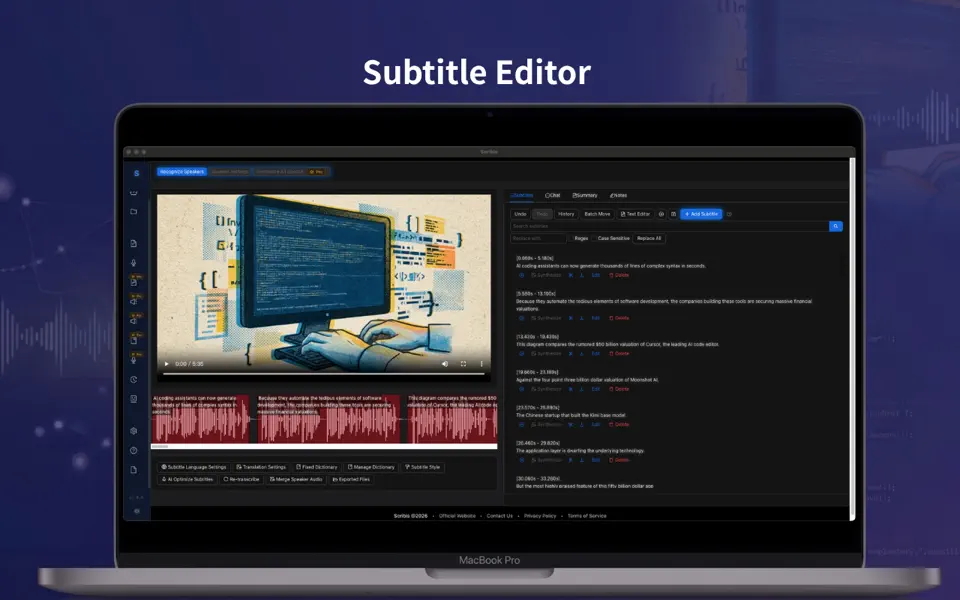
scribis.app
Scribis: Subtitle editing, audio transcription, and live transcription.
Learn More
DMflow.chat
DMflow.chat: Your intelligent AI partner for exceptional customer engagement.
Learn More
DMflow.chat
Discover DMflow.chat and unlock the new era of AI-powered customer service.
Learn More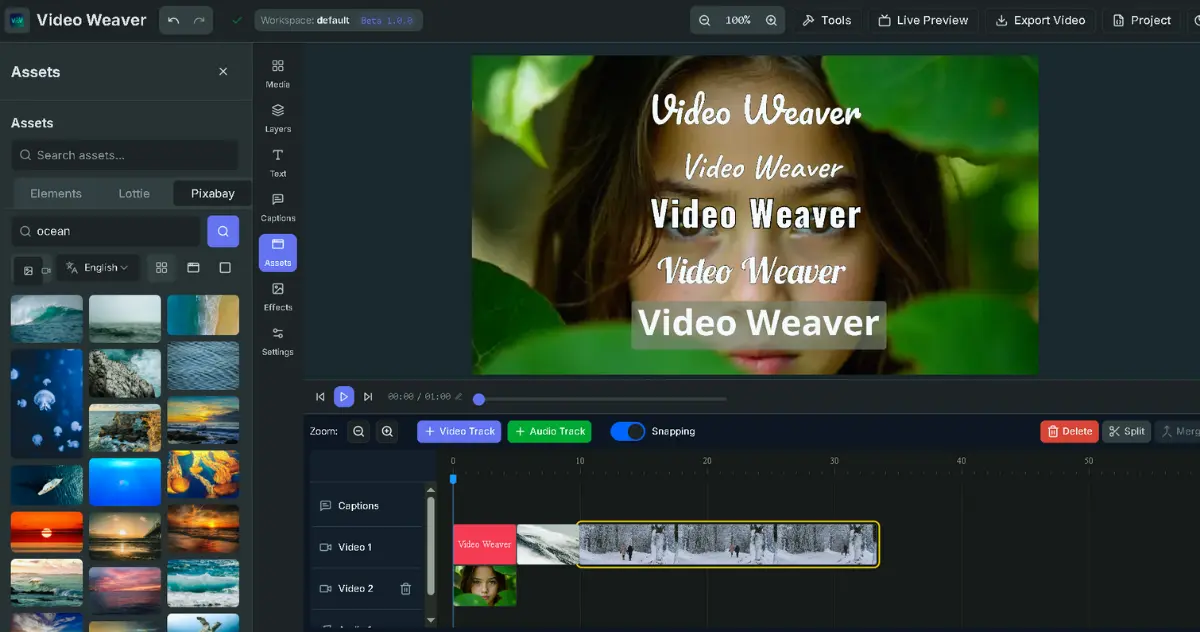
videoweaver.app
Video Weaver: Professional video editing directly in your browser. No downloads required.
Learn Morescribis.app
Scribis: Subtitle editing, audio transcription, and live transcription.
Learn MoreDMflow.chat
DMflow.chat: Your intelligent AI partner for exceptional customer engagement.
Learn MoreDMflow.chat
Discover DMflow.chat and unlock the new era of AI-powered customer service.
Learn Morevideoweaver.app
Video Weaver: Professional video editing directly in your browser. No downloads required.
Learn More