

The pace of development in the AI field never stops. Just today, we’ve seen stunning breakthroughs from fundamental security issues to application layers. Microsoft has revealed a new attack method called ‘Whisper Leak’ that can spy on encrypted AI conversations, sparking deep reflection on the privacy of Large Language Models (LLMs). Meanwhile, Google’s Gemini model has demonstrated an extraordinary ability to analyze multi-spectral data, allowing developers to gain insights into the world in unprecedented ways. In addition, from OpenAI’s new models to new tools from Meituan and ChatGPT, AI is integrating into all aspects of development and collaboration at an unprecedented speed.
Microsoft Discloses ‘Whisper Leak’ Attack: Your AI Chats Could Be Snooped On Even When Encrypted
Think your AI chats are safe as long as they’re encrypted? You might want to think again. Microsoft’s security research team recently disclosed a new type of side-channel attack called ‘Whisper Leak.’ This attack method is like digital lip-reading; even if your internet traffic is end-to-end encrypted (TLS), an attacker can still infer the ’topic’ of your conversation with an AI.
How is this possible?
Simply put, when a large language model generates a response, it doesn’t give the whole answer at once. Instead, it ‘spits out’ the answer word by word (or token by token). This streaming response method leaves a unique ‘digital fingerprint’ in the network transmission process—namely, the size of the network packets and the time intervals between them.
Microsoft researchers found that conversations on different topics produce distinct patterns of packet sizes and time series. An attacker doesn’t need to decrypt the content. Like a shrewd detective, they only need to analyze the ‘behavioral patterns’ of this encrypted traffic to determine with surprising accuracy whether a user is discussing a specific sensitive topic, such as money laundering, political dissent, or other monitored issues.
In a simulated scenario where an attacker monitors 10,000 random AI conversations, with only one being about the target sensitive topic, the experiment showed that the attack’s precision is extremely high, with almost no false positives. This means that a conversation flagged as suspicious is almost certainly about that sensitive topic. This is no longer just a theoretical threat but a very real privacy risk.
Better Late Than Never
Fortunately, after discovering this vulnerability, Microsoft immediately collaborated with major AI vendors in the industry to find a solution. Companies including OpenAI, Mistral, Microsoft’s own Azure AI, and xAI have all quickly deployed protective measures.
Their method is also quite clever. It mainly involves adding an extra field called ‘obfuscation’ to each response, containing a string of random length. This scrambles the length of each packet, preventing attackers from inferring the original token length from the packet size, thus significantly reducing the effectiveness of the attack.
Advice for general users: Although AI service providers have taken action, as users, we can still do a little more to protect ourselves:
- Avoid discussing highly sensitive topics with AI on untrusted networks (like public Wi-Fi).
- Use a VPN service to add another layer of protection to your network traffic.
- Prioritize AI service providers that have already implemented relevant protective measures.
To delve into the technical details, you can read Microsoft’s official blog post.
Google Gemini Opens Its ‘Third Eye’: Seeing the World Invisible to the Human Eye
The world we are used to is composed of the three primary colors RGB (Red, Green, Blue). But what if your application could have ‘superhuman vision’ and see spectrums that are imperceptible to the human eye? It sounds like science fiction, but Google is making it a reality with its Gemini model.
Google recently announced a breakthrough that allows the Gemini model to natively understand and analyze ‘Multi-Spectral Imagery.’
What is multi-spectral imagery and why is it important?
Imagine a regular digital camera is like our eyes, with each pixel recording only red, green, and blue color information. A multi-spectral sensor, on the other hand, is like a super camera that can capture data from many different bands of the electromagnetic spectrum, including the invisible near-infrared (NIR) and short-wave infrared (SWIR).
This capability is a game-changer:
- Assessing Vegetation Health: Healthy plants reflect a large amount of near-infrared light. By analyzing the NIR band, scientists can assess crop health and monitor deforestation more accurately than by simply looking at green photos.
- Detecting Water Bodies: Water absorbs infrared light, which makes it easy to distinguish between water and land in satellite images, useful for mapping floodplains or analyzing water quality.
- Identifying Burn Scars After Fires: Short-wave infrared can penetrate smoke to accurately identify burned areas after a wildfire.
- Identifying Materials: Different minerals and man-made materials have their own unique ‘spectral fingerprints,’ making it possible to identify them from space.
In the past, analyzing this complex data required specialized tools and complicated processing workflows. But now, developers can directly ‘feed’ this multi-spectral data to Gemini and tell the model what the different colors represent through simple prompts, and Gemini can understand and perform analysis. This significantly lowers the barrier to entry for satellite data analysis.
The popularization of this technology means that the era of AI-driven environmental monitoring, precision agriculture, and disaster response has arrived. Developers who want to experience it firsthand can check out Google’s official detailed introduction and Colab notebook examples.
Good News for Developers: OpenAI, Meituan, and ChatGPT Tool Updates
In addition to the two major announcements above, the AI toolchain is also constantly evolving, bringing more convenience to developers and users.
OpenAI Launches GPT-5-Codex-Mini: OpenAI has released a series of updates for developers, the most prominent of which is the launch of the leaner, more cost-effective GPT-5-Codex-Mini model. At the same time, they have increased the rate limits for ChatGPT Plus, Business, and Edu plans by 50% and provided priority processing for Pro and Enterprise users. This means developers can use powerful code generation capabilities at a lower cost and with higher efficiency.
ChatGPT Web Version to Get ‘Group Chat’: A ‘Start Group Chat’ button will appear in the top navigation bar of the ChatGPT web version in the future. You can generate a link to invite others to the same chat room. Group chats will have their own custom instructions and will not use your personal chat memory. In addition, features like message reactions, file uploads, image generation, and web search may also be added in the future, making AI collaboration a reality.
Meituan Releases AI IDE Tool CatPaw: Meituan has officially launched the public beta of its AI Integrated Development Environment (IDE) called CatPaw. This tool aims to let developers focus on creative implementation and improve delivery efficiency. It features code completion, quick Q&A to generate code, and built-in preview and debugging, supporting mainstream languages like Python, Java, and JavaScript. It is currently in a free public beta phase, and new users can get 500 conversation credits upon registration. Interested developers can visit the official website to try it out.
Coding Agent TRAE SOLO to be Officially Released Soon: Another highly anticipated coding agent, TRAE SOLO, is also about to be officially released. It is designed as an intelligent partner that can learn, plan, and build projects with developers. According to the development team, the latest architectural upgrades have significantly improved the model’s performance. The official version will be launched on November 12th and will be available for free for a limited time. You can review its evolution through this video.
Today’s AI news once again proves the vitality and potential of this field. From underlying security protection to upper-level innovative applications, every step is shaping our digital future.
DMflow.chat
DMflow.chat: Your intelligent AI partner for exceptional customer engagement.
Learn More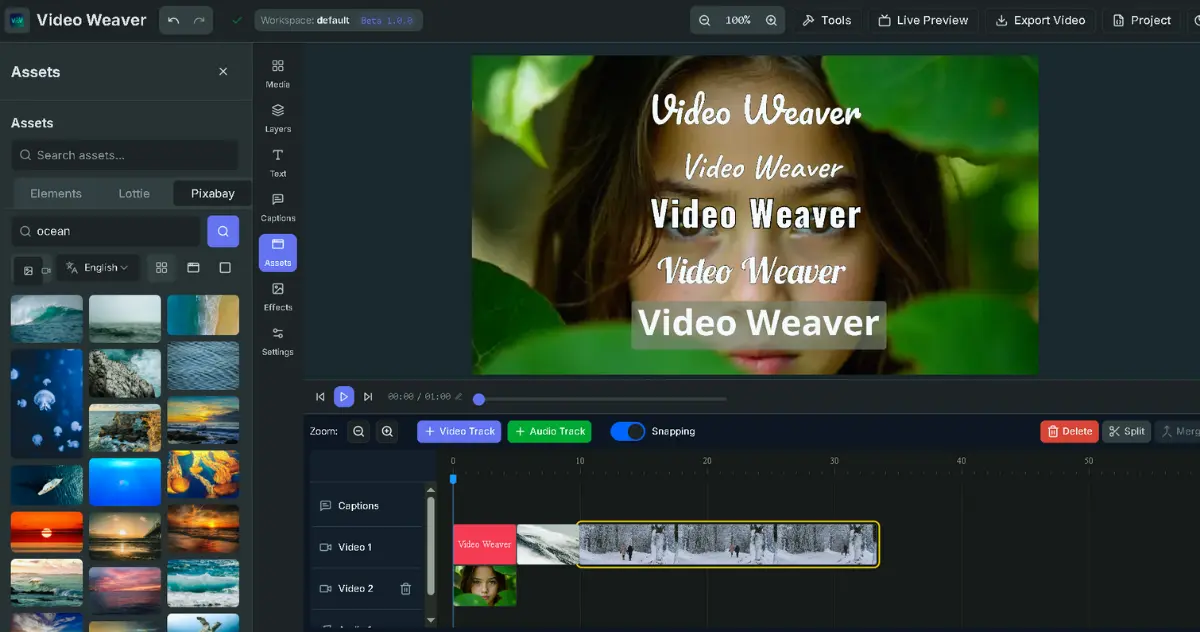
videoweaver.app
Video Weaver: Professional video editing directly in your browser. No downloads required.
Learn More
DMflow.chat
Discover DMflow.chat and unlock the new era of AI-powered customer service.
Learn MoreDMflow.chat
DMflow.chat: Your intelligent AI partner for exceptional customer engagement.
Learn Morevideoweaver.app
Video Weaver: Professional video editing directly in your browser. No downloads required.
Learn MoreDMflow.chat
Discover DMflow.chat and unlock the new era of AI-powered customer service.
Learn More