


Explore Maya1, a groundbreaking open-source voice AI model. It not only creates voices from natural language but also accurately expresses over 20 emotions. Discover how it brings unprecedented freedom and vitality to creators, developers, and any project that needs a ‘voice’.
Are you tired of those stiff, emotionless AI voices? Whether it’s for video dubbing, game characters, or smart assistants, that “robotic feel” always breaks the immersion. What’s more troublesome is that the most powerful voice generation tools on the market are usually hidden behind expensive paywalls, limiting the imagination of many creators.
But what if there was an AI that is not only completely open-source and free for commercial use, but can also understand your descriptions, and even precisely add laughter, crying, or whispers into sentences?
Doesn’t that sound amazing? This is the mission behind the birth of Maya1. It’s not just a tool; it’s a revolution in vocal expression.
What Exactly is Maya1? A Voice Engine with a Soul
Simply put, Maya1 is an advanced Text-to-Speech (TTS) model developed by Maya Research. Based on the powerful Llama architecture, it has 3 billion parameters and can generate extremely realistic, emotionally rich 24 kHz high-quality audio.
Most importantly, it is completely open-source. This means anyone can download, use, and even modify it, deploying it in their own projects without worrying about licensing fees.
What Makes Maya1 Different? These Three Features Say It All
There are many TTS tools on the market, but Maya1 stands out with a few unique highlights.
1. Design Voices by “Telling,” Just Like Talking to a Voice Actor
Forget complex parameters and sliders! With Maya1, you just need to describe the voice you want in natural language, just as if you were directing a professional voice actor.
Want something different? No problem:
A warm, deep, and talkative male voice in his 40sA lively British girl in her 20sA dark villain full of anger, with a British accent
You just write down the description, and Maya1 takes care of the rest. This intuitive interaction greatly lowers the barrier to entry, allowing anyone to easily create unique voices.
2. Give AI Emotions, Accurately Conveying Every Feeling
This is perhaps Maya1’s most stunning feature. It supports over 20 emotion tags, allowing you to mark emotional triggers directly in your text, just like writing a script.
For example, you could write:
"We went through so much trouble to pull him out of that mess <cry> I can't believe it..."
Or something more cheerful:
"Our new feature <laugh> is finally live!"
From laughter (<laugh>), crying (<cry>), sighing (<sigh>), to whispering (<whisper>), these emotion tags transform the voice from a flat reading into something full of dramatic tension and life. This is a dream feature for game developers, audiobook producers, and animation creators.
3. Truly Open-Source, Giving You Complete Freedom
Maya1 is licensed under the Apache 2.0 License, what does that mean?
- Free for Commercial Use: You can use it in your products and services and profit from it.
- You Own the Deployment: No longer subject to the per-second billing of cloud services, you can deploy the model on your own servers, giving you full control over costs and privacy.
- Highly Customizable: Maya1’s architecture supports fine-tuning. This means you can train the model with your own unique voice dataset to create a voice exclusive to your brand or character.
Compared to closed-source tools like ElevenLabs or Murf.ai, Maya1 offers a more flexible, economical, and unrestricted choice.
Deep Dive into the Tech Core: How Does Maya1 Work?
For those who love to delve into technical details, here’s a brief explanation of how Maya1 works.
At its core, Maya1 is a Llama-style decoder model, but instead of directly generating audio waveforms, it predicts something called SNAC (Neural Audio Codec) tokens. This multi-scale, hierarchical structure allows the model to achieve real-time audio streaming at an extremely low data rate (about 0.98 kbps).
What does this mean? It means it’s incredibly efficient.
Furthermore, Maya1’s infrastructure is ready for real-world applications. It integrates with vLLM, enabling it to run on a single consumer-grade GPU (requiring only 16GB+ VRAM, like an RTX 4090) with latencies below 100 milliseconds. This is crucial for real-time interactive applications like AI assistants or customer service bots.
Who is Maya1 For? Comprehensive Applications from Gaming to Accessibility Tools
The application potential of Maya1 is almost limitless. Here are a few particularly suitable scenarios:
- Game Character Voicing: Instantly generate unique NPC voices to make game worlds more vivid.
- Podcast and Audiobook Production: Tell stories with emotive voices that keep listeners engaged for longer.
- AI Voice Assistants: Create conversational AI that responds naturally and with emotion.
- Video Content Creation: Quickly generate high-quality narration for YouTube and TikTok videos.
- Smart Customer Service: Deploy voice bots that can understand and respond to customers with the appropriate emotion.
- Accessibility Tools: Create more natural and engaging screen readers for visually impaired users.
The Mission: To Give a Voice to the Other 90% of the World
The inspiration for Maya1 came from a profound observation by Maya Research: the training data for most mainstream voice AI comes from a small fraction of English speakers. This prevents them from adequately serving the vast majority of the world’s accents, languages, and speaking styles.
They believe that voice intelligence should not be a privilege for the few. By going open-source, they hope to empower developers worldwide to participate and collectively build voices that truly belong to the 90% of people ignored by mainstream AI.
Experience the Magic of Maya1 Now!
After all this talk, it’s better to experience it for yourself. Maya Research provides very convenient ways for you to immediately experience the power of Maya1.
- Try it Online: Go to the Maya1 Playground to enter text and descriptions directly on the webpage and hear the generated voice.
- Model Download and Deployment: If you are a developer, you can go to Hugging Face to download the complete model and follow the instructions to run it in your own environment.
- Interactive Demo: There is also an interactive demo page on Hugging Face Spaces.
The emergence of Maya1 not only brings a powerful open-source alternative to the market but, more importantly, it shows us a future where AI voice is full of emotion and humanity. Are you ready to give your project a soul that can truly speak?
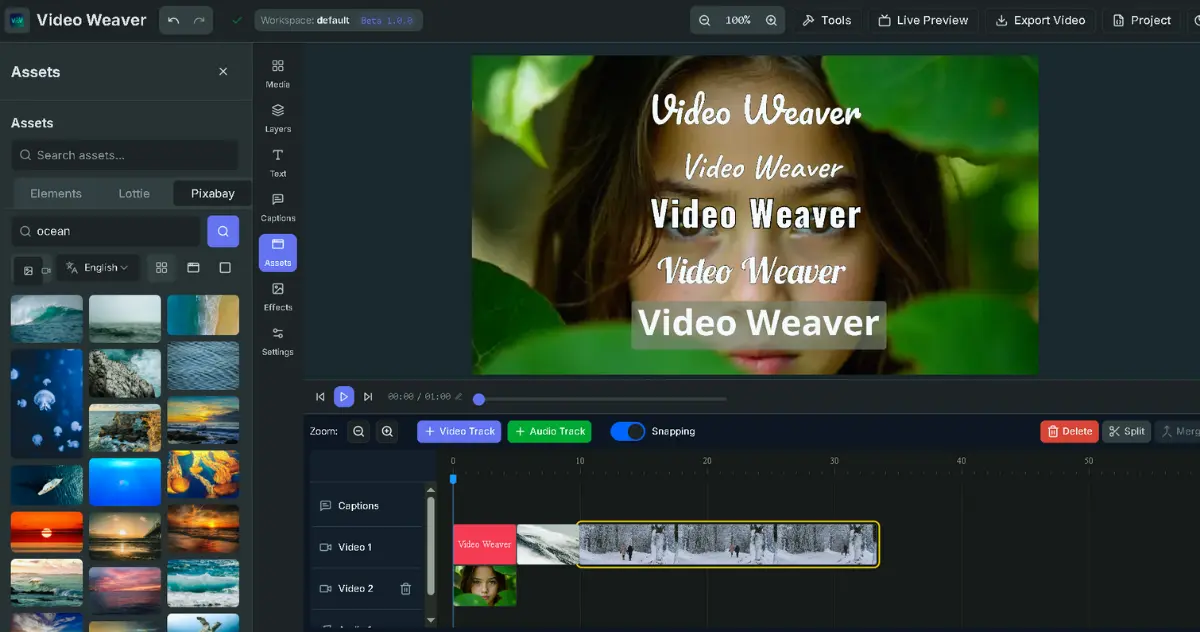
videoweaver.app
Video Weaver: Professional video editing directly in your browser. No downloads required.
Learn More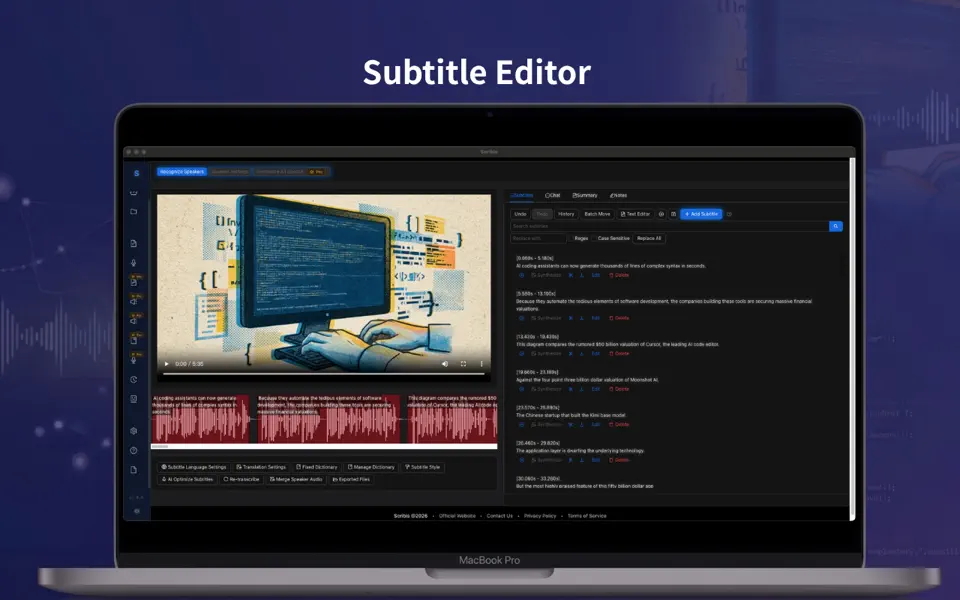
scribis.app
Scribis: Subtitle editing, audio transcription, and live transcription.
Learn Morevideoweaver.app
Video Weaver: Professional video editing directly in your browser. No downloads required.
Learn Morescribis.app
Scribis: Subtitle editing, audio transcription, and live transcription.
Learn More