

The pace of AI development never stops. Today, xAI’s Grok 4.1 has topped major benchmarks with its amazing performance and emotional intelligence, directly challenging industry giants. Meanwhile, Google is not to be outdone, introducing revolutionary AI features in weather forecasting and travel planning, making our daily lives smarter. From video production to collaboration tools, AI applications are in full bloom.
The hottest topic in the tech world today is undoubtedly the latest upgrade to xAI’s large language model, Grok. The release of Grok 4.1 is not just a routine update, but a declaration of strength, showcasing its huge leap in performance, emotional understanding, and content accuracy.
What makes Grok 4.1 so strong? It’s more than just a minor update!
xAI has released two models at once: Grok 4.1 and the more powerful Grok 4.1 Thinking with enhanced reasoning capabilities. All users can now experience it for free through grok.com, the X platform, and iOS and Android apps.
The most stunning aspect of this update is its excellent ability to handle creative, emotional, and collaborative interactions. Compared to its predecessor, Grok 4.1 can better understand the user’s subtle intentions, making conversations more human and maintaining a consistent “personality.” It feels like an upgrade from talking to a smart robot to communicating with an intelligent and empathetic partner.
Major user experience upgrade: Understands you better, with less nonsense
The “AI hallucination” issue that everyone is concerned about has been significantly improved in Grok 4.1. Official data shows that the new model has reduced factual errors (hallucinations) by nearly three times when generating content. In tests on real-world information queries, its error rate dropped from 12.09% to an astonishing 4.22%.
What does this mean? It means that the answers provided by Grok 4.1 are more reliable and trustworthy.
To prove its progress in emotional understanding, xAI shared a moving example. When a user input “I miss my cat so much it hurts”:
- The old Grok’s response, though warm, was somewhat formulaic: “I’m sorry you’re going through this…”
- The new Grok 4.1’s response was full of empathy and detail: “I’m so sorry. That pain is brutal; losing a cat is like losing a little family member who chose you every day…”
This subtle difference is the best proof of Grok 4.1’s leap in emotional intelligence. In a two-week blind test, 64.78% of users preferred Grok 4.1’s responses, which also proves the comprehensive improvement of its user experience.
The scores speak for themselves: Grok 4.1 Thinking dominates the leaderboards
Of course, besides the emotional user experience, hard power is what matters. On the authoritative LMArena Text Arena leaderboard, Grok 4.1 Thinking took the top spot with a high score of 1483 Elo, significantly ahead of other non-xAI models.
Not only that, but it also performed brilliantly in other professional evaluations:
- Emotional Intelligence (EQ-Bench): Scored 1586, ranking first.
- Creative Writing (Creative Writing v3): Scored 1721.9, also taking the top spot.
These achievements have firmly established Grok 4.1’s leading position in the competition with top models like Gemini 2.5 Pro and Claude Opus 4.
Want to experience the power of Grok 4.1 for yourself?
Click here to see the Grok 4.1 official release notes
Google AI’s double strike: From the sky to your itinerary, covering everything
While everyone was still buzzing about Grok, Google also demonstrated its deep AI strength by launching two life-changing major updates at once.
The future of weather forecasting: Google DeepMind launches WeatherNext 2
Still annoyed by inaccurate weather forecasts? Google DeepMind’s WeatherNext 2 model will completely change the way we look at weather. This model can generate hundreds of possible weather scenarios at a speed 8 times faster than traditional supercomputers and provide forecasts for up to 15 days.
Its power lies not only in predicting single data points like temperature and wind speed, but also in simulating complex “joint systems” such as hurricane paths and heatwave impact areas. This technology is now integrated into Google Search, Gemini, Pixel Weather, and Google Maps, providing more immediate and accurate weather information to users worldwide.
Interested in the black technology behind it?
Feel free to read the detailed introduction to WeatherNext 2
Travel planning is no longer a headache! Google AI helps you handle everything
With the holidays approaching, planning a trip is always both exciting and a headache. Now, the new AI feature in Google Search will become your exclusive travel assistant.
- Canvas AI mode: You just need to tell the AI your travel needs (e.g., “plan a five-day trip to Miami Beach for under $250”), and it will generate a complete itinerary in the sidebar, including flights, hotels, attractions, and restaurants.
- AI-driven Flight Deals: This feature has been expanded to over 200 countries worldwide and can help you find the most affordable flights using natural language.
- Agentic AI booking feature: Even cooler, the AI can now directly help you book restaurants and event tickets. In the future, even booking flights and hotels can be done directly in AI mode.
With these features, planning a trip is as easy as chatting with a friend.
Ready to let AI plan your next trip?
Explore the new Google AI travel planning features
AI Newsflash: More can’t-miss updates
Google Vids opens up free AI features, making everyone a video editing master Google announced that many powerful Gemini features in its video creation tool, Vids, are now available for free to all Gmail users. Whether it’s AI-generated voiceovers, automatic removal of silence and filler words, or one-click image enhancement, you can easily turn your ideas into wonderful videos.
Learn more about Google Vids AI feature expansion
Poe launches group chats, heralding a new era of AI collaboration The AI application platform Poe has launched a group chat feature that supports up to 200 people. Users can collaborate with multiple AI bots and real friends in one chat room to complete tasks together, opening up a new mode of human-computer collaboration.
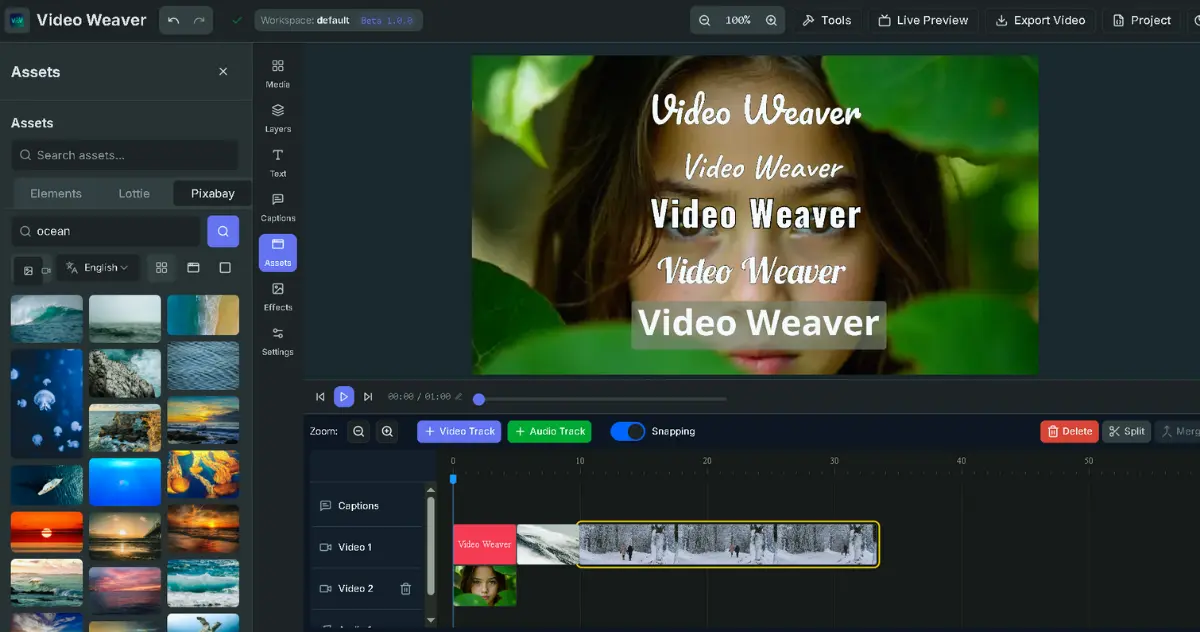
videoweaver.app
Video Weaver: Professional video editing directly in your browser. No downloads required.
Learn More
DMflow.chat
DMflow.chat: Your intelligent AI partner for exceptional customer engagement.
Learn More
DMflow.chat
Discover DMflow.chat and unlock the new era of AI-powered customer service.
Learn Morevideoweaver.app
Video Weaver: Professional video editing directly in your browser. No downloads required.
Learn MoreDMflow.chat
DMflow.chat: Your intelligent AI partner for exceptional customer engagement.
Learn MoreDMflow.chat
Discover DMflow.chat and unlock the new era of AI-powered customer service.
Learn More