


The field of AI translation welcomes a heavyweight contender! Tencent’s newly released Hunyuan Translation Large Model (Hunyuan-MT) is rewriting industry standards with its amazing strength. This article will provide an in-depth analysis of its core technology, its overwhelming performance in major evaluations, and how it defeated many powerful enemies with the industry’s first open-source ‘integrated model’.
In today’s flourishing artificial intelligence, machine translation is no longer a novelty. From Google Translate to various emerging AI tools, we seem to have become accustomed to fast and convenient cross-language communication. However, when a new model not only achieves a technological breakthrough but also demonstrates near-monopolistic dominance in top international competitions, it deserves our full attention.
We are talking about Tencent’s latest open-source Hunyuan Translation Large Model (Hunyuan-MT).
As soon as this model series was unveiled, it crazily won 30 first places in the 31 language projects it participated in at the authoritative WMT25 International Machine Translation Competition. You read that right, 30 championships. This is not only a demonstration of technical strength but also a powerful impact on the existing landscape of translation models.
The Birth of a “Champion Harvester”? Not Just Talk
Winning 30 championships right off the bat sounds a bit incredible. But the data is honest. The performance of Hunyuan-MT is not accidental; behind it is a complete and innovative technical architecture.
The Hunyuan-MT series mainly includes two core models:
- Hunyuan-MT-7B: This is the main model for translation, responsible for accurately translating source text into the target language. Among models of the same scale (7 billion parameter level), its performance has reached the industry’s leading level.
- Hunyuan-MT-Chimera-7B: This can be called the “secret weapon” of Hunyuan-MT. It is the industry’s first open-source translation integration model.
Wait, what is an “integration model”?
You can think of it as an “expert decision committee.” A traditional translation model is like an independent translation expert who tries his best to give the best translation. Hunyuan-MT-Chimera goes a step further. It will simultaneously refer to the output results of multiple translation versions, and then, like an experienced editor-in-chief, select and fuse the advantages of each version to finally generate a higher-quality and more fluent translation result. This “brainstorming” approach raises the accuracy and naturalness of translation to a whole new level.
The Data Speaks for Itself: Overwhelming Performance in Actual Tests
Let’s look at the data in the chart directly. Whether in the general FLORES-200 evaluation set or the highly competitive WMT24pp benchmark test, the two models representing Hunyuan-MT (dark blue and blue-and-white checkered bars) almost occupy the top position on every list.
Okay, here is the Markdown table format for this chart:
FLORES-200 Translation Model Evaluation
Metric: XCOMET-XXL Score (%)
| Model / Task | ZH-XX | XX-ZH | EN-XX | XX-EN | WMT24app | Mandarin↔Minority |
|---|---|---|---|---|---|---|
| Hunyuan-MT-Chemira-7B | 89.7 | 87.2 | 93.1 | 91.3 | 85.9 | 60.8 |
| Hunyuan-MT-7B | 87.6 | 85.3 | 91.1 | 90.2 | 85.7 | 36.9 |
| Google-Translator | 76.2 | 77.0 | 76.4 | 77.6 | 73.9 | 42.1 |
| Seed-X-PPO-7B | 80.1 | 79.1 | 78.8 | 81.0 | 59.9 | 39.5 |
| Llama-4-Scout-17B-168-Instruct | 79.3 | 82.7 | 81.8 | 84.4 | 69.8 | 44.9 |
| Tower-Plus-9B | 85.1 | 84.5 | 81.9 | 87.0 | 75.5 | 41.7 |
| Qwen3-32B | 88.5 | 85.7 | 86.7 | 89.5 | 71.0 | 48.6 |
| Qwen3-235B-A22B | 91.5 | 85.9 | 87.8 | 92.9 | 76.7 | 52.1 |
| DeepSeek-V3-B324 | - | - | 90.1 | 92.2 | 83.1 | 51.1 |
| Claude-Sonnet-4 | - | - | - | - | 81.2 | 45.0 |
| Gemini-2.5-Pro | - | - | 93.0 | 94.3 | 80.3 | 42.1 |
| GPT-4.1 | - | - | - | 94.0 | - | 43.0 |
Note:
- ZH-XX: Chinese to multilingual
- XX-ZH: Multilingual to Chinese
- EN-XX: English to multilingual
- XX-EN: Multilingual to English
- WMT24app: WMT24 application translation task
- Mandarin↔Minority: Mutual translation between Mandarin and minority languages
- “-” in the table indicates that the model was not evaluated in that task.
- All values are approximate and manually read from the chart data.
- Chinese-English Mutual Translation (ZH↔XX, EN↔XX): Whether it is Chinese translated into other languages or English translated into other languages, Hunyuan-MT’s scores are consistently ranked among the top, even surpassing well-known powerful opponents such as Google Translate and GPT-4.1.
- WMT24pp Competition Data: On this evaluation set specially designed for the competition, Hunyuan-MT once again proved its strength, with scores significantly higher than other participating models.
- Mutual Translation between Mandarin and Minority Languages (Mandarin↔Minority): This part is particularly worthy of attention.
Not Only Understanding Mainstream Languages but Also Protecting Cultural Diversity
The strength of a translation model depends not only on its ability to handle mainstream languages but also on its performance when dealing with relatively unpopular and less-resourced languages. Hunyuan-MT has delivered a beautiful report card in this regard.
It currently supports mutual translation in 33 languages, including Chinese and English, with a special inclusion of five Chinese minority languages. As can be seen from the “Mandarin↔Minority” data on the right side of the chart, Hunyuan-MT’s performance in handling these languages is also excellent, far exceeding other models. This is not only a technological breakthrough but also reflects the important value of technology in inheriting and protecting cultural diversity.
From Zero to the Top: A Unique Five-Step Training Method
The success of Hunyuan-MT stems from its comprehensive and refined training framework. This framework covers every step from the birth of the model to its maturity, ensuring its final outstanding performance:
- Pretrain: Lay a solid language foundation on massive data.
- Continuous Pre-training (CPT): Strengthen professional knowledge for translation tasks.
- Supervised Fine-tuning (SFT): Use high-quality translation data for precise tuning to make the model learn to “speak human language.”
- Translation Reinforcement Learning (Translation RL): Let the model learn and improve itself during the translation process.
- Ensemble Reinforcement Learning (Ensemble RL): Specially designed for the Chimera integration model, teaching it how to make the optimal “multiple-choice question.”
It is this interlocking process that has created this translation model with excellent performance in all aspects.
The Power of Open Source: What Does It Bring to the AI Translation Community?
More importantly, Tencent has chosen to completely open source Hunyuan-MT-7B and the industry’s first Hunyuan-MT-Chimera-7B. This means that developers and researchers around the world can freely use, study, and improve this model.
This is not just sharing a tool, but also providing a set of advanced translation model training methodologies, which will undoubtedly promote the development of the entire AI translation field. For enterprises or individual developers who need high-quality translation functions, this is a huge boon.
If you are interested in this powerful translation model, you may wish to visit its official GitHub page to explore its charm.
- Project Link: Tencent-Hunyuan/Hunyuan-MT on GitHub
In summary, the emergence of Tencent Hunyuan-MT not only brings us a more powerful translation tool but also injects new vitality into the entire AI community through open source. We have reason to believe that future cross-language communication will become more seamless and accurate because of this.
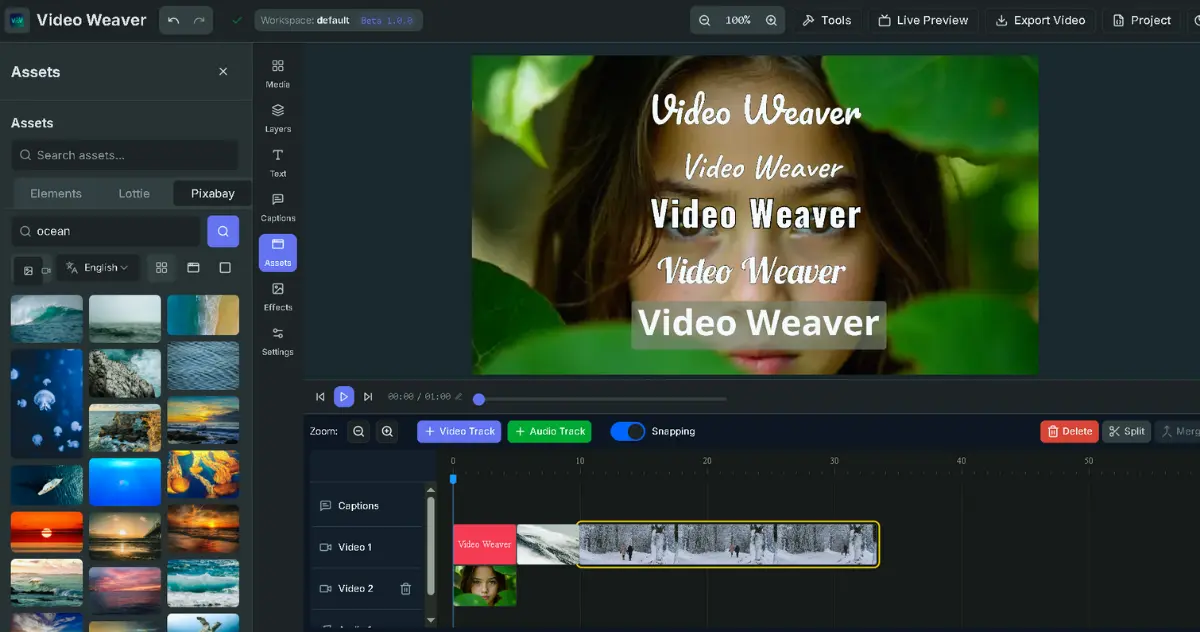
videoweaver.app
Video Weaver: Professional video editing directly in your browser. No downloads required.
Learn More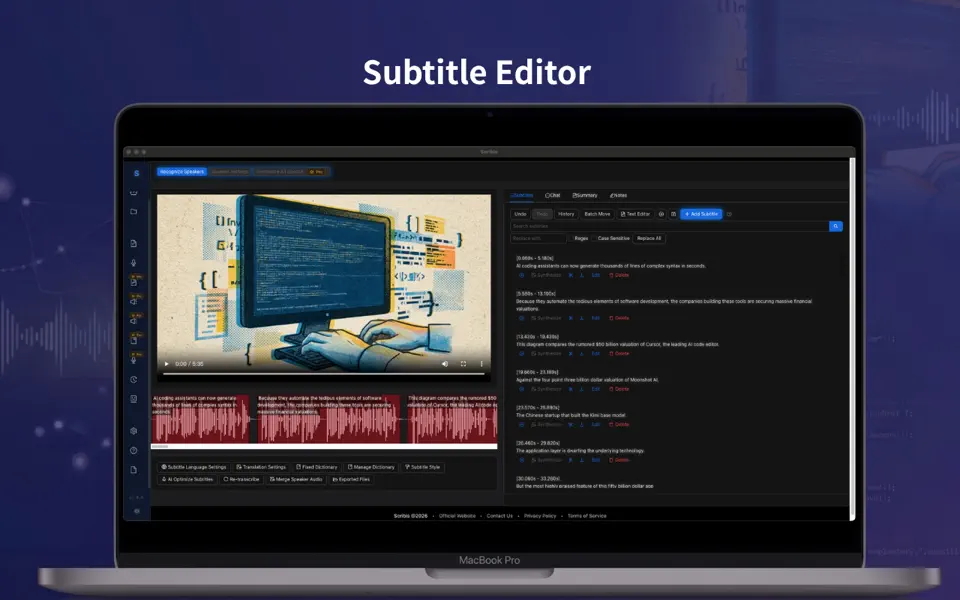
scribis.app
Scribis: Subtitle editing, audio transcription, and live transcription.
Learn Morevideoweaver.app
Video Weaver: Professional video editing directly in your browser. No downloads required.
Learn Morescribis.app
Scribis: Subtitle editing, audio transcription, and live transcription.
Learn More