


On September 15, 2025, OpenAI released a major update to Codex, introducing GPT-5-Codex, specifically designed for ‘agentic coding.’ It’s not only faster and more reliable, but it can also collaborate with you in your familiar development environment like a real team member, and even complete complex tasks independently. This article will take you deep into the highlights of this upgrade and how it will change our daily development.
Remember when AI tools were, at best, smart autocomplete helpers while you were coding? That era may be coming to an end. OpenAI recently dropped a bombshell, officially launching GPT-5-Codex. This isn’t just a minor update; it’s a declaration: your AI programming assistant has evolved into a capable “AI coding companion.”
Codex is now faster, more reliable, and performs beyond imagination in real-time collaboration and independent problem-solving. Whether you’re developing in a terminal, IDE, on the web, or even on your phone, it integrates seamlessly. Are you ready to welcome a teammate that truly understands you and can fight alongside you?
It Doesn’t Just Write Code, It “Thinks”? Meet GPT-5-Codex
The core of this upgrade is the all-new GPT-5-Codex model. This isn’t a general-purpose version of GPT-5, but a version deeply optimized for “agentic coding.”
What does this mean? Simply put, it no longer passively waits for your commands. GPT-5-Codex’s training data comes entirely from real-world, complex software engineering tasks, such as:
- Building a complete project from scratch
- Adding new features and tests to existing code
- Debugging to find the root cause of problems
- Performing large-scale code refactoring
- Conducting in-depth code reviews
What’s most impressive is that it has learned to dynamically adjust its thinking time. For a simple request, it can give you an answer quickly. But for a complex task, like a large refactoring, it can work independently for over 7 hours, continuously iterating and correcting errors until it successfully delivers.
According to OpenAI’s data, GPT-5-Codex achieved an accuracy of 74.5% on the SWE-bench Verified benchmark. Its performance on code refactoring tasks was 51.3% higher than the standard version of GPT-5. This means it produces higher quality code and better understands your needs. You no longer need to write lengthy instructions to specify code style.
Your Development Environment is Its Home Turf
OpenAI’s goal this time is clear: to make Codex fit perfectly into your existing workflow. You don’t need to change your habits because it’s already waiting for you where you usually work.
All-New Codex CLI and IDE Extensions
The Codex CLI (Command-Line Interface) is open-source and has become more powerful after incorporating a lot of community feedback. You can now communicate designs directly in the terminal by attaching screenshots or wireframes, allowing it to accurately understand your ideas.
The new Codex IDE extension is a huge boon for developers. It brings the power of Codex directly into editors like VS Code and Cursor. Because it can read your open files or selected code as context, you need shorter prompts to get faster results. You can even create, track, and review cloud tasks directly within the IDE, without switching windows at all.
Smarter Cloud Collaboration and Code Review
In Codex Cloud, infrastructure performance has also been significantly improved, with new task completion times reduced by 90%. It can now automatically scan and set up environments, and even install dependencies when needed.
The coolest part is its performance in GitHub Code Review. Once enabled, Codex will automatically review your Pull Requests (PRs). It doesn’t just scan the code like a static analysis tool; it understands the intent of the PR, analyzes dependencies across the entire repository, and even executes code and tests to verify behavior.
According to OpenAI’s internal statistics, GPT-5-Codex submitted fewer erroneous comments, while the number of valuable “high-impact” comments increased. This means teams can identify problems earlier, reduce the burden on reviewers, and release products with more confidence.
Security is the Foundation of It All
Of course, with great power comes great responsibility, and security is the top priority. OpenAI has made many efforts in this area.
By default, whether locally or in the cloud, Codex runs in a sandboxed environment with network access disabled. This effectively prevents it from harming your computer or being influenced by unknown commands.
At the same time, it requests permission before performing potentially dangerous operations. Developers can customize security settings, such as restricting access to trusted domains in the cloud or manually approving commands in the CLI and IDE. This is all to ensure that the entire process is safe and controllable while expanding the capabilities of AI.
How to Get Started? Pricing and Availability
The good news is that Codex is already included in the ChatGPT Plus, Pro, Business, Edu, and Enterprise plans. Different plans have different usage limits, ranging from a few focused coding sessions per week to supporting multi-project development for the entire work week.
For developers who want to use it via API, OpenAI also plans to make GPT-5-Codex available soon.
Conclusion: The Beginning of a New Era
From simple code autocompletion to this AI coding companion that can think and execute tasks independently, the evolution of Codex is astounding. It’s no longer just a tool, but a “teammate” that can accelerate innovation and improve quality.
As Tres Wong-Godfrey, a technical lead at Cisco Meraki, said: “I needed to update a library that another team was responsible for… With Codex, I could delegate the refactoring and test generation work to it while focusing on other priorities. It produced high-quality, fully tested code, allowing the feature to go live on schedule without adding any risk.”
Are you ready to welcome this AI partner and take on even bigger projects together?
For more technical details, you can check out the official OpenAI publication.
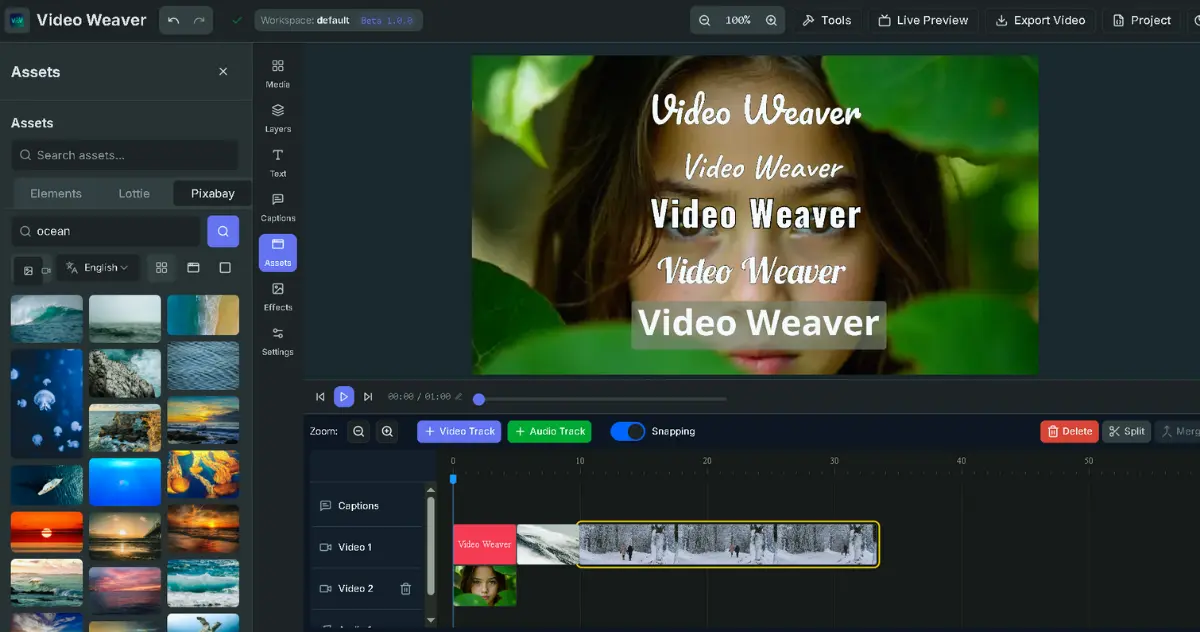
videoweaver.app
Video Weaver: Professional video editing directly in your browser. No downloads required.
Learn More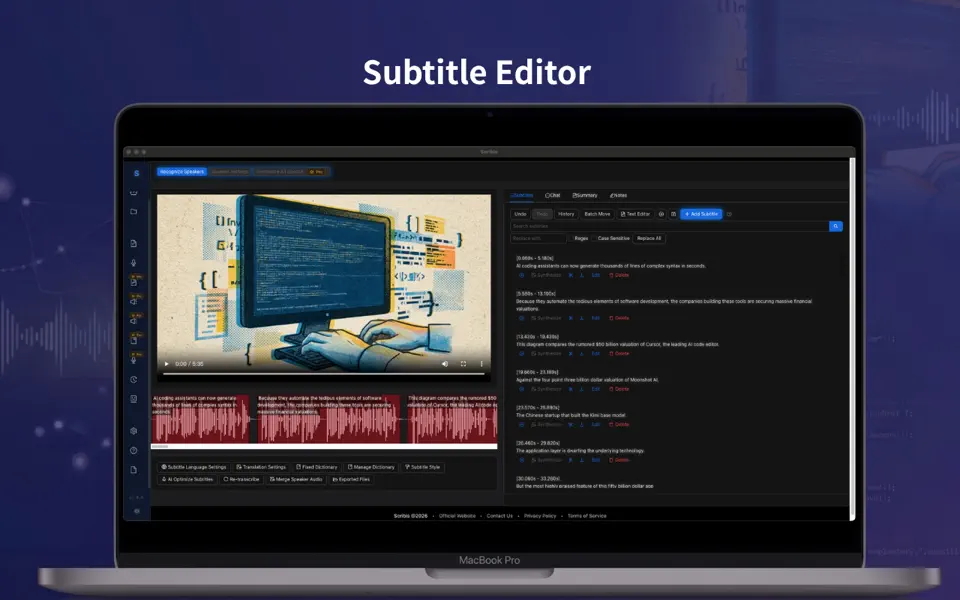
scribis.app
Scribis: Subtitle editing, audio transcription, and live transcription.
Learn Morevideoweaver.app
Video Weaver: Professional video editing directly in your browser. No downloads required.
Learn Morescribis.app
Scribis: Subtitle editing, audio transcription, and live transcription.
Learn More