


Catch up on the latest AI developments on October 24, 2025! Today was an explosive day in the AI field. OpenAI introduced the revolutionary “Company Knowledge” feature for ChatGPT, truly integrating AI into business workflows. Meanwhile, Google launched a new “Annotation Mode” in AI Studio for more intuitive app development and significantly upgraded Google Earth AI. Anthropic’s Claude also officially opened its “Memory” feature to individual users. Finally, Microsoft brought back the classic “Clippy” character as a new AI persona, Mico, in Copilot. This article will provide an in-depth analysis of these major updates.
OpenAI Launches “Company Knowledge” to Make ChatGPT Understand Your Business Better
Have you ever found yourself scrambling through Slack, Google Drive, and countless emails just to find a single document? The information we need most for our work is often scattered like pieces of a puzzle. To solve this long-standing pain point, OpenAI has officially launched a powerful feature called “Company Knowledge” for ChatGPT Business, Enterprise, and Edu users.
Breaking Down Information Silos to Create a Corporate Brain
In simple terms, the “Company Knowledge” feature is like giving ChatGPT a master key to your company’s internal information repository.
When you use it for the first time, you just need to connect your company’s commonly used applications (such as Slack, SharePoint, Google Drive, GitHub, etc.) with ChatGPT. After that, when you enable this feature and ask a question, ChatGPT can search across all relevant data and provide a precise answer that integrates the full context of your company’s business.
For example, when you need to prepare for a client meeting, you can directly ask ChatGPT: “Help me summarize the key points from the last meeting with Client A and the recent discussions about them in the Slack channel.” ChatGPT will automatically pull meeting notes from Google Docs, key details from emails, and even customer service questions from Intercom to generate a complete presentation.
All of this is driven by a specially trained version of GPT-5, ensuring the comprehensiveness and accuracy of the answers. What’s more, every answer comes with clear source citations, allowing you to trace the information back to its source at any time and ensure the results are trustworthy.
Security and Privacy? OpenAI’s Commitment
Of course, when connecting internal company data with AI, the biggest concern is security. In this regard, OpenAI emphasizes that user control over data is the top priority:
- Respects existing permissions: ChatGPT can only access data that the user already has permission to view.
- No training by default: OpenAI promises that it will never use your company data to train its models by default.
- Enterprise-grade security: All data is protected by industry-standard encryption and supports SSO (Single Sign-On) and SCIM (System for Cross-domain Identity Management) to ensure secure access.
This feature is designed to make AI a smarter work partner, not a potential data breach risk.
Learn more: OpenAI Official Announcement
Google AI Studio Launches “Annotation Mode” for More Intuitive Application Development
In the past, modifying an application’s interface, even just tweaking a button or a piece of text, could require back-and-forth communication and tedious code adjustments. Now, Google AI Studio is launching a brand new “Annotation Mode” that completely changes this process.
Point and Click, and Gemini Handles the Code
The concept of this new mode is very intuitive: you just need to circle or highlight any component you want to modify directly in the application’s preview interface—whether it’s a button, an image, or text. Then, tell Gemini what you want to do, such as “make this button bigger” or “change this text to blue.”
Magically, Gemini will automatically understand your intent and handle all the heavy lifting of code modification behind the scenes.
It’s like having a top developer sitting next to you. You just need to give instructions, and they can immediately implement all your ideas. The goal of this feature is to make the application optimization process as simple and easy as chatting.
Learn more: Google AI Studio Announcement
Google Earth AI Upgrades, Enhancing Global Environmental Monitoring and Disaster Response Capabilities
Google Earth is no longer just a digital map for you to explore the world; it is evolving into a powerful AI tool that can understand and predict the dynamics of our planet. Google announced today a major feature update for Google Earth AI and expanded access for users worldwide.
Not Just a Map, but a “Digital Twin” of the Earth
The core of this update is the introduction of a “Geospatial Reasoning” framework powered by Gemini. This framework allows AI to automatically connect and analyze different Earth data models, such as weather forecasts, population density maps, and satellite imagery, to answer more complex questions.
This means that Google Earth AI can not only tell you where a storm might make landfall but also combine population data and infrastructure information to analyze which communities are most vulnerable and in need of assistance.
Application Scenarios: From Public Health to Business Forecasting
This technology has already demonstrated its value in real-world applications:
- The World Health Organization (WHO) is using it to predict areas at risk of cholera outbreaks in the Democratic Republic of Congo.
- Satellite imagery companies Planet and Airbus are using it to analyze billions of pixels of images to map deforestation or detect vegetation encroaching on power lines.
- Insurance brokerage McGill and Partners is using it to provide hurricane forecasts, allowing clients to receive claims faster and begin rebuilding their homes.
Google is also making Earth AI’s models available to testers on Google Cloud, allowing more businesses to leverage this technology to address challenges ranging from environmental monitoring to disaster response.
Learn more: Google Official Blog
Claude Opens “Memory” Feature to Create a Truly Personalized AI Assistant
Have you ever felt that every time you talk to an AI, it’s like talking to a stranger you just met, and you have to keep repeating background information? The artificial intelligence company Anthropic has heard this feedback. Remember the major update in September, Claude’s Major Update: Automatic Memory Function, Making Team Collaboration No Longer Repetitive!, which was launched for Team and Enterprise plan users? Now, the new “Memory” feature is officially available for users of its flagship AI model, Claude’s Pro and Max versions.
Say Goodbye to Forgetfulness, Claude Remembers Your Projects and Preferences
This new feature aims to significantly improve the consistency and personalization of conversations. Once enabled, Claude can remember the details of the projects you are working on, your personal preferences, and even your workflow.
It’s like collaborating with a colleague who is familiar with you. They remember the conclusions of the last meeting and understand your preferred writing style, so you don’t have to explain everything from scratch every time.
Privacy First: Your Memory, Your Control
Anthropic has paid special attention to privacy protection in its design:
- Project-independent memory: Each project has its own independent memory bank to ensure that confidential information from different projects or clients does not interfere with each other.
- Full user control: You can view, edit, or even delete any content that Claude has remembered at any time.
- “Incognito Chat” mode: If you need to have a one-time conversation that you don’t want to be remembered, you can enable this mode.
This feature is optional and has undergone rigorous security testing before its launch to ensure that it does not reinforce harmful conversations or bypass security mechanisms.
Learn more: Claude Official Announcement
Anthropic and Google Cloud Expand Partnership to Accelerate AI Frontier Development
To support its growing user demand and more powerful model capabilities, Anthropic has announced a significant expansion of its partnership with Google Cloud.
Joining Forces to Inject More Powerful Computing Power into Claude
The core of this collaboration is that Anthropic will significantly increase its use of Google Cloud technologies, including up to one million TPUs (Tensor Processing Units).
This means that Anthropic will gain massive computing power to support the needs of its more than 300,000 business customers and continue to promote Claude’s leading position in the AI field. Anthropic also emphasized its diversified computing strategy, maintaining close cooperation with Amazon and NVIDIA in addition to Google Cloud to ensure the stability and advancement of its services.
Learn more: Anthropic Official News
Microsoft Copilot Gets a Major Update, Clippy Returns as a New AI Persona, Mico
That “Clippy” paperclip that used to bounce in the bottom right corner of Office documents is back in a whole new way! Microsoft has launched a new AI persona for its AI assistant Copilot—Mico.
Mico’s Debut, Your AI Friend is Back?
Although Microsoft hasn’t explicitly said so, Mico’s design is clearly inspired by Clippy. What’s more interesting is that Microsoft has also hidden an Easter egg: if you click on Mico multiple times, it will “transform” into the classic Clippy image, bringing this old friend back to life as an AI.
Mico has conversational memory, can learn from user feedback, and will be launched first in the United States, Canada, and the United Kingdom.
Not Just for Chatting, but for Having an Opinion
This Copilot update also introduces a “Real Conversation” mode. In this mode, the AI will no longer just agree with you but will present different viewpoints in an “opinionated” way, encouraging users to think about problems from different angles. Microsoft says that this communication style will make human-computer interaction more authentic and inspiring.
Microsoft AI CEO Mustafa Suleyman said, “We built this product in the hope that AI can help people return to their lives and enhance the connections between people.”
In addition, Copilot has also received a series of updates, including group chats with friends, long-term memory, cloud connectors, and deep integration with the Edge browser. With the rise of AI browsers such as OpenAI’s ChatGPT Atlas and Perplexity’s Comet, Microsoft’s move is clearly intended to consolidate its leading position in the generative AI field.
scribis.app
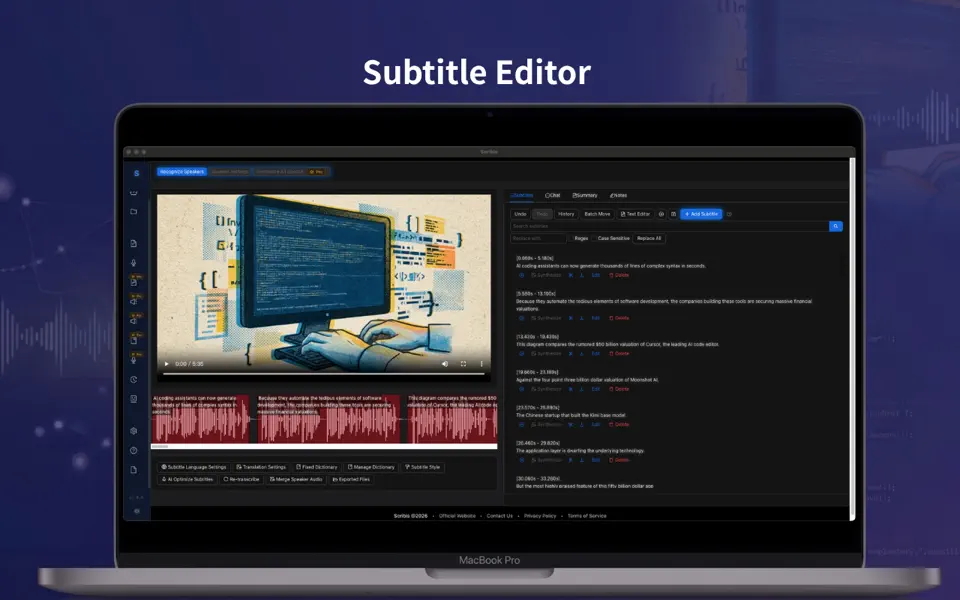
Scribis: Subtitle editing, audio transcription, and live transcription.
Learn More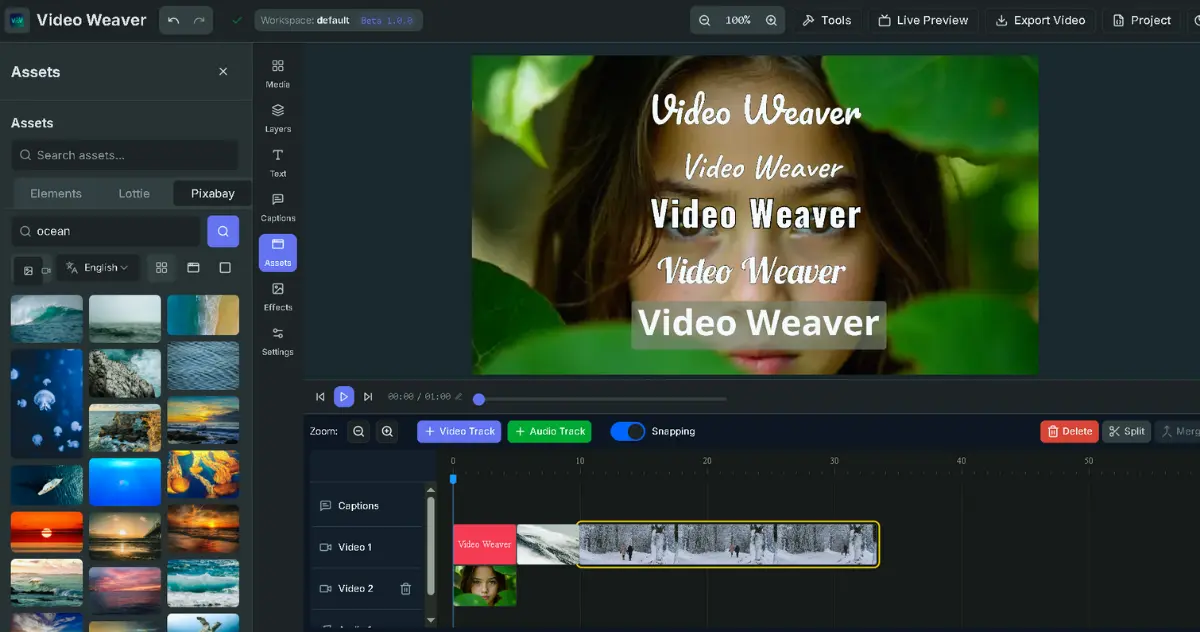
videoweaver.app
Video Weaver: Professional video editing directly in your browser. No downloads required.
Learn Morescribis.app
Scribis: Subtitle editing, audio transcription, and live transcription.
Learn Morevideoweaver.app
Video Weaver: Professional video editing directly in your browser. No downloads required.
Learn More