


AI Focus Daily: Microsoft & OpenAI End Cloud Exclusivity, GitHub Copilot Shifts to Usage-Based Billing, Xiaomi Releases Trillion-Parameter Open-Source Model
Today’s tech world is filled with bombshells and major business strategy adjustments. From the reorganization of cloud giant alliances to changes in the billing mechanisms of AI tools that developers rely on daily, and the open-source community welcoming a powerful new model. Honestly, these changes will directly impact the future of software development and corporate strategy.
Here are today’s three most important AI news highlights.
Changes in the Microsoft & OpenAI Partnership? Here’s What the New Agreement Says
The tech world’s most high-profile alliance now has a new set of rules. According to the latest announcement from Microsoft, Microsoft and OpenAI have formally revised their partnership agreement. This amended contract brings significant flexibility and marks the end of Azure’s cloud exclusivity.
What does this actually mean? It means OpenAI has gained unprecedented freedom. Sam Altman also confirmed this update on X, explicitly stating that while Microsoft remains their primary cloud partner, OpenAI can now deploy its products and services across all cloud platforms.
As you can imagine, this is a massive shift for the cloud market. Previously, everyone was accustomed to the tight binding between OpenAI and Microsoft Azure. Now, this new non-exclusive relationship allows OpenAI to reach a broader customer base. The financial structure has also seen a major overhaul. Microsoft will no longer pay revenue shares to OpenAI. Conversely, OpenAI’s revenue share payments to Microsoft will continue until 2030, with a cap on the total amount. Furthermore, Microsoft’s licensing of OpenAI’s IP for models and products will extend until 2032.
Some might wonder if the two are preparing for a breakup. Not exactly. Microsoft remains a major shareholder in OpenAI’s growth. They are still collaborating on ambitious projects like building new data center capacity, developing next-generation chips, and applying AI to cybersecurity. Giving each other more flexibility seems to be a step towards a longer-term partnership in today’s hyper-competitive market.
Developers Take Note: GitHub Copilot Billing is Changing Significantly
Shifting from cloud giant maneuvers to a practical tool used daily by developers: GitHub has officially announced a fundamental change to Copilot’s billing model. Starting June 1, 2026, all GitHub Copilot plans will fully transition to a usage-based billing model.
Why the change? Over the past year, Copilot has evolved from a simple in-editor assistant to a powerful platform capable of executing long-running, multi-step coding tasks. This “agentic” usage has gradually become the norm, bringing with it immense computing and inference costs. Previously, a simple Q&A and a multi-hour autonomous coding task cost the same for the user. GitHub has been absorbing these rising costs, but the fixed premium request model is no longer sustainable.
The new billing method introduces a “GitHub AI Credits” system. Usage will be calculated based on token consumption, including input, output, and cached tokens. However, don’t worry just yet—the base prices for existing plans remain unchanged. For instance, the $10/month Copilot Pro plan will include $10 worth of AI credits, and the Business/Enterprise versions will maintain their monthly fees while providing corresponding credits.
A key question for many developers: will basic code completion still be free? Yes. Code completions and Next Edit suggestions remain included in all plans and will not consume any AI credits.
Notably, the previous “fallback experience” that automatically downgraded users to lower-cost models when quotas were exhausted will be discontinued. Future usage will be determined entirely by remaining credits and administrator budget controls. Enterprise admins now have more flexible budget settings, allowing them to manage unused credits centrally within the organization.
Xiaomi’s Open-Source Push: MiMo-V2.5-Pro Brings Million-Token Context and High-Performance Computing
Following the billing changes in commercial products, let’s look at a new star in the open-source world. Xiaomi has demonstrated strong R&D capabilities by officially launching the MiMo-V2.5-Pro model series. This is an open-source Mixture-of-Experts (MoE) language model with a staggering 1.02 trillion total parameters and 42 billion active parameters.
What makes this model so powerful? It is specifically optimized for high-demand agentic tasks, complex software engineering, and long-cycle missions. MiMo-V2.5-Pro utilizes an innovative hybrid attention architecture, cleverly interleaving Sliding Window Attention (SWA) and Global Attention (GA) in a 6:1 ratio. This design significantly reduces KV cache storage by nearly 7x while maintaining excellent long-text performance.
Even more impressive is its context length. The model supports a context window of up to 1 million tokens. This means it can effortlessly read and understand entire technical manuals or massive codebases. Paired with its built-in three-layer Multi-Token Prediction (MTP) module, inference output speed is tripled.
For developers who want to test the underlying capabilities themselves, the MiMo-V2.5-Pro-Base model is also available for fine-tuning. This model completed pre-training on a staggering 27 trillion tokens under FP8 mixed precision and uses Multi-Teacher On-Policy Distillation (MOPD) technology, allowing a single student model to accurately absorb the essence of expert models from various fields. This is definitely one of the most powerful tools worth exploring in the open-source community recently.
Q&A
Q: Are Microsoft and OpenAI breaking up? A: Definitely not. Microsoft remains OpenAI’s primary cloud partner and a major shareholder. The two are not only staying together but will continue to collaborate deeply on ambitious fields like data center expansion, next-gen chips, and cybersecurity. The new agreement simply provides more operational flexibility for both parties.
Q: What are the practical benefits of this non-exclusive agreement for businesses or developers? A: The biggest benefit is “freedom of choice.” Previously, OpenAI’s products were primarily tied to Microsoft Azure, but the contract is now a “non-exclusive” license. This means OpenAI can now offer its products and services to customers on any cloud platform. For enterprises, deploying AI applications will no longer be limited to a single cloud provider, allowing for more flexible infrastructure choices.
Q: With the shift to usage-based billing, will my daily “code completion” still be free? A: Yes! Basic “Code completions” and “Next Edit suggestions” are still included in all plans and will not consume any GitHub AI Credits. Only when you execute long autonomous coding tasks or make heavy use of “agentic” features will credits be deducted strictly based on input, output, and cached tokens.
Q: If companies are worried about employees overusing and blowing the budget, are there safeguards? A: GitHub has designed more powerful budget control permissions for enterprise admins. Admins can set budgets at the enterprise, cost center, or even individual user level. Even better, unused credits can be “pooled” within the organization to avoid waste. If credits run out, admins can choose to allow additional charges at public rates or set a hard cap on spending.
Q: With 1.02 trillion total parameters, won’t this open-source model be extremely resource-heavy to run? A: While the total parameter count is huge, MiMo-V2.5-Pro uses a Mixture-of-Experts (MoE) architecture, so the actual active parameters are only 42 billion. More importantly, its innovative “hybrid attention architecture” interleaves SWA and GA at a 6:1 ratio, which reduces KV cache storage requirements by nearly 7x.
Q: What is the strongest use case for this model? A: According to official documentation, MiMo-V2.5-Pro’s greatest strength lies in handling high-demand “agentic tasks,” complex software engineering, and long-cycle missions. It integrated Multi-Teacher On-Policy Distillation (MOPD) technology during training, enabling it to maintain complex trajectories covering thousands of tool calls within a 1-million-token context while demonstrating strong instruction-following capabilities. Additionally, the built-in three-layer Multi-Token Prediction (MTP) module triples inference output speed.
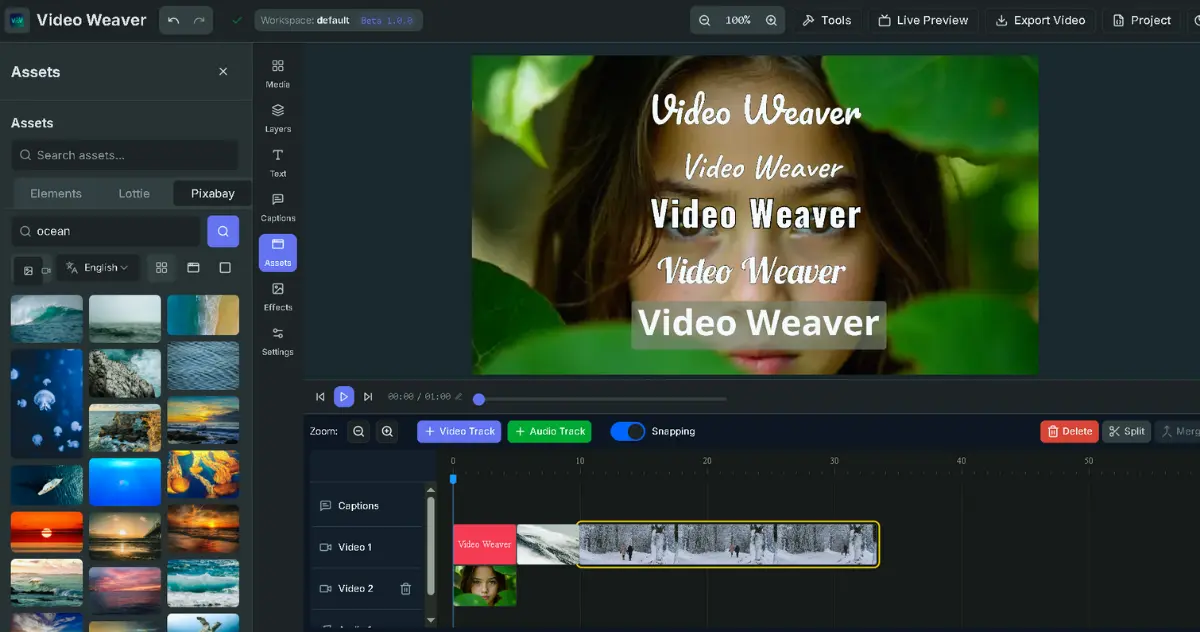
videoweaver.app
Video Weaver: Professional video editing directly in your browser. No downloads required.
Learn More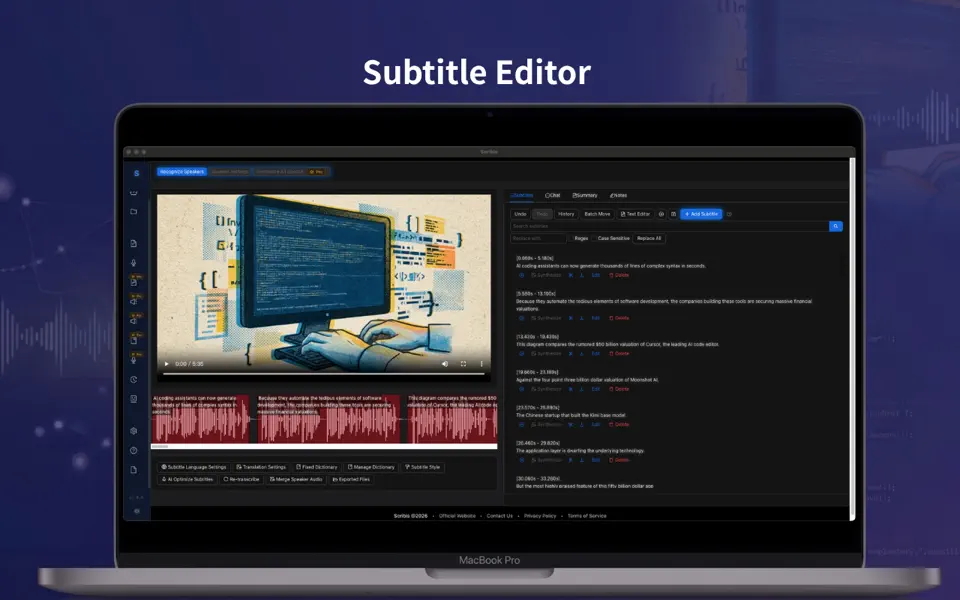
scribis.app
Scribis: Subtitle editing, audio transcription, and live transcription.
Learn Morevideoweaver.app
Video Weaver: Professional video editing directly in your browser. No downloads required.
Learn Morescribis.app
Scribis: Subtitle editing, audio transcription, and live transcription.
Learn More