


Significant personnel changes are once again reshaping the tech industry. Peter Steinberger has joined OpenAI to lead the development of intelligent agents, while OpenClaw is transitioning into a foundation to ensure its open-source independence. Concurrently, Google has released a new threat report detailing the current state of AI-driven cyber warfare, and the open-source community has introduced two robust new voice generation models.
A New Chapter for Intelligent Agents: Peter Steinberger Joins OpenAI
Personnel movements in the tech world often signal the next technological frontier. Renowned developer Peter Steinberger has officially announced his move to OpenAI. This is more than just a job change; it’s a signal that the focus of AI development is shifting from conversational models to “Intelligent Agents” (Agents) capable of solving real-world problems. OpenAI CEO Sam Altman expressed high expectations, calling Peter a genius and stating that his vision for the future—where multiple high-intelligence agents collaborate to complete complex tasks—will rapidly become a core competitive advantage for OpenAI’s products. This suggests OpenAI is working to address the “all talk, no action” limitation of current models, making AI a truly task-oriented assistant.
Regarding Peter’s previous project, OpenClaw, the community initially feared it might be compromised or shut down due to this move. However, the good news is that OpenClaw will transition into a foundation and continue to exist as an open-source project. OpenAI has explicitly stated it will continue to support the project, emphasizing that the future will be a highly multi-agent world and that supporting the open-source ecosystem is a vital piece of this vision. This provides reassurance for developers, who can see both technical progress from commercial giants and the preservation of an independent open-source community. Peter himself mentioned that while building OpenClaw into a large company was tempting, he felt a greater desire to change the world, and joining forces with OpenAI is the fastest path to that goal.
Google Reveals the AI Cyber Warfare: Model Extraction and Defense Upgrades
As AI technology evolves rapidly, so do the forms of cyber threats. Google’s Threat Intelligence Group (GTIG) has released a detailed new report analyzing how malicious actors have abused AI technology in recent months. The report notes that while direct attacks on top-tier “Frontier Models” haven’t been observed yet, a technique known as “Model Extraction” is becoming more frequent. This behavior, similar to corporate espionage, involves using high volumes of queries to copy or “steal” a model’s logic and capabilities, presenting a serious challenge for companies with proprietary AI models.
In addition to model theft, attackers are using AI to increase the realism of phishing emails and develop more stealthy malware. Google emphasized that this is a dynamic game of cat-and-mouse; they have taken specific actions, including blocking malicious accounts to break the attack chain, while simultaneously strengthening the security and defensive controls of their Gemini models. This report serves not only as an analysis of the current state but also as a wake-up call for all enterprises deploying AI: while enjoying the convenience of AI, security thinking must also be upgraded to guard against those seeking shortcuts via new technology.
Democratizing Open-Source Voice Tech: KaniTTS2 and MioTTS
In the realm of Text-to-Speech (TTS), the open-source community has shown incredible vitality by releasing two noteworthy projects that challenge the notion that only large corporations can train high-quality models. First is the release of KaniTTS2, a model with 350 million parameters (350M) specifically designed for the consistency of long-form voice generation. It not only supports voice cloning, but more importantly, the development team has open-sourced the entire pre-training framework and code. This means any interested developer can use this framework to train a voice model from scratch for their own language, accent, or specific domain, truly achieving the popularization of the technology.
On the other hand, developers seeking ultimate efficiency have introduced the MioTTS project. This is a family of lightweight TTS models ranging from a tiny 0.1B to 2.6B, capable of running on resource-constrained devices. The developer even created a custom neural audio encoder (MioCodec) to reduce latency. MioTTS supports bilingual generation in English and Japanese and features zero-shot voice cloning, requiring only a very short reference audio clip to mimic a speaker’s voice. These two projects demonstrate the powerful momentum of the open-source world in performance optimization and technical openness, making high-quality voice synthesis no longer out of reach.
Grok 4.20 Coming Soon
Finally, let’s look at the latest from Elon Musk. In his characteristic style, he announced on social media that Grok version 4.20 will officially be released next week. While the tweet didn’t reveal many technical details, he promised a “significant improvement” over version 4.1. Given Grok’s focus on real-time data and its unique sense of humor, many are curious whether the version number “4.20” hints at more topical features or a performance breakthrough.
Frequently Asked Questions (FAQ)
Q: How will Peter Steinberger joining OpenAI affect OpenClaw? A: OpenClaw will not disappear; instead, it will transition into a foundation and continue as an open-source project. OpenAI has committed to supporting the project, ensuring its independence and openness, meaning developers can continue to use and contribute to it with confidence.
Q: What is a “Model Extraction” attack? A: This is an attack method where malicious actors systematically send large numbers of queries to an AI model and record its answers, attempting to use this data to train a new model that mimics the original’s functionality. This is essentially an intellectual property theft, and Google is actively monitoring and defending against such activities.
Q: Can I use KaniTTS2 or MioTTS to train my own voice? A: Yes. KaniTTS2 specifically highlights the release of its full pre-training code, allowing developers to train their own models from scratch. MioTTS supports zero-shot voice cloning, requiring only a short reference audio sample to generate a similar voice, making it ideal for individual developers or small projects.
Q: When will Grok 4.20 be released? A: According to Elon Musk’s latest update, Grok 4.20 is expected to launch next week, promising significant performance improvements.
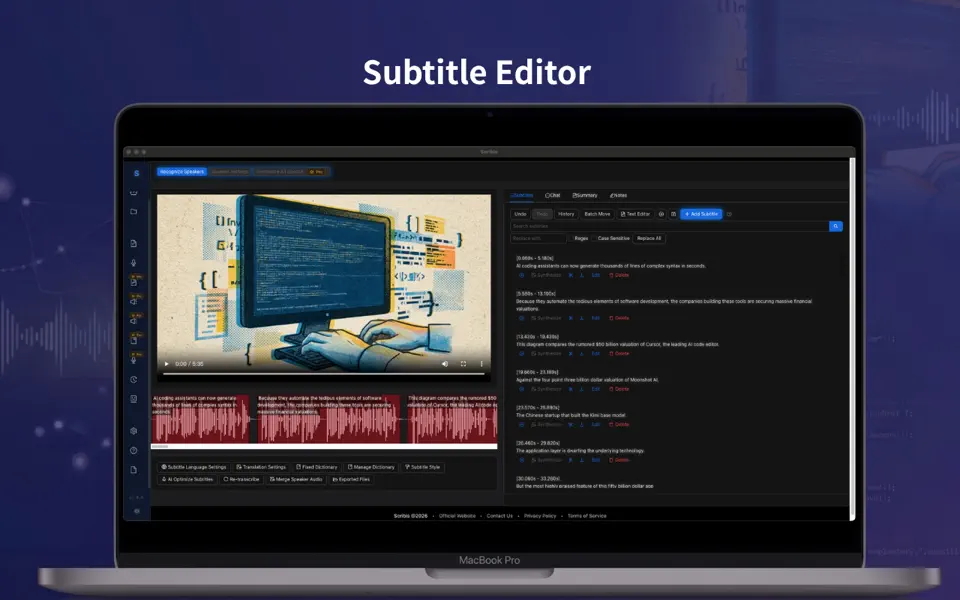
scribis.app
Scribis: Subtitle editing, audio transcription, and live transcription.
Learn More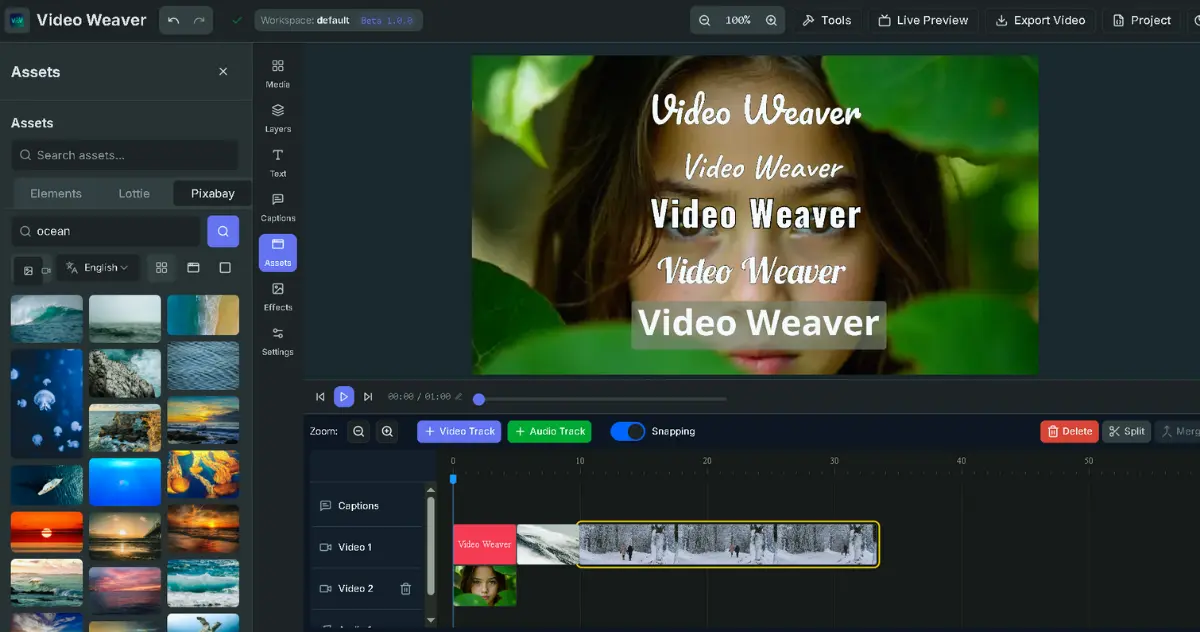
videoweaver.app
Video Weaver: Professional video editing directly in your browser. No downloads required.
Learn Morescribis.app
Scribis: Subtitle editing, audio transcription, and live transcription.
Learn Morevideoweaver.app
Video Weaver: Professional video editing directly in your browser. No downloads required.
Learn More