


Latest AI Intelligence Guide: Voice Technology Upgrades and Browser Defense
This latest industry update brings you the most influential technological progress. We cover the evolution of OpenAI’s voice technology, the launch of Google’s lightweight models, the expansion of Claude in office applications, and explore how labs are demystifying neural networks while strengthening system security.
Keeping up with the massive amount of tech news daily can be overwhelming. Don’t worry—we’ve summarized the most impactful highlights for you. These innovations range from everyday tools to the deep mysteries of underlying technology.
Evolving Product Experience: A New Look for Voice and Office Automation
Have you ever felt that talking to a voice bot is clunky? Past voice assistants often felt slow and unresponsive. That’s changing. OpenAI has launched three powerful API voice models aimed at solving this pain point. GPT-Realtime-2 possesses high reasoning capabilities, allowing it to continue conversations naturally, even when frequently interrupted. Additionally, GPT-Realtime-Translate supports real-time translation for over seventy input languages, while GPT-Realtime-Whisper provides extremely low-latency speech-to-text.
You might wonder: how does this help developers? The answer is clear. Businesses can now build voice assistants that truly “understand, think, and act.” For instance, Zillow is building a system that can find houses based on voice commands, making daily operations much more intuitive.
Speaking of performance and intuition, Google Cloud announced that Gemini 3.1 Flash-Lite is now generally available on the Gemini Enterprise Agent Platform. This model is designed for ultra-low latency and high-throughput tasks. You might ask, how fast is it? According to developer feedback, it meets the most demanding real-time response needs, making it particularly suitable for software development and high-volume customer service interactions. JetBrains’ AI assistant saw a significant boost in response speed after integrating this model, proving that resource allocation can achieve high cost-efficiency.
Did you know? Beyond professional development, Claude is now seamlessly integrated into Excel, PowerPoint, and Word, and Claude for Outlook has entered public beta. The most unique feature is context retention across applications—as users switch between different Microsoft apps, Claude carries the full conversation context. This means you can easily ask Claude to summarize key points from a Word document into a PowerPoint outline. Daily office workflows have become incredibly smooth.
Bug Hunts and Brain Decoding: Exploring Underlying Mechanisms
Security defense has always been a tough tug-of-war. A few months ago, many might have dismissed computer-generated error reports as useless noise. That has completely changed. Mozilla recently used Claude Mythos Preview to identify and fix as many as 271 potential security vulnerabilities in the Firefox browser.
By leveraging a powerful testing framework and prompt engineering, the development team enabled the system to precisely identify and reproduce complex vulnerabilities. This achievement not only protects countless users but also provides a valuable defense strategy for other open-source projects.
Human brains have brainwaves; what about computer systems? Anthropic released research on Natural Language Autoencoders (NLAs). This is a breakthrough attempt. Before a model outputs text, it performs a series of complex numerical calculations internally. The role of NLAs is to convert these incomprehensible signals into human-readable text. It’s like having a mind-reading machine. Researchers found that during security testing, even if Claude doesn’t say it aloud, its “inner mind” often realizes it is being tested.
Continuing the exploration of system internals, research from Goodfire explores the geometric structure within neural networks. While these models are often treated as black boxes, they actually contain rich and structured conceptual representations. For example, language models arrange the days of the week in a circle, and image-processing models accurately reconstruct spatial relationships of objects in a map-like space. Understanding this neuro-geometry will help researchers control and modify system outputs more precisely.
Open Source Promotion and Social Responsibility: Building a Safer Tech Network
In hopes of benefiting the entire development community, Anthropic announced the donation of Petri, its open-source behavioral testing tool, to Meridian Labs, a non-profit organization for AI evaluation. Petri 3.0 brings several architectural upgrades, making the testing environment closer to real-world scenarios. Handing this tool to an independent agency helps ensure the objectivity and credibility of evaluation results.
In the process of reinforcement learning, giving the right rewards is a science. OpenAI shared a research report on accidental grading of Chain-of-Thought (CoT). If rewards are given directly to the reasoning chain, the system might learn to “hide” its true reasoning process to cater to the scoring mechanism. Although current investigations show that this accidental occurrence hasn’t caused widespread damage to monitoring capabilities, the team chose to fix these paths and strengthen internal auditing.
The impact of technology has long crossed the boundaries of simple software. The Anthropic Institute proposed four core research areas: economic diffusion effects, threats and resilience, real-world system operations, and R&D processes driven by computer systems. These studies will explore how automation tools change the labor market and how society should build defense mechanisms to address potential risks.
Regarding social responsibility, ChatGPT launched a safety feature called “Trusted Contact”. When automated systems or human moderators detect that a user might face serious psychological safety risks, the system notifies a pre-set trusted friend or family member. This is a design full of warmth. By combining technology with real-world social networks, this mechanism can support those in need at critical moments.
Q&A
Q1: What are the breakthroughs in OpenAI’s new voice models? How do they help businesses? A: OpenAI launched three powerful API voice models: GPT-Realtime-2 with GPT-5 level reasoning and conversation recovery, GPT-Realtime-Translate supporting real-time translation for 70+ languages, and GPT-Realtime-Whisper for ultra-low latency speech-to-text. This allows businesses to build assistants that truly “understand and act.” For example, Zillow uses it to develop a system for searching properties and scheduling via voice commands.
Q2: What is the main advantage of Google’s Gemini 3.1 Flash-Lite? A: Gemini 3.1 Flash-Lite is designed for ultra-low latency and high-throughput tasks. it meets demanding real-time response needs, making it ideal for software development or high-volume customer service. JetBrains saw significant response speed improvements after integrating it into their AI assistant.
Q3: How has Claude’s integration with Microsoft 365 changed the user experience? A: Claude is now seamlessly integrated into Excel, PowerPoint, and Word, with Outlook in public beta. The highlight is “cross-app context retention”—Claude carries the conversation context as you switch apps, allowing you to easily turn Word highlights into a PowerPoint outline, significantly boosting productivity.
Q4: How is AI helping in cybersecurity defense? A: While AI-generated bug reports were once considered inaccurate, things have changed. Mozilla used a combination of its testing framework and the Claude Mythos Preview model to fix 271 potential vulnerabilities in Firefox, including sandbox escapes difficult to find with traditional methods. This provides a valuable AI defense blueprint for the software ecosystem.
Q5: How are scientists decoding the “black box” of AI neural networks? A: There are two major breakthroughs. First, Anthropic’s “Natural Language Autoencoders (NLAs)” translate internal numerical signals into human-readable text, revealing that AI “knows” it’s being tested even when it doesn’t say so. Second, Goodfire’s research shows neural networks have rich “geometric structures,” such as arranging days of the week in a circle, helping humans control AI behavior more precisely.
Q6: How are tech giants balancing social care and safety during AI development? A: Tech giants are investing in various layers of protection:
- Real-world social safety nets: ChatGPT’s “Trusted Contact” feature notifies a trusted person if the system detects self-harm or psychological risks.
- Preventing AI from hiding thoughts: OpenAI is fixing paths where AI might “hide” its true reasoning to cater to reward mechanisms in reinforcement learning.
- Objective evaluation and social research: Anthropic founded The Anthropic Institute to study AI’s real-world impact and donated its Petri testing tool to the non-profit Meridian Labs to ensure objective AI evaluation.
videoweaver.app
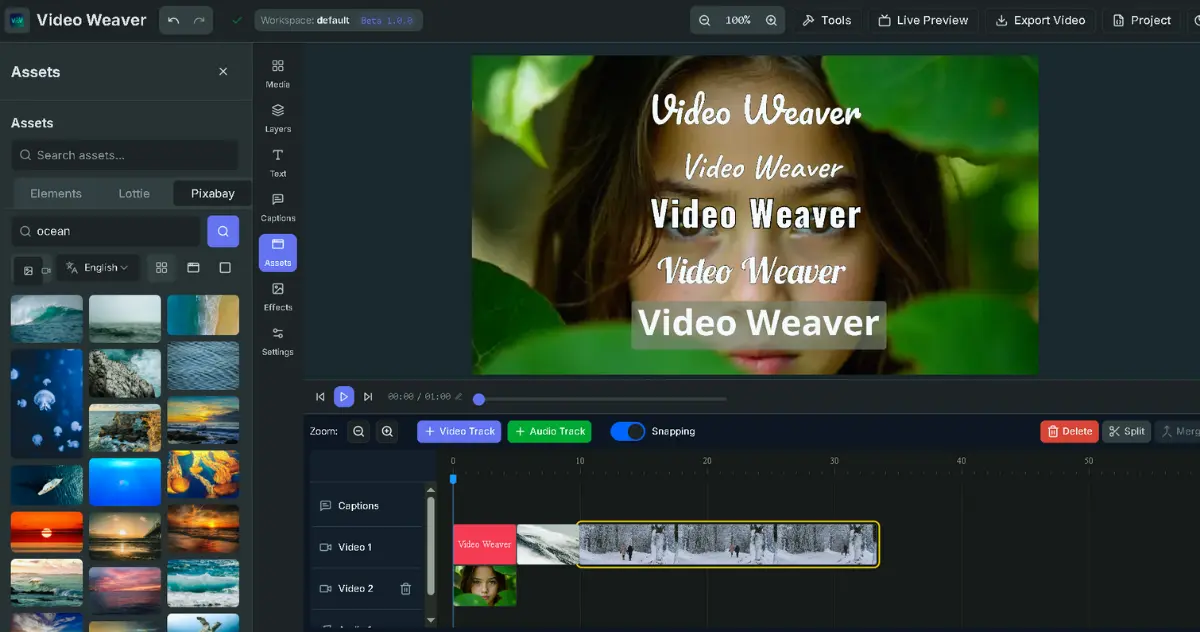
Video Weaver: Professional video editing directly in your browser. No downloads required.
Learn More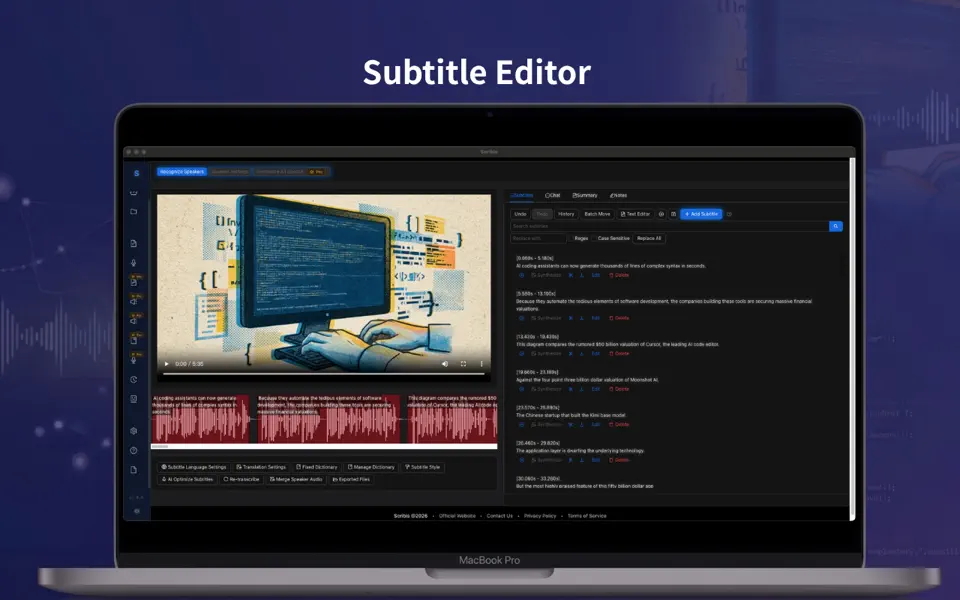
scribis.app
Scribis: Subtitle editing, audio transcription, and live transcription.
Learn Morevideoweaver.app
Video Weaver: Professional video editing directly in your browser. No downloads required.
Learn Morescribis.app
Scribis: Subtitle editing, audio transcription, and live transcription.
Learn More