


The tech world has recently seen a wave of major updates. Expectations for artificial intelligence have long surpassed simple Q&A; users now demand intelligent assistants that can truly take action. From automated coding and open-source models with million-token context windows to cross-conversation memory that learns user habits, tech giants have delivered impressive results.
Are you ready? Let’s dive into these exciting new technologies and see how they are poised to transform our daily work and learning.
GPT-5.5 Arrives: Let Your Computer Handle the Heavy Lifting
The long-awaited next step from OpenAI is finally here. The official OpenAI announcement: Introducing GPT-5.5 reveals their smartest and most intuitive model to date. This new release moves beyond simple chat frameworks toward true “Agentic AI.”
How powerful is GPT-5.5? It understands user intent with incredible speed. While users previously had to guide models step-by-step, you can now assign it a complex, multi-step task, and it will automatically plan, use tools, check for errors, and persevere until the task is complete. This is particularly evident in coding and debugging, online data collection, and software operations.
For professional developers, performance and security are paramount. GPT-5.5 excels in complex logic and scientific research while maintaining high computational efficiency. It uses fewer tokens than before to complete the same Codex tasks. On the security front, OpenAI has deployed rigorous safeguards for high-risk areas like cybersecurity and biotechnology. This update represents a significant leap forward.
DeepSeek-V4 Shakes the Open Source World: Million-Context Efficiency
Beyond OpenAI’s progress, the open-source community has reached a stunning milestone. According to the DeepSeek-V4 Preview release, this model officially introduces highly cost-effective million-token context processing.
What does this mean? Imagine feeding an entire encyclopedia or a massive project codebase into the model all at once. To meet different needs, this release includes two versions:
- DeepSeek-V4-Pro: Features 1.6T total parameters and 49B active parameters. Its “Max Deep Thinking Mode (DeepSeek-V4-Pro-Max)” rivals the world’s top closed-source models (such as Gemini-3.1-Pro and GPT-5.4) across core tasks.
- DeepSeek-V4-Flash: With 284B total parameters and only 13B active parameters, it is an incredibly fast and affordable choice.
Many developers wonder how such a large model can be applied practically. The DeepSeek-V4 Technical Report provides the answer: they utilize a hybrid attention architecture (combining CSA and HCA) to significantly reduce the computational burden of long texts. In extreme scenarios involving one million tokens, DeepSeek-V4-Pro’s per-character inference power (FLOPs) is only 27% of the previous V3.2 generation, and KV cache memory usage is only 10%. This makes long-context processing a practical technology rather than just a performance showcase.
If you want to access the weights, you can visit the Hugging Face collection page. General users can experience the power of million-token context directly on the DeepSeek online platform via expert or instant modes without worrying about hardware requirements.
Claude Ecosystem Evolution: Memory and Everyday Integration
Anthropic has recently undergone a thorough upgrade of the Claude ecosystem. these updates streamline workflows for developers and enhance convenience for everyday users.
Cross-Conversation Memory for Agents Frequent AI users often find it frustrating when a model forgets previous context in a new conversation. To address this, Anthropic introduced Claude Managed Agents with built-in memory. This feature allows agents to retain information across different sessions.
These memories are stored as files within the system. Developers can export and manage these memories, controlling exactly what the agent should remember. Many enterprises are already using this technology to drastically reduce initial error rates. For implementation details, developers can refer to the Managed Agents Memory Guide.
Integrating AI into Daily Life AI is for more than just coding or data analysis. The latest Claude Everyday Connectors allow the model to interact directly with your favorite apps. For example, users can now find hiking trails via AllTrails or order food through Uber Eats directly within a conversation. Claude automatically suggests appropriate connectors, making the planning process natural and seamless.
Transparency in Bug Fixes and Desktop Shortcuts Software development inevitably faces challenges. When users noticed a decline in Claude Code quality, Anthropic responded with high transparency. They released a statement from the development team along with a detailed Claude Code Quality Report and Post-Mortem. They explained the root causes, confirmed fixes in v2.1.116, and reset usage limits for all subscribers.
Additionally, a new integration allows opening Claude Desktop via web links. Using the claude:// URL format, you can wake the desktop app and jump to a specific conversation with one click from a browser or script.
Enhancements in Speech Recognition and Learning Tools
Beyond LLMs, speech technology and educational tools have also made notable progress.
Xiaomi MiMo V2.5: A Breakthrough for Complex Audio Xiaomi’s MiMo team has open-sourced a new end-to-end speech recognition model. As seen on the Xiaomi MiMo V2.5 GitHub, this model is optimized for complex real-world audio scenarios.
While many systems struggle with mixed-language speech, MiMo V2.5 seamlessly recognizes multilingual input without manual language tagging. It also performs exceptionally well in noisy environments. Interested users can visit the Hugging Face page or the online demo space.
Google NotebookLM: Built on User Feedback Google recently announced updates to NotebookLM, significantly upgrading the quiz and flashcard features.
Responding to student feedback that progress was lost if interrupted, the system now automatically saves your learning state. New features like random shuffling and precise progress tracking help users identify which concepts they’ve mastered and which need review. Boost your learning efficiency at the official NotebookLM website.
From the self-healing code of GPT-5.5 to the efficient million-context DeepSeek-V4, and the increasingly integrated Claude ecosystem, these updates demonstrate how the tech world is rapidly transforming complex computation into practical, user-friendly tools.
Q&A
Q: What is the biggest highlight of OpenAI’s GPT-5.5? A: GPT-5.5 is a powerful “Agentic AI.” Beyond faster intent recognition, it can automatically handle complex, multi-step tasks with capabilities for automatic planning, tool usage, error checking, and persistent execution. It also consumes fewer tokens for the same tasks and includes industry-leading cybersecurity safeguards.
Q: Why is DeepSeek-V4 described as “million-context efficiency”? A: Both DeepSeek-V4 Pro and Flash support a context length of up to 1 million tokens, allowing users to process massive codebases or entire books at once. It uses a hybrid attention architecture (CSA + HCA) to reduce computational load. In extreme million-token scenarios, DeepSeek-V4-Pro’s inference power is only 27% of the previous generation, with significantly lower memory usage.
Q: How do the recent updates make Claude feel more like a “digital concierge”? A: Claude introduced two key features: Cross-conversation memory, which stores user preferences and project settings to maintain context across sessions, and Everyday Connectors, which allow the model to interact with apps like AllTrails and Uber Eats directly to help with planning and ordering.
Q: What makes Xiaomi’s open-source MiMo V2.5 speech model special? A: MiMo-V2.5-ASR is optimized for complex real-world scenarios. It handles mixed-language speech seamlessly without manual tagging and maintains high accuracy even in noisy environments.
Q: What are the practical upgrades to Google NotebookLM’s flashcards? A: Based on user feedback, NotebookLM now automatically saves learning progress, allowing users to resume where they left off. It also added randomized shuffling and precise tracking to help users focus on areas that need the most review.
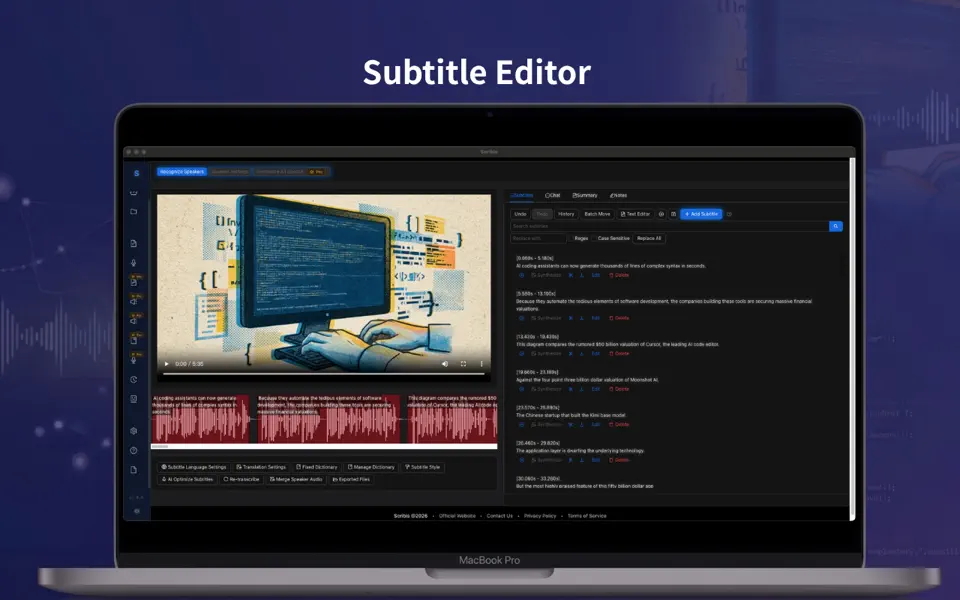
scribis.app
Scribis: Subtitle editing, audio transcription, and live transcription.
Learn More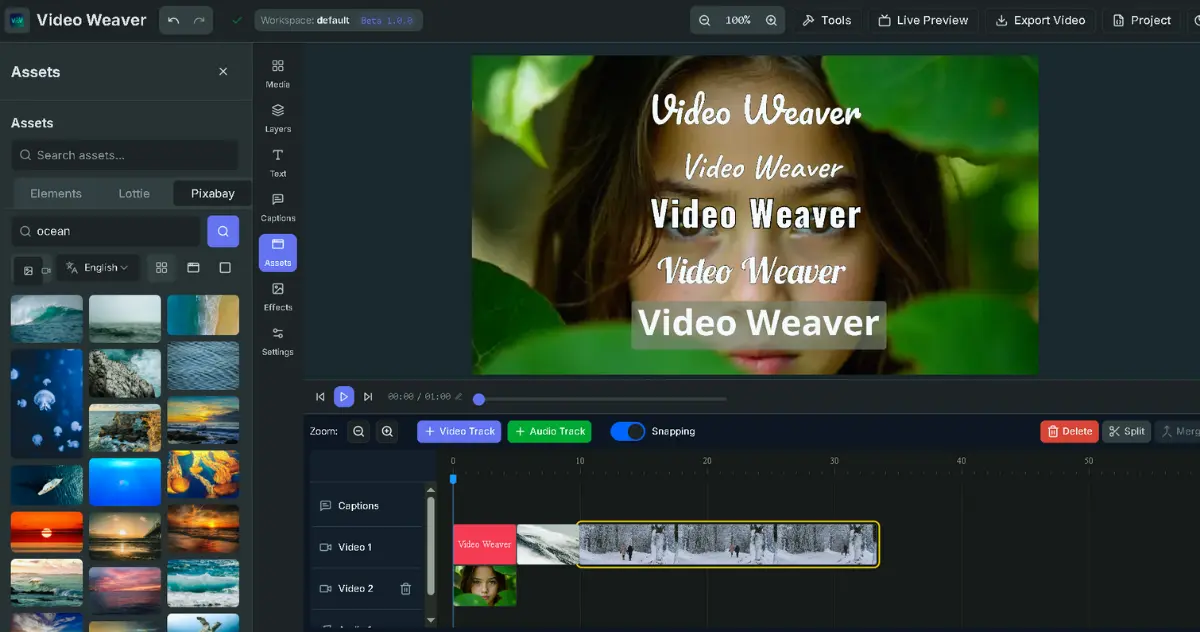
videoweaver.app
Video Weaver: Professional video editing directly in your browser. No downloads required.
Learn Morescribis.app
Scribis: Subtitle editing, audio transcription, and live transcription.
Learn Morevideoweaver.app
Video Weaver: Professional video editing directly in your browser. No downloads required.
Learn More