


AI Industry Trends: OpenAI Expands Enterprise Reach and Cyber Defenses, Claude Deepens Cloud Integration
Every day, new technological breakthroughs hit the headlines. In the current environment, AI development is no longer just a series of experimental projects in laboratories; major players are racing to implement these cutting-edge technologies into daily business operations and network security. Honestly, keeping up with this information can sometimes feel overwhelming.
Here is the situation: today’s tech circle has several heavyweight updates. OpenAI has taken the rare step of establishing a new company specifically to help enterprises deploy AI systems. Meanwhile, Google and OpenAI have respectively issued warnings and solutions regarding cybersecurity. On another front, Anthropic’s Claude has enhanced its enterprise-level service convenience via AWS and introduced a more intuitive terminal management interface for developers. Even the popular open-source project Unsloth has reached a significant milestone.
Let’s take a closer look at these key movements that are reshaping the market.
OpenAI Launches Dedicated Deployment Company: Bridging the Final Mile for Enterprise Adoption
Integrating powerful models into a company’s existing complex workflows has never been easy. Many companies hit a bottleneck in scaling up after initial testing. Did you know? The decision behind OpenAI launches the OpenAI Deployment Company to help businesses build around intelligence is aimed directly at this pain point.
This new entity, referred to as DeployCo, received an initial investment of over $4 billion. It isn’t acting alone; it is backed by 19 top global investment firms and consultancies, including TPG and Bain Capital. Most notably, OpenAI acquired the application consultancy Tomoro, bringing approximately 150 experienced “Forward Deployed Engineers” (FDEs) under its wing.
The mission of these engineers is clear. They will work directly within enterprises, alongside business leaders and frontline teams, to fundamentally redesign organizational infrastructure and workflows. Previously, companies had to figure out how to connect models with internal data and control systems on their own; now, with direct assistance from these experts, the speed and stability of system launches will improve significantly. This move signals that OpenAI has officially transitioned from a pure technology developer into the vast market of enterprise system integration.
Weaponized AI Emerges: Google Reveals New Types of Cyber Threats
AI is a double-edged sword. While enterprises celebrate productivity gains, malicious actors are not sitting idle. The report GTIG AI Threat Tracker: Adversaries Leverage AI for Vulnerability Exploitation, Augmented Operations, and Initial Access from Google’s Threat Intelligence Group (GTIG) sounds a serious alarm.
Hackers are integrating generative models into their attack processes on a large scale. The report mentions that some state-sponsored threat groups are using an open-source vulnerability database on GitHub called “wooyun-legacy” as a code-skill plugin for Claude. This allows AI models to learn from 85,000 real-world vulnerability cases, guiding the models toward deeper logical vulnerability analysis. On the other hand, cybercriminals are using AI to develop zero-day exploits; researchers discovered a weaponized Python script capable of bypassing common Two-Factor Authentication (2FA) mechanisms, with a code structure (such as textbook-perfect Python formatting and fictional CVSS scores) showing strong signs of LLM generation.
Even more concerning is the Android malware named PROMPTSPY. This software actually connects to the Gemini API, giving the model the ability to navigate mobile interfaces automatically. It reads information on the screen, simulates human clicks and swipes, and even intercepts biometric actions to seize control of the device. Additionally, a group called TeamPCP has begun supply chain attacks targeting AI software dependencies to steal high-value secrets, including AWS keys. This is undoubtedly a wake-up call for everyone to review information security with a fresh perspective.
A New Tool for Defenders: OpenAI Introduces Project Daybreak
Since attackers are using the latest technology, defenders cannot afford to fall behind. Amidst these rising threats, project Daybreak has officially debuted. OpenAI also shared the news on social media: Introducing Daybreak: frontier AI for cyber defenders, declaring that powerful model capabilities are being placed in the hands of cybersecurity defenders.
Daybreak combines the strong reasoning and code generation capabilities of GPT-5.5 and Codex, aiming to make software resilient from the design phase. The system helps security personnel find hidden vulnerabilities in massive codebases and automatically verifies the effectiveness of patch code. It acts like a tireless security expert, shortening analysis work that used to take hours into just a few minutes.
Notably, the system provides different access levels for various needs. In addition to the standard GPT-5.5, it offers “GPT-5.5 with Trusted Access for Cyber” for verified authorized security environments, specifically for defensive tasks like secure code review, vulnerability triaging, and malware analysis. Furthermore, for authorized red teaming and penetration testing, OpenAI provides the “GPT-5.5-Cyber” level with the most permissive behavior permissions, allowing testers to perform professional deep verification in controlled environments. This project has already gained support from industry giants like Cloudflare and Cisco.
Claude Platform Officially Lands on AWS, Making Enterprise Adoption More Flexible
For development teams that rely on major cloud providers, the most frustrating part of integrating external APIs is often the tedious process of permission management and billing. The announcement of Introducing the Claude Platform on AWS precisely solves this common headache.
Now, enterprises can access all native Claude API features directly through AWS. Billing is integrated into existing AWS invoices, and it fully applies to existing AWS IAM access controls and CloudTrail audit logs. This means teams don’t need to learn a new set of management tools to easily access the latest features.
This is slightly different from the service originally provided by Amazon Bedrock. Bedrock emphasizes that data processing stays entirely within the AWS boundary, which is suitable for enterprises with strict data residency requirements. Conversely, the new Claude Platform on AWS is operated directly by Anthropic, allowing users to access all beta features first, including Claude Managed Agents, MCP connectors, code execution, and web search capabilities. These two paths allow enterprises with different needs to find the most suitable integration solution.
A Win for Developers: Claude Code Introduces Agent View
Honestly, engineers who stare at terminal windows all day will understand the pain. When running several background tasks or automation agents simultaneously, the terminal screen often becomes a mess, forcing the use of tmux to split into countless small panes. The launch of Agent view in Claude Code completely changes this workflow.
By simply typing claude agents in the terminal or pressing the left arrow key, developers can enter a clean and clear overview screen. This Agent View lists all active conversation sessions. You can clearly see which tasks are running in the background, which are completed, and which are paused waiting for your decision or instructions.
By adding the /bg parameter, users can easily move time-consuming tasks (such as waiting for Pull Request reviews or updating dashboard data) to the background. When intervention is needed, you can switch back at any time to reply. This design not only reduces visual clutter but also makes managing multiple concurrent tasks as intuitive as using a web interface.
Open Source Evolution: Unsloth Officially Joins the PyTorch Ecosystem
On the path to democratizing AI, the power of the open-source community cannot be underestimated. The news Unsloth Joins PyTorch Ecosystem is exciting for many developers passionate about local model fine-tuning.
Unsloth has always been dedicated to making model training simpler and more hardware-efficient. Now, they have officially become part of the PyTorch Ecosystem Landscape. This recognition is built on their strong technical contributions. For example, the QAT (Quantization Aware Training) technology they co-released with the PyTorch team successfully allows models to recover up to 70% of lost accuracy when compressed to 4-bit, while significantly reducing VRAM consumption.
Despite this official recognition, Unsloth will continue to operate as an independent project. Their model downloads on Hugging Face have surpassed 250 million. In the future, they will continue to optimize the underlying core, allowing students and researchers with limited consumer-grade GPU resources to smoothly experience and train cutting-edge open-source models.
Frequently Asked Questions (FAQ)
1. What is OpenAI’s DeployCo mainly for? DeployCo is a new company controlled by OpenAI with investments from multiple parties. It sends Forward Deployed Engineers into enterprises to help clients identify application scenarios with the highest impact and reshape critical infrastructure and workflows, effectively turning technology into production systems with commercial value.
2. Why is the PROMPTSPY malware mentioned in the Google report particularly dangerous? PROMPTSPY represents a significant evolution in attack methods. It has a built-in autonomous agent module that uses an API to read and understand the spatial structure of Android phone interfaces, then autonomously decides and simulates clicks or swipes, and can even intercept user biometric behaviors. This ability to operate without continuous human instruction significantly increases the difficulty of defense.
3. How does OpenAI’s Project Daybreak assist in cyber defense? Daybreak integrates OpenAI’s most capable models with Codex, allowing security teams to automatically find code vulnerabilities, perform threat modeling, and verify patches. It also provides specialized access levels: “Trusted Access for Cyber” for professional defense, and the high-privilege “GPT-5.5-Cyber” for red teaming and penetration testing, allowing experts to perform deep verification in controlled environments and accelerate response times.
4. What is the difference between Claude Platform on AWS and Claude on Amazon Bedrock? Both provide access to Claude models. Claude Platform on AWS is operated by Anthropic, allowing users to use all the latest native API features and beta tools first, with billing and authentication integrated directly with AWS. Amazon Bedrock ensures all data processing remains within the AWS boundary, suitable for enterprises with strict compliance requirements for data residency.
5. What does Unsloth joining the PyTorch ecosystem signify? This represents official recognition from PyTorch for Unsloth’s technical, community, and open-source contributions. This will help Unsloth gain more resources and collaboration opportunities to further optimize QAT and VRAM-reducing technologies, while they continue to operate as an independent open-source project.
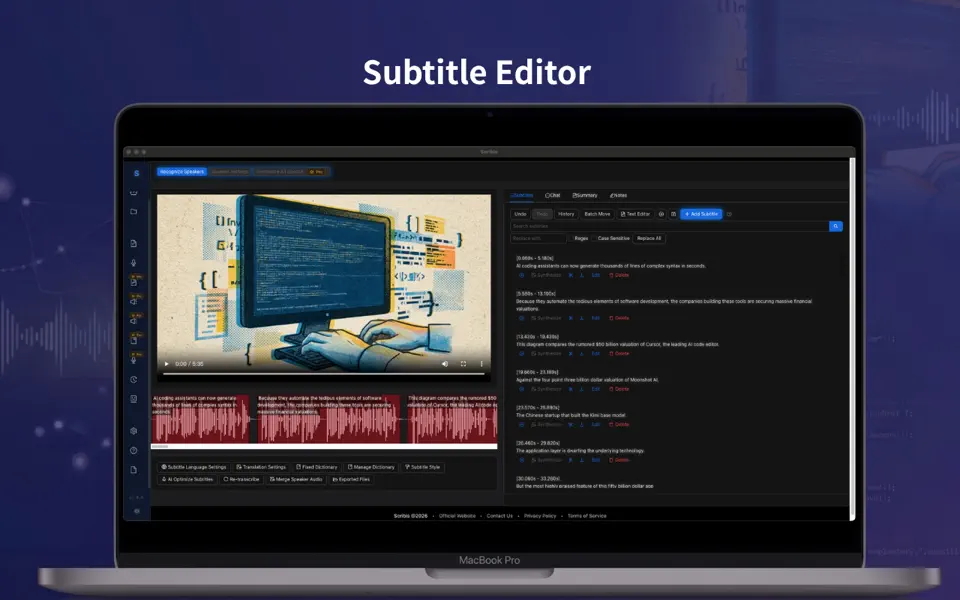
scribis.app
Scribis: Subtitle editing, audio transcription, and live transcription.
Learn More
videoweaver.app
Video Weaver: Professional video editing directly in your browser. No downloads required.
Learn Morescribis.app
Scribis: Subtitle editing, audio transcription, and live transcription.
Learn Morevideoweaver.app
Video Weaver: Professional video editing directly in your browser. No downloads required.
Learn More