


OpenAI on AWS: Analyzing Enterprise Applications of New Models and Agent Tools
Many may wonder what sparks fly when two tech giants join forces. The expansion of the OpenAI and AWS strategic partnership has opened in limited preview today. For companies relying on cloud infrastructure, this is undoubtedly attractive news. Enterprises can now access top-tier models, including GPT-5.5, directly through Amazon Bedrock.
Honestly, moving an AI project from experimental to production has always been a headache. Many development teams get stuck in infrastructure setup. Through this partnership, AWS customers can continue using the security controls, identity systems, and procurement processes they already know. This significantly lowers the barrier for enterprises to adopt advanced AI. Developers gain more flexibility, making it smoother to build new AI applications or seamlessly integrate intelligent features into existing products.
Furthermore, Codex, which boasts over four million weekly active users, has also arrived on AWS. Development teams can now enjoy OpenAI’s powerful coding assistance directly via Bedrock. This tool not only helps write code but also explains system architectures, refactors applications, and even covers daily paperwork like research analysis and presentations. By setting Bedrock as the provider, enterprises instantly gain AWS-grade security and high availability.
Enterprise executives often ask: is it safe to use these agent tools for complex business? This is where Amazon Bedrock Managed Agents come in. This new feature, powered by OpenAI, is specifically designed to handle multi-step workflows. It comes with AWS’s strict compliance controls and security standards built-in. Teams can finally focus on how to make agents handle real-world tasks without worrying about underlying deployment or security oversight.
Claude Steps into the Creator Space: Seamless Integration with Major Design Tools
Creators always want to spend time on ideas while leaving tedious operations to machines. Anthropic has heard this call and launched new plugins and connectors for Claude focused on creative work. This update aims to revolutionize existing digital creation workflows.
You might wonder, does AI really understand design? Objectively, Claude cannot replace human taste or imagination. Instead, it acts as an “on-call” digital assistant. AI primarily handles the repetitive tasks that eat up massive amounts of time. Now, through officially released connectors, Claude can work directly with industry-standard software like Adobe, Autodesk Fusion, and SketchUp.
For example, users of Affinity by Canva can have Claude automate batch image adjustments or layer renaming. Music producers can search Splice’s royalty-free sound assets directly within the Claude interface. For beginners learning complex software, Claude can become a dedicated tutor. If you’re stuck on a feature, just ask, and it will explain compositing techniques or steps in detail.
Beyond commercial applications, the open-source community and education sector also received exciting news. The Blender development team created an official MCP connector, allowing 3D artists to explore complex scene settings or write Python scripts for batch object changes using natural language. Anthropic has even joined the Blender Development Fund. They are also collaborating with top art schools like the Rhode Island School of Design. Real feedback from students and faculty will directly help the development team shape the future of creative tools.
NVIDIA Announces Nemotron 3 Nano Omni: Extremely Efficient Multimodal Model
When dealing with multimodal data, developers usually need to piece together different vision, voice, and language models. This not only increases system inference complexity but also keeps overall computing costs high. To solve this, NVIDIA announced Nemotron 3 Nano Omni, a high-efficiency open-source model built for multimodal agent reasoning.
This model uses a 30B-A3B Mixture-of-Experts (MoE) architecture. It perfectly integrates perception for images, video, audio, and text into a single processing loop. This means systems no longer rely on fragmented model chains. Nemotron 3 Nano Omni accurately captures dynamic details in visuals through 3D convolution and efficient video sampling. It also retains strong text decoding capabilities, ensuring consistency across modal information.
Many wonder if this open-source model can be easily deployed locally. The answer is yes. NVIDIA provides fully open-source weights, datasets, and training recipes. Enterprises can perform customized fine-tuning while maintaining full control over data privacy. When used with NemoClaw and a privacy router, a user’s sensitive video data never leaves the local infrastructure.
Performance is equally impressive. Under fixed interaction latency standards, Nemotron 3 Nano Omni’s system throughput for video reasoning is many times higher than other open-source models. It supports FP8 and NVFP4 quantization. Whether using Ampere or the latest Blackwell architecture GPUs, developers can enjoy low-latency, low-cost inference. From financial analysis and healthcare to ad tech, this model provides an attractive, practical option for enterprises needing to process massive amounts of audio-visual data.
Q&A
🎯 Topic 1: OpenAI on AWS Platform
Q: Which OpenAI services can enterprises now use through the AWS platform? What is the current release status? A: Enterprises can now access three core services via Amazon Bedrock: OpenAI models (including the latest GPT-5.5), the coding tool Codex with over four million weekly active users, and Amazon Bedrock Managed Agents powered by OpenAI technology. All three services are currently available in “limited preview.”
Q: Why would an enterprise choose to deploy OpenAI models on AWS instead of using OpenAI’s services directly? A: By deploying through Amazon Bedrock, enterprises can continue using their familiar security controls, identity systems, and procurement processes within their AWS environment. This lowers the barrier to entry and ensures enterprise-grade security and high availability, allowing projects to move smoothly from experimental to production environments.
🎨 Topic 2: Claude Steps into the Creator Space
Q: What major problems can Claude’s new plugins and connectors solve for designers? A: Claude’s role is not to replace human taste and imagination, but to take over time-consuming repetitive tasks. For example, via the Affinity by Canva connector, Claude can automate batch image adjustments, layer renaming, or file exports; it can also act as a dedicated tutor, explaining complex software operations and compositing techniques. Additionally, music producers can search Splice’s royalty-free sound assets directly through Claude.
Q: What is special about Claude’s integration with the well-known open-source 3D software Blender? A: The Blender development team built an official MCP (Model Context Protocol) connector for Claude. This allows 3D artists to analyze and debug entire scenes or write Python scripts for batch object modifications using natural language. Furthermore, Anthropic has officially joined the Blender Development Fund to support open-source development.
🚀 Topic 3: NVIDIA Nemotron 3 Nano Omni Model
Q: What pain point does NVIDIA’s new Nemotron 3 Nano Omni solve in terms of architecture? A: Previously, when processing multimodal data, developers had to piece together different vision, voice, and language models, which increased inference complexity and costs. Nemotron 3 Nano Omni uses a 30B-A3B Mixture-of-Experts (MoE) architecture, integrating perception for images, video, audio, and text into a single processing loop. This significantly reduces inference costs while ensuring consistency across multimodal information.
Q: For security-conscious enterprises in healthcare or finance, are there privacy risks in using this model to process confidential videos? A: No, there are no risks. This model is fully open-source (including weights and datasets), so enterprises can deploy and fine-tune it in their own local environments. When used in a sandbox environment with NVIDIA NemoClaw agents and a privacy router, sensitive video data never leaves the local infrastructure, ensuring the highest level of privacy and security.
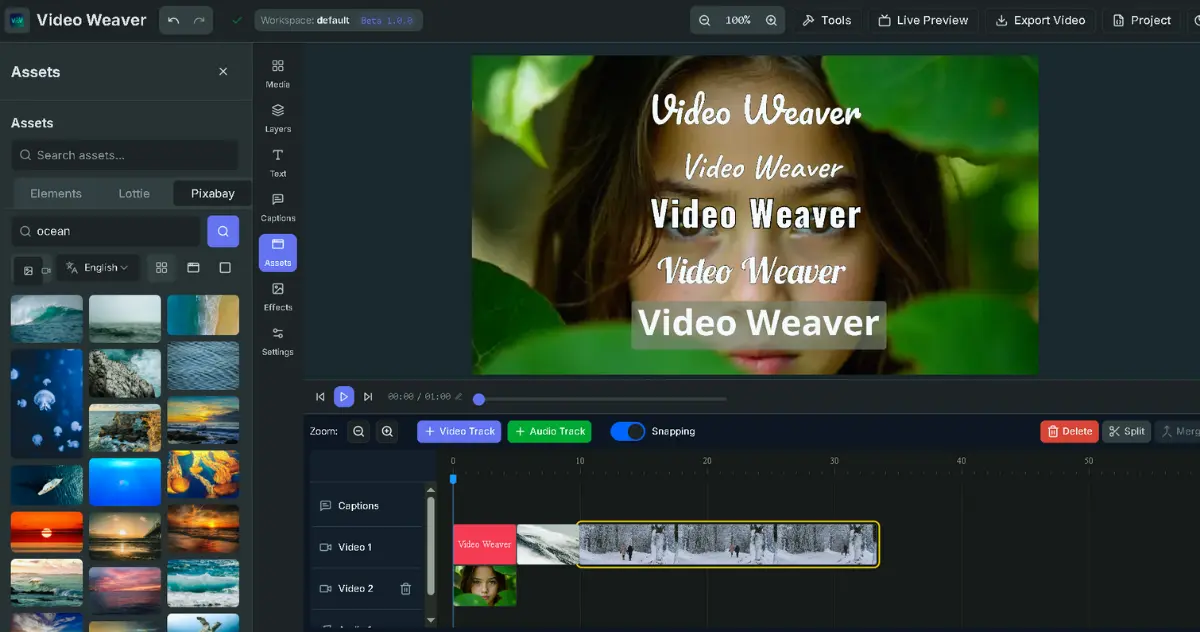
videoweaver.app
Video Weaver: Professional video editing directly in your browser. No downloads required.
Learn More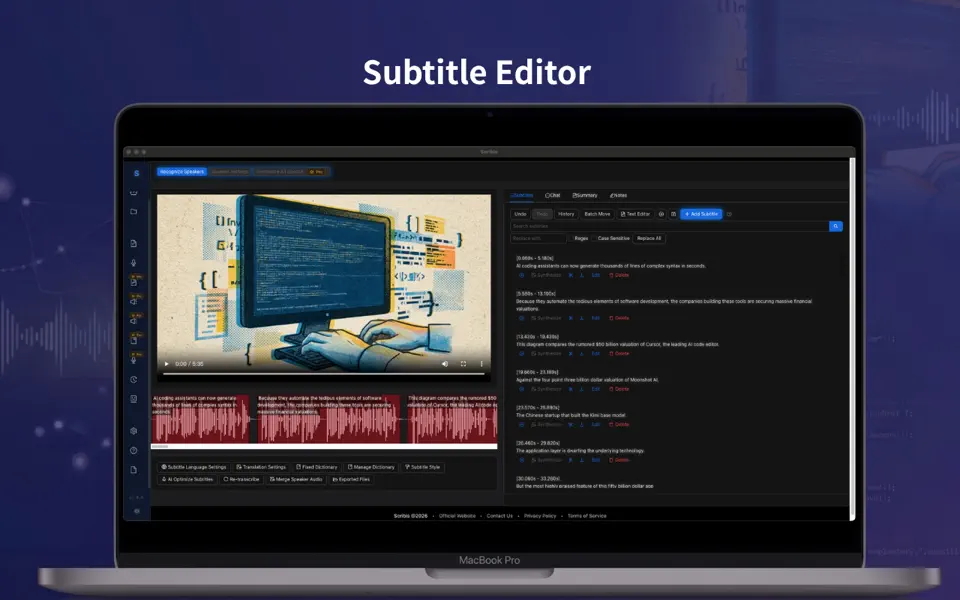
scribis.app
Scribis: Subtitle editing, audio transcription, and live transcription.
Learn Morevideoweaver.app
Video Weaver: Professional video editing directly in your browser. No downloads required.
Learn Morescribis.app
Scribis: Subtitle editing, audio transcription, and live transcription.
Learn More