

The speed of updates in the field of artificial intelligence is always dazzling, with new tools born every day attempting to change workflows. Today’s key updates are exciting, from OpenAI finally solving the “mishearing” problem of audio models, to Nvidia launching a new model combining two powerful architectures, and even Manus making developing mobile apps as simple as speaking.
These updates are not just cold parameter improvements, but practical tools that can really save you time. Let’s look directly at how these new technologies affect your work.
OpenAI Audio Models: Goodbye Hallucinations, Hearing is Believing
When using speech-to-text tools, the biggest headache is AI mishearing words, or even fabricating content out of thin air. OpenAI clearly realized this, and in the latest Realtime API update, they released a brand new audio model snapshot, with a focus entirely on “reliability”.
This update brings significant improvements. First is gpt-4o-mini-transcribe-2025-12-15, which compared to the previous whisper-1, reduces hallucinations by up to 89%. This means the model will no longer inexplicably make up sounds it didn’t hear.
Secondly, gpt-4o-mini-tts-2025-12-15 has also greatly improved in speech synthesis accuracy, with word error rates reduced by 35%.
For developers, gpt-realtime-mini-2025-12-15 is good news. It has improved instruction following ability by 22% and function calling by 13%. Simply put, current AI voice assistants understand human speech better and execute tasks more precisely. For more technical details, you can refer to the OpenAI Devs release info.
Nvidia Nemotron 3: Precision Strike with Hybrid Architecture
If OpenAI is making AI hear more accurately, Nvidia is dedicated to making AI think more efficiently. Nvidia has launched the brand new Nemotron 3 model family, this time adopting an innovative Mamba-Transformer hybrid architecture.
This technological breakthrough combines Mamba’s high efficiency in handling long text with the Transformer’s precise reasoning capabilities. It’s like having both a photographic memory and a logical reasoning brain, allowing the model to remain brisk even when processing contexts up to 1M tokens long.
This family includes three members, tailored for different needs:
- Nemotron 3 Nano: The lightweight player of the family, with 30 billion parameters (30B). It activates only 3 billion parameters during operation, designed for high-efficiency, highly targeted tasks. Notably, only the Nano version is currently available for download.
- Nemotron 3 Super: A high-accuracy reasoning model with 100 billion parameters, suitable for multi-Agent collaboration scenarios, expected to launch in the first half of 2026.
- Nemotron 3 Ultra: A heavyweight engine with 500 billion parameters, born for extremely complex AI applications, also expected to debut in the first half of next year.
This tiered strategy combined with the hybrid architecture allows enterprises to allocate computing power more flexibly. For more technical details, please see Nvidia’s official technical blog.
ResembleAI Chatterbox Turbo: Open Source Voice with Soul
For developers wanting to build their own voice AI, ResembleAI brings Chatterbox Turbo. This is a fully open-source voice cloning model, characterized not just by speed, but by being “human-like”.
This model has 350 million parameters and runs 6 times faster than real-time on GPUs, with a latency of only 75 milliseconds. You only need a short 5-second audio sample to complete high-quality voice cloning.
But the most interesting part is its “Paralinguistic Prompting” feature. You no longer have to endure flat robotic voices; just add tags like [laugh] or [sigh] in the text, and the model can naturally perform these emotional reactions without any post-editing.
In terms of security, ResembleAI has also done well. Each output has a built-in PerTh invisible watermark to ensure generated content is traceable. This model uses the MIT license, and you can download it directly from the ResembleAI HuggingFace page, or check the GitHub project.
Google Gemini Visual Reports: Let Data Tell Its Own Story
Reading long text reports is often exhausting. Google has enhanced the capabilities of Gemini Deep Research, allowing it not only to write but also to “draw”.
Now, Gemini Deep Research can generate visual reports containing custom images, charts, and even interactive simulations. Imagine when planning a marketing budget, AI doesn’t just give you text suggestions, but directly draws a dynamic simulation model, letting you see predicted results under different variables.
This ability to combine analysis with charts can instantly transform dry data into intuitive insights. Currently, this feature is open to Google AI Ultra subscribers. To experience this kind of report that “comes alive”, please refer to Google’s product update announcement.
Manus 1.6: Max Performance and a New Chapter in Mobile Development
Manus’s version number has jumped directly to 1.6 this time, bringing many substantial breakthroughs. They are trying to solve the old problem of AI needing human supervision with the new Manus 1.6 Max.
Max Agent: Stronger Autonomy
The new flagship Agent — Manus 1.6 Max, introduces a more advanced planning architecture. In double-blind tests, user satisfaction increased by 19.2%. It can handle complex workflows from financial modeling to automatic report generation, significantly reducing manual intervention. Currently, the official Max Agent offers a limited-time 50% discount on credit costs, so friends who want to experience flagship performance might want to buy in now.
Mobile Development: Speak Your App
This is the most exciting feature this time. You can now use Manus to build Mobile Apps. Just describe the App features you want, and Manus will handle the end-to-end development process. Combined with its optimized Web development capabilities, whether it’s a webpage or a mobile App, it can handle it.
Design View: Precise Control
Mans 1.6 also introduces a brand new Design View. This is an interactive canvas that allows users to go beyond the limitations of text prompts. You can precisely click on parts of an image to modify them, or even directly edit text within the image, which is very practical for teams needing to quickly produce prototypes. More details can be found on the Manus 1.6 Max release page.
Google Open Source Models Ready to Launch
Finally, a supplementary piece of news: Google seems to be preparing to release new open-source models on HuggingFace. Although details haven’t been made public, the community has already started paying attention. It is recommended to keep an eye on Google’s HuggingFace page, as there may be surprises at any time. Relevant news sources can be found in this Twitter post.
Frequently Asked Questions (FAQ)
Q: Are all three models of Nvidia Nemotron 3 available for download now? A: No. Currently, only the lightweight Nemotron 3 Nano version is open for download. The more powerful Nemotron 3 Super and Nemotron 3 Ultra are expected to be officially launched in the first half of 2026.
Q: Is ResembleAI’s Chatterbox Turbo free? A: Yes, Chatterbox Turbo is an open-source model using the MIT license, which means you can download it for free and run it on your own device. In addition, although it is open source, it has built-in PerTh invisible watermark technology to ensure that the generated voice content is traceable, balancing flexibility and security.
Q: What main problem does OpenAI’s new audio model solve? A: This update mainly significantly reduces “Hallucinations”, meaning the instances of the model fabricating content have decreased by 89%. It also improves the accuracy of speech-to-text and makes the voice assistant’s instruction following ability stronger, reducing errors for developers during integration.
Q: What is special about Manus 1.6’s “Design View”? A: It no longer just lets you use text to “draw cards” (generate images). Design View provides an interactive canvas where you can modify parts of an image, or even directly edit text on the image, making AI-generated images more controllable for actual production environments.
DMflow.chat
Discover DMflow.chat and unlock the new era of AI-powered customer service.
Learn More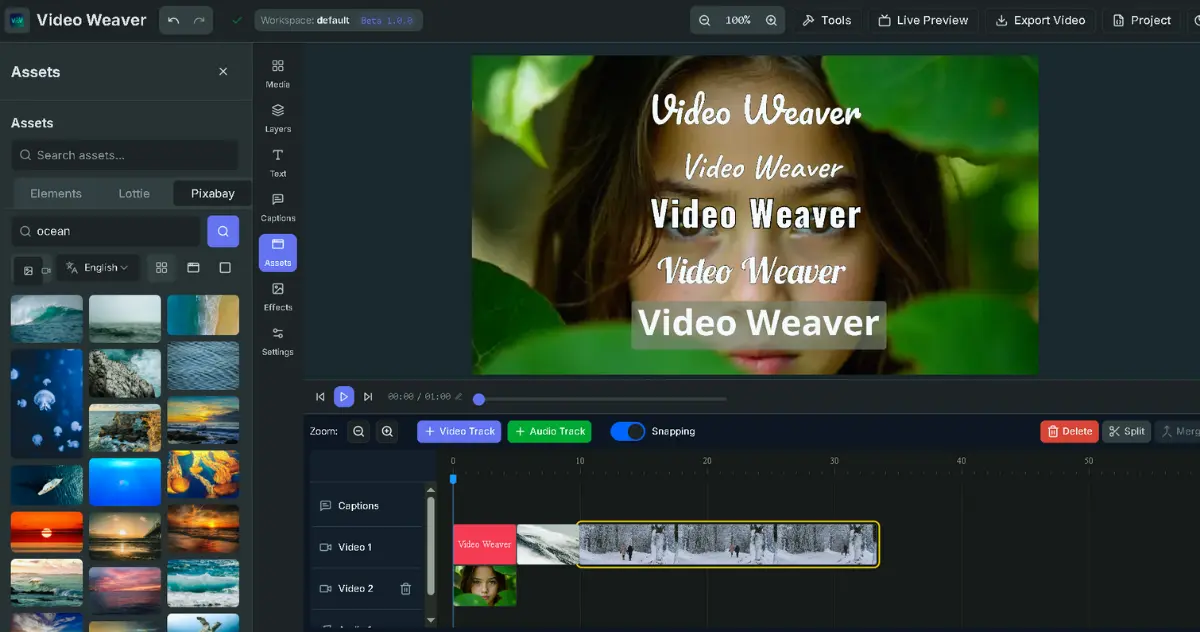
videoweaver.app
Video Weaver: Professional video editing directly in your browser. No downloads required.
Learn More
DMflow.chat
DMflow.chat: Your intelligent AI partner for exceptional customer engagement.
Learn MoreDMflow.chat
Discover DMflow.chat and unlock the new era of AI-powered customer service.
Learn Morevideoweaver.app
Video Weaver: Professional video editing directly in your browser. No downloads required.
Learn MoreDMflow.chat
DMflow.chat: Your intelligent AI partner for exceptional customer engagement.
Learn More