

Exploring the Latest AI Trends: NVIDIA Opensource Giant Model and the Community Buzz over Google Subscriptions
The pace of development in the tech world is always breathtaking. Every day, new tools emerge, attempting to change the way humans interact with the digital world. Honestly, staying sharp in this wave isn’t easy. Today, we’ve summarized several major recent announcements for you, ranging from innovations in underlying architecture to the evolution of daily office software, covering a variety of amazing technical details.
An Open-Source Masterpiece Breaking Performance Bottlenecks
The high cost of training language models is a well-known pain point in the industry. To address this challenge, NVIDIA has released the Nemotron 3 Super Hybrid Architecture Large Model. NVIDIA’s move this time is indeed quite bold. This model, with 120 billion parameters, specifically adopts a Mixture-of-Experts (MoE) architecture. This means that during inference, it only activates a small portion of its parameters. This design significantly improves operational efficiency, reportedly increasing throughput by five times.
When you think about it, systems often encounter context overload bottlenecks when handling multi-step autonomous agent tasks. Large amounts of historical data are constantly transferred back and forth, making computations exceptionally slow. Nemotron 3 Super features a massive 1-million-token context window, which perfectly maintains the complete workflow state. This not only reduces costs but also prevents the system from losing its way in complex tasks.
Community Waves Triggered by Platform Updates
However, new policies don’t always receive unanimous applause. The recent overhaul of Google Antigravity’s service architecture and subscription plans has sparked heated discussions in the community. The platform’s original intent was excellent—using a credit system to integrate top models on the market, allowing developers to switch between them freely within a single interface.
Users can choose between Pro or Ultra plans according to their needs. If credits run out, they can theoretically be purchased additionally. However, the problem lies in the specific restrictive terms. Many users have taken to social media to complain, pointing out that the new model quotas are unreasonably strict. Some even grumbled that after just an hour of project testing, their accounts were restricted for an entire week. The excessively long refresh cycles have left many power users feeling frustrated, highlighting that there is still much room for adjustment between resource allocation and user experience.
A Mysterious Star Showing Incredible Potential
Sometimes, the most impactful surprises arrive quietly. While the market was debating subscription quotas, two mysterious new models appeared on the OpenRouter platform. Named Hunter Alpha and Healer Alpha, the backgrounds of their development teams remain unknown, but the specifications they’ve demonstrated have already garnered widespread attention.
Hunter Alpha is a trillion-parameter giant, also featuring a 1-million-token context capability. It is specifically built for agent workflows, excelling at tasks requiring long-term planning and complex reasoning. Healer Alpha, on the other hand, demonstrates powerful multimodal potential. It combines vision, hearing, reasoning, and action capabilities, as if it possesses real-world sensory organs. This means it can directly receive audio and video and execute multi-step actions precisely based on that input. This level of stability and precision is definitely an important indicator for future development.
Seamless Upgrades to Office Productivity
Technological progress ultimately must return to practical applications. For countless office workers battling spreadsheets and presentations every day, Claude’s updates for Excel and PowerPoint are undoubtedly excellent news.
In the past, handling such clerical work inevitably involved frequent switching between different windows, a process of copying and pasting that was both tedious and inefficient. Now, Claude brings cross-file context sharing. This means that AI can extend the same conversational context across different software. For example, the system can directly read financial data in Excel, understand the logic, help organize it into clear charts, and then seamlessly write these key points into a PowerPoint presentation. It’s like having an extremely intelligent assistant by your side, simplifying complex processes.
Web Scraping Made Exceptionally Simple
Data collection has always been a major challenge for many technical teams. To build excellent retrieval systems or train models, a large amount of clean data must be scraped from the web. Cloudflare seems to have heard the voices of developers, launching the highly practical Browser Rendering Crawler Service.
With a simple API request, this tool can automatically explore and scrape the content of an entire website. It uses a headless browser in the background to handle complex dynamic web rendering and then converts the results into clean Markdown or structured JSON format. This saves developers from the trouble of dealing with anti-scraping mechanisms or parsing complex web structures, significantly improving the efficiency of building databases.
Redefining the Future of the Personal Computer
After looking at current tool updates, let’s look toward the future. The operational logic of computer operating systems has remained the same for a long time—the basic architecture is humans inputting commands and the machine executing them passively. However, Perplexity is incubating a new concept called Personal Computer.
This is not just a software application; it’s more like an operating system with thinking capabilities. It aims to create a digital twin that runs forever in the background, capable of accessing local files and applications. Of course, given this level of permission, privacy and security are paramount. The system design mandates that any sensitive operations must receive explicit user approval, and all behavioral tracks will be detailedly recorded. The development team has even set up an emergency kill switch to ensure humans have absolute control. Perhaps soon, a computer will no longer be just a calculating machine but a capable partner thinking along with the user.
Frequently Asked Questions (FAQ)
What are the advantages of Nemotron 3 Super’s Mixture-of-Experts architecture? This architecture allows the model to activate only a portion of its parameters during inference, significantly reducing memory consumption and increasing throughput by five times, making it ideal for heavy and time-consuming autonomous agent tasks.
Why is the community unhappy with Google Antigravity’s new subscription plans? While the new plan integrates multiple top models and introduces a credit system, some users found the model quotas to be extremely strict. For example, just an hour of testing could trigger a week-long restriction, causing inconvenience for developers requiring high-intensity operations.
What specific help do Claude’s cross-application updates bring? This update breaks down the barriers between software. Users can have the system read vast amounts of data in Excel and generate analytical presentations directly in PowerPoint based on that data, eliminating the tedious process of copying, pasting, and re-explaining.
DMflow.chat
DMflow.chat: Your intelligent AI partner for exceptional customer engagement.
Learn More
DMflow.chat
Discover DMflow.chat and unlock the new era of AI-powered customer service.
Learn More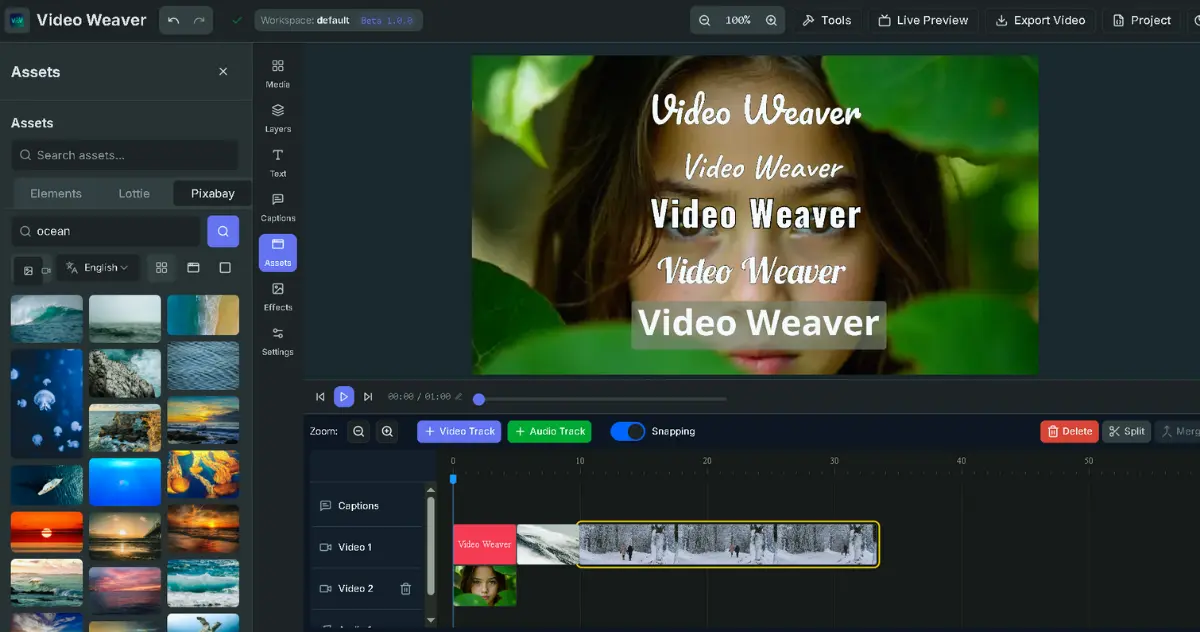
videoweaver.app
Video Weaver: Professional video editing directly in your browser. No downloads required.
Learn MoreDMflow.chat
DMflow.chat: Your intelligent AI partner for exceptional customer engagement.
Learn MoreDMflow.chat
Discover DMflow.chat and unlock the new era of AI-powered customer service.
Learn Morevideoweaver.app
Video Weaver: Professional video editing directly in your browser. No downloads required.
Learn More