

Latest AI Industry Trends: Meta SAM 3.1 Image Processing Upgrade and Google Academic Controversy
New technical breakthroughs happen every day, occasionally accompanied by unexpected sparks. Today, we bring several noteworthy highlights. Meta has just launched a brand-new image processing model with impressive performance. Additionally, there has been some friction in the academic world, as a Google paper has sparked intense discussion. Let’s take a closer look.
Meta SAM 3.1 Debuts, Enhancing Image Segmentation Efficiency
Meta’s newly released SAM 3.1 model is truly eye-opening. Did you know? In the past, to track multiple objects in a video, the system had to perform calculations for each object individually. It’s like a restaurant waiter who can only take orders for one table at a time; naturally, efficiency couldn’t be high.
Now, the situation is quite different. SAM 3.1 introduces Object Multiplexing technology. This change allows the model to track up to 16 objects simultaneously in a single forward pass. This means that video processing speeds for a moderate number of objects have doubled, and it achieves approximately a 7x inference speedup when tracking up to 128 objects on a single H100 GPU, without any sacrifice in accuracy. This global reasoning design completely eliminates redundant calculations and memory bottlenecks.
This isn’t just about a boost in speed. Because overall computational resource requirements are lower, many high-performance image processing applications can now run smoothly on more affordable, smaller hardware. For developers who want to test it themselves, the model weights can be obtained directly from the SAM 3.1 page on Hugging Face. Combined with text or visual prompts, this system can precisely handle various challenging image segmentation tasks.
Academic Shockwave: RaBitQ Team Accuses Google Paper of Unfairness
The tech world isn’t always smooth sailing. Recently, the RaBitQ team published a long article on Zhihu, raising serious questions about the TurboQuant paper published by Google Research at ICLR 2026. There’s a key issue worth reflecting on here: the fairness and transparency of academic research.
The RaBitQ team explicitly pointed out that the TurboQuant paper used a Random Rotation quantization method that significantly overlaps with theirs, yet failed to provide objective comparison or attribution in the main text. Even more surprising was the difference in experimental settings. According to public correspondence, the TurboQuant team deliberately disabled multi-threading and used only a single-core CPU when testing RaBitQ’s performance, subsequently comparing it with their own results achieved using an NVIDIA A100 GPU.
Comparing hardware resources in such a grossly unequal way naturally results in speed differences of several orders of magnitude. Furthermore, TurboQuant was accused of dismissing RaBitQ’s theoretical guarantees as sub-optimal results without providing any derivation evidence. This controversy has been officially submitted to the conference organizers, and future developments are certainly worth the academic community’s continued attention.
OpenAI Codex Launches New Use Case Library
On a different note, let’s look at some practical news for development tools. Romain Huet from the OpenAI team recently announced the official launch of the brand-new Codex Use Case Library. To be honest, faced with powerful AI coding tools, beginners sometimes feel lost and don’t know which command to start with.
This new online showcase organizes various practical examples for both coding and non-coding tasks. One of the most convenient features is that if users already have the application installed on their computers, they can directly click a button to open these preset Starter Prompts in Codex with one click. This significantly lowers the barrier to entry, making daily development and workflows more intuitive and smooth.
NotebookLM Upgrades Background Generation and Push Notifications
Finally, we have a practical feature that boosts productivity. NotebookLM has released its latest update, making multitasking incredibly easy.
In the past, when generating project notebooks or studio content, users often had to stay on the screen and wait for the progress bar to finish. Now, users can start a generation task on the web or mobile app and then directly leave that page to handle other important matters. The system will quietly complete the heavy lifting in the background. Once everything is ready, the user will immediately receive a push notification on their phone. This thoughtful design detail truly saves everyone valuable time.
Frequently Asked Questions (FAQ)
Q: What is the biggest breakthrough in SAM 3.1 compared to previous versions?
A: The biggest breakthrough is the introduction of Object Multiplexing capabilities. SAM 3.1 can track up to 16 independent objects simultaneously in a single operation, doubling overall video processing speed compared to older versions while significantly reducing dependence on top-tier GPU hardware.
Q: Why did Google’s TurboQuant paper spark academic controversy?
A: The main points of controversy involve three serious aspects. First is the failure to adequately acknowledge similarities with prior research methods. Second is the extremely unfair experimental baseline, such as using single-core CPU settings to compare against high-end A100 GPU results. Finally, it involves groundless criticism of theoretical results that others have already rigorously proven.
Q: What daily pain point does the new version of NotebookLM solve?
A: It solves the problem of wasting time while waiting for lengthy content generation. The system now fully supports background processing and automatically alerts the user via mobile push notifications upon completion, allowing users to close the window and focus on more important tasks with peace of mind.

DMflow.chat
DMflow.chat: Your intelligent AI partner for exceptional customer engagement.
Learn More
DMflow.chat
Discover DMflow.chat and unlock the new era of AI-powered customer service.
Learn More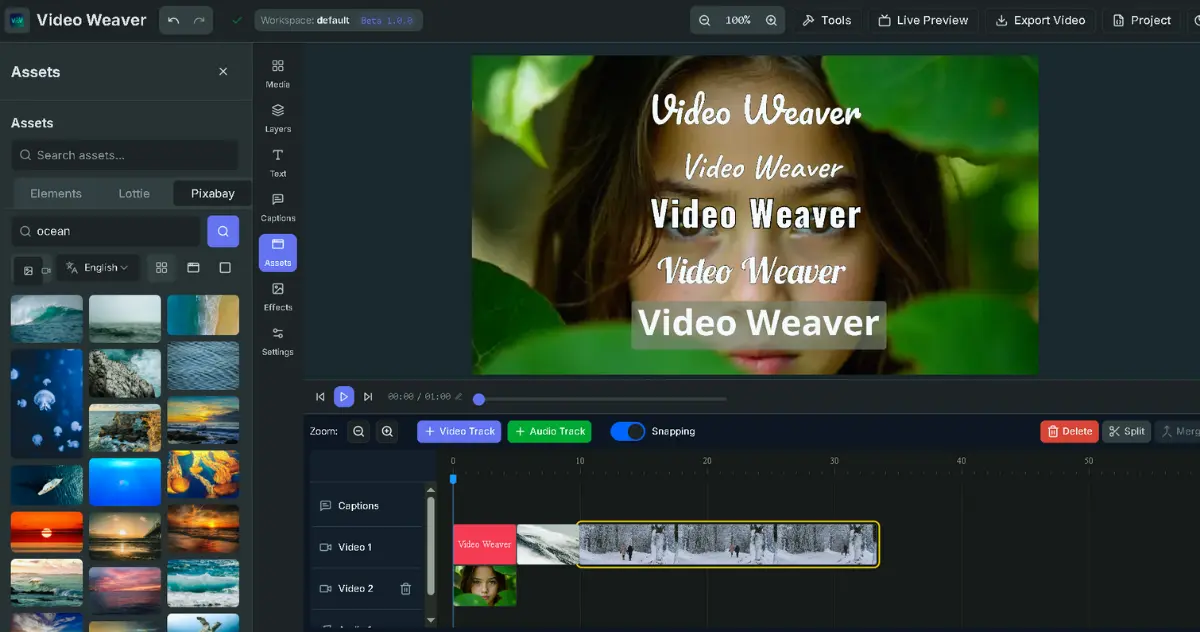
videoweaver.app
Video Weaver: Professional video editing directly in your browser. No downloads required.
Learn MoreDMflow.chat
DMflow.chat: Your intelligent AI partner for exceptional customer engagement.
Learn MoreDMflow.chat
Discover DMflow.chat and unlock the new era of AI-powered customer service.
Learn Morevideoweaver.app
Video Weaver: Professional video editing directly in your browser. No downloads required.
Learn More