


AI Daily | 2026-09-18
💡 This report is generated automatically and updates every morning at 9am (Taipei time).
Model Releases & Updates
Gemini 3.8 Live & Extended Thinking — Google DeepMind
- TL;DR: Google DeepMind released Gemini 3.8 Live and Extended Thinking, introducing real-time speech-to-speech reasoning with synchronous progress reporting and asynchronous background tool execution.
- Key Highlights:
- The Extended Thinking version achieves 82.6 on Speech-to-Speech benchmarks, pairing multi-step logical planning with natural conversational fillers (“let me check…”) while executing background tasks.
- Supports multimodal real-time interactions (simultaneous vision and voice) across 97 languages while significantly lowering inference token consumption and latency.
- Specs: Multimodal Real-Time Speech Architecture / Asynchronous Tool-Calling / 97 Language Support
- Links: Google DeepMind Blog |
边想边说的实时语音大模型:
— 小互 (@xiaohu) September 16, 2026
Google 发布 Gemini 3.8 Live 与 Extended Thinking
把实时语音推向多步骤推理
基础版本 Gemini 3.8 Live 专注于大规模部署的高性价比。面向高并发、低延迟的日常助理与检索服务。支持在97种语言对话中自动识别并平滑过渡...… pic.twitter.com/wnuOPYDeqB
Koa Enterprise Agent Model — Salesforce AI Research
- TL;DR: Salesforce unveiled Koa, a custom enterprise agent model trained by expanding declarative Agent Script specifications into multi-turn reinforcement learning environments using Group Relative Policy Optimization (GRPO).
- Key Highlights:
- Built upon the open-weight Nemotron-3-Super-120B base architecture, Koa is trained directly on structured workflow configurations and simulated user personas.
- Scores 69.41 on Tau2Bench (outperforming base models and GPT-4.1) and achieves 0.86 on CRM Bench with noticeably enhanced function-calling precision.
- Specs: Open Weights / Nemotron-3-Super-120B Base / GRPO Post-Training / Declarative Workflow Optimization
- Links: ArXiv Paper |
Banger report from Salesforce.
— elvis (@omarsar0) September 16, 2026
Pretty interesting to see more of these custom enterprise models.
Salesforce trained the enterprise agent model from the same files it uses to configure agents.
Koa starts from the open-weight Nemotron-3-Super-120B.
Salesforce takes Agent Script… pic.twitter.com/dlhKsFR4k7
StepAudio 3 Realtime — Stepfun
- TL;DR: Stepfun open-sourced the StepAudio 3 family, a suite of five on-device speech recognition and synthesis models optimized for edge hardware and low-latency local deployment.
- Key Highlights:
- Delivers flexible model sizing ranging from 0.1B to 3B parameters for ASR and up to 0.6B for TTS.
- Enables fully offline, low-memory voice interactions on smartphones and local PCs.
- Specs: Open Weights / On-Device Speech Models (0.1B–3B) / Local Inference Ready
- Links: Stepfun Blog |
StepAudio 3 Realtime Technical Report
— AK (@_akhaliq) September 16, 2026
paper: https://t.co/4OM7SP4NSQ pic.twitter.com/f6ytQm8nx7
Product Releases & Updates
Claude for Financial Advisors & Salesforce Integration — Anthropic
- What’s New: Anthropic significantly expanded Claude’s enterprise utility by releasing dedicated workflow connectors for financial institutions (Charles Schwab, BlackRock, Addepar, Envestnet) alongside an embedded Salesforce integration featuring 37 pre-built sales skills. Advisors and sales teams can now execute client meeting prep, pipeline reviews, and compliance documentation directly within conversational threads under human oversight.
- Who It’s For: Financial advisors, registered investment advisors (RIAs), and enterprise sales operators.
- Try It: Anthropic Blog |
— AI Will (@FinanceYF5) September 16, 2026
Grok Build Persistent Memory & Guides — xAI
- What’s New: xAI published comprehensive engineering guides and workflows for Grok Build, formalizing its persistent background workspace memory that logs architectural project decisions, conventions, and facts across sessions using
/memoryand/dream. - Who It’s For: Software engineers and multi-agent pipeline developers.
- Try It: xAI Guides |
xAI 把 Grok Bot 的实际工作流公开了。
— AI Will (@FinanceYF5) September 16, 2026
工程、客服、GTM、产品、设计和移动应用开发,都有对应指南和模板。
Grok Bot 正从编程 Agent,变成一支可复制的 AI 团队。 pic.twitter.com/1xJDZexwyr
Page Shield Client-Side Security ML — Cloudflare
- What’s New: Cloudflare deployed its automated Page Shield machine learning model into live traffic, successfully detecting advanced client-side JavaScript skimming campaigns that went entirely undetected by VirusTotal and standard security scanners.
- Who It’s For: Web storefront owners, e-commerce security teams, and enterprise IT operators.
- Try It: Cloudflare Blog
Industry News
Databricks Deploys OpenAI Astra to All 3,500 Engineers
- What Happened: Databricks officially announced the company-wide deployment of OpenAI’s Astra model to its ~3,500 engineers, following a successful 200-person pilot where Astra demonstrated clear superiority over previous frontier models in high-level system design and complex code refactoring.
- Why It Matters: Reflects rapid enterprise adoption of advanced agentic models for core infrastructure engineering despite higher token consumption and cost overheads.
- Source:
wall-to-wall deployment of astra for engineers at databricks: https://t.co/yJmKV581Rd
— Greg Brockman (@gdb) September 16, 2026
Mozilla Releases 91-Page Open-Weights Ecosystem Report
- What Happened: Mozilla published a comprehensive 91-page report analyzing the open-weights AI landscape, revealing that open models lag frontier proprietary systems by only ~4 months. While open models command nearly 20% of OpenRouter traffic volume (led heavily by Chinese open-source releases), they capture just 4% of total model-layer revenue due to pricing and capability gaps.
- Why It Matters: Highlights the widening wedge between open-source adoption breadth and direct monetization in the foundational model market.
- Source:
Mozilla just published a 91-page report and it says open-weight AI is now only about 4 months behind the frontier.
— Rohan Paul (@rohanpaul_ai) September 16, 2026
- 8 of OpenRouter's 10 most-used models by August token volume were open-weight, and 7 were Chinese-built, while DeepSeek became the first open model to lead the… pic.twitter.com/xfyYWpYEH0
Apple Developing Enterprise AI Servers Powered by M8 Ultra
- What Happened: Reports surfaced that Apple is actively designing enterprise-grade AI servers packed with future M8 Ultra chips, targeting a potential 2029 release. If realized, this would mark Apple’s first major return to the server hardware market since the discontinuation of the Xserve in 2011.
- Why It Matters: Signals Apple’s long-term vertical integration strategy extending from consumer edge devices directly into private-cloud enterprise AI compute infrastructure.
- Source: Ars Technica Coverage
Research Papers
Continual Learning Mechanisms Compose for Long-Horizon Memorization — AI Research Community
- Motivation: Addressing the degradation of long-horizon memory and catastrophic forgetting in multi-agent workflows and extended LLM task execution.
- Key Innovation: Proposed compositional continual learning mechanisms that dynamically bind modular memory modules without destabilizing core parametric weights during extended agent runs.
- Results: Demonstrated sustained zero-forgetting performance across multi-day conversational tasks and large code-base refactoring pipelines.
- Paper: Hugging Face Papers |
Continual Learning Mechanisms Compose for Long-Horizon Memorization
— AK (@_akhaliq) September 16, 2026
paper: https://t.co/uxop9VYkNs pic.twitter.com/I7aVbCPIvA
Other Highlights
AgentGit: Version Control for Multi-Agent Sessions
- Overview: Einsia introduced AgentGit, an open-source platform designed to save, resume, fork, and hand off active AI agent sessions. As multi-hour agent workflows become standard in engineering teams, AgentGit enables seamless context collaboration and session reproducibility across developers.
- Link:
This will matter a lot as agent work gets more complex.
— elvis (@omarsar0) September 16, 2026
We version-control the code agents produce.
But the next step is reserving the session behind that code.
AgentGit lets you save, resume, share, and hand off agent sessions for seamless context collaboration. https://t.co/BnzDnnaEc4
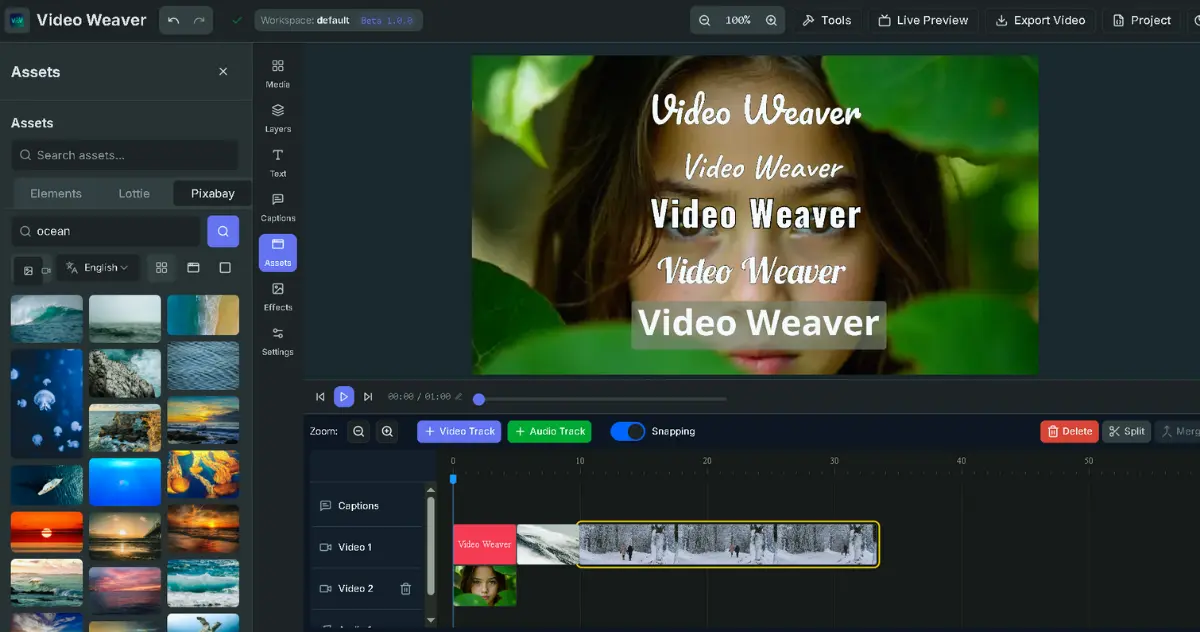
videoweaver.app
Video Weaver: Professional video editing directly in your browser. No downloads required.
Learn More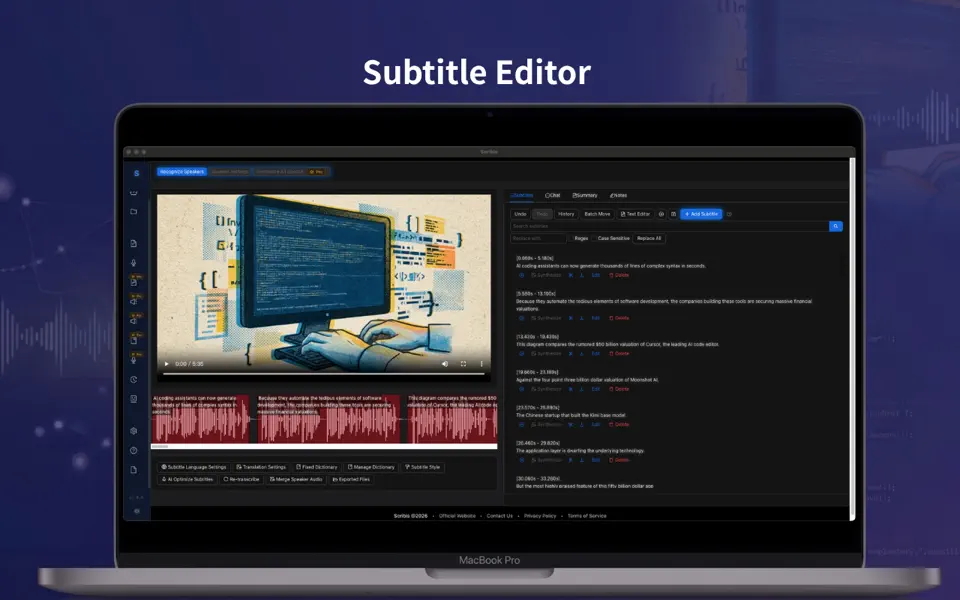
scribis.app
Scribis: Subtitle editing, audio transcription, and live transcription.
Learn Morevideoweaver.app
Video Weaver: Professional video editing directly in your browser. No downloads required.
Learn Morescribis.app
Scribis: Subtitle editing, audio transcription, and live transcription.
Learn More