


GPT-5.5 Becomes More Personalized, Gemma 4 Accelerates, and Voice Tech Evolves
New things happen every day. Today, the tech world dropped several bombshells. From smarter language models to incredibly fast voice generation technology, every corner seems full of surprises. How will these new tools affect the daily operations of the general public? This report summarizes the most noteworthy highlights of today.
GPT-5.5 Instant: The Strict and Attentive Proofreader is Here
Did you know? OpenAI just released its new default model, GPT-5.5 Instant. Compared to its predecessor, this version provides more concise and powerful answers. In the past, many users complained about the model occasionally “talking nonsense” with a straight face. The engineering team has clearly listened. In high-risk areas like medicine, law, and finance, hallucination issues have decreased by as much as 52.5%. It’s like hiring a strict proofreader for the system. It has become more attentive.
Now, it naturally remembers past conversations and documents. Of course, users can delete these memories at any time. For those who rely on machines to handle complex tasks, this tailored feeling makes a significant difference. Honestly, being able to save time by not repeating background information significantly boosts work efficiency. For application scenarios with extremely high accuracy requirements, GPT-5.5’s performance is indeed reassuring.
Gemma 4 and Gemini: Faster Generation and a Visual-Capable Document Assistant
Google also introduced exciting updates. Developers will surely be impressed by Gemma 4’s new Multi-Token Prediction (MTP) technology. Traditional large language models output one word at a time, a process somewhat like squeezing toothpaste. Now, with this new technology, the model can “guess” several subsequent words at once. This makes generation speeds three times faster while maintaining extremely high accuracy. Waiting times have been significantly reduced.
Additionally, the Gemini API’s file search tool has now learned to “see” images. Users can mix images and text to feed the model and use custom metadata to filter out irrelevant information. The tool even indicates exactly which page an answer comes from. This is incredibly practical for applications that require repeated fact-checking. It’s like a librarian with a photographic memory, helping to organize massive amounts of unstructured data.
Sounds Like a Real Person: The Tiny Details Behind Voice Tech
Next, let’s look at voice technology. Robotic voices often felt stiff in the past, but as generative AI evolves, latency and naturalness in voice interaction have become the core of competition among major players. To make AI responses feel more like a real person, it’s not just about improving sound quality; the underlying infrastructure is key.
Maintaining such smooth, lag-free voice dialogue involves immense engineering challenges. Take a look at how OpenAI built its low-latency voice infrastructure. They redesigned the WebRTC system, separating repeaters from transceivers. This cleverly solved the problem of insufficient server ports. By using globally distributed relays, they successfully stabilized audio transmission. This design preserves standard connection behavior while significantly reducing latency, making voice interaction feel as natural as daily chatting.
What’s New in Business: A Self-Service Ads Platform with Pay-Per-Click
Finally, let’s turn to digital marketing news. ChatGPT’s advertising system has introduced a new purchasing mechanism. In addition to the original impression-based billing, advertisers can now use a Cost-Per-Click (CPC) bidding model. This means businesses only pay when a user actually clicks on an ad. This change makes marketing budget spending much more precise.
OpenAI also launched a new self-service platform, allowing companies to easily manage budgets and track performance. Some might worry about their conversation history being exposed. OpenAI guarantees that all click data will be anonymized, and users’ personal conversations will remain strictly confidential. Advertisers will only receive aggregated performance reports, helping brands precisely reach their target audience while protecting privacy.
Q&A
Q1: GPT-5.5 Instant remembers my conversations. Will my privacy and trade secrets be exposed? A: No need to worry; users have full control. While GPT-5.5 Instant provides more personalized answers by remembering past conversations and documents, it also introduces a Memory sources panel. You can clearly see which past records the system is using to customize answers and can delete or correct outdated memories at any time. If you don’t want a specific conversation to be remembered, you can use the temporary chats feature.
Q2: Why can Gemma 4 increase generation speed by 3 times without “sacrificing quality”? A: This is because Google introduced “Multi-Token Prediction (MTP).” Traditional large language models are like squeezing toothpaste, outputting only one word at a time. MTP uses speculative decoding technology, where a lightweight “drafter” model predicts multiple subsequent words at once, which are then verified in parallel by the large main model (such as Gemma 4 31B). Since the final verification authority remains with the main model, waiting times are significantly reduced with zero quality degradation in logical reasoning and accuracy.
Q3: Gemini API’s file search has now “learned to see images.” How can this be applied in practice? A: This is extremely helpful for businesses handling unstructured data. For example, creative agencies that previously relied on keywords or filenames to find images can now have their applications search an entire gallery for images matching a specific “emotional tone” or “visual style.” Furthermore, the system now provides page-level citations, explicitly telling you which page of a PDF an answer came from—a boon for legal or research applications that require strict fact-checking.
Q4: How exactly does current voice technology achieve “sounding like a real person”? A: The key lies in “contextual awareness” and “ultra-low latency.” To make the conversation feel natural, the system must be able to capture the user’s speech rate and emotion. This requires not only a powerful voice generation model but also a robust infrastructure like OpenAI’s redesigned WebRTC architecture. By solving transmission latency with globally distributed relays, audio transmission becomes extremely stable and fast, allowing AI responses to sync almost perfectly with the user, resulting in a natural and smooth interaction experience similar to daily chat.
Q5: What are the benefits for brand advertisers now that the ChatGPT ad system uses CPC (Cost-Per-Click) billing? A: With the previous impression-based billing (CPM), you were charged as long as the ad was displayed. The CPC model ensures that advertisers only pay when a user “actually clicks” on the ad. Since people using ChatGPT usually have a clear purpose (e.g., comparing products or deciding on a next step), a “click” at this moment represents extremely high intent and relevance. This not only makes brand marketing budgets more precise, but the official guarantee also ensures all performance reports are anonymized and aggregated, never disclosing users’ personal conversation records.
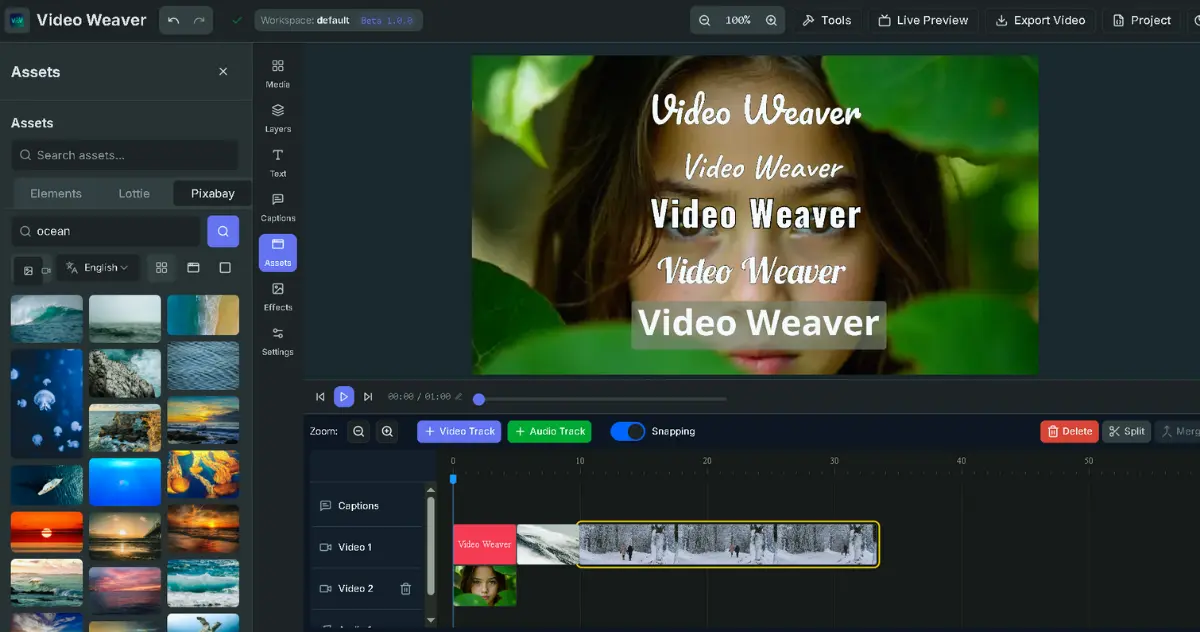
videoweaver.app
Video Weaver: Professional video editing directly in your browser. No downloads required.
Learn More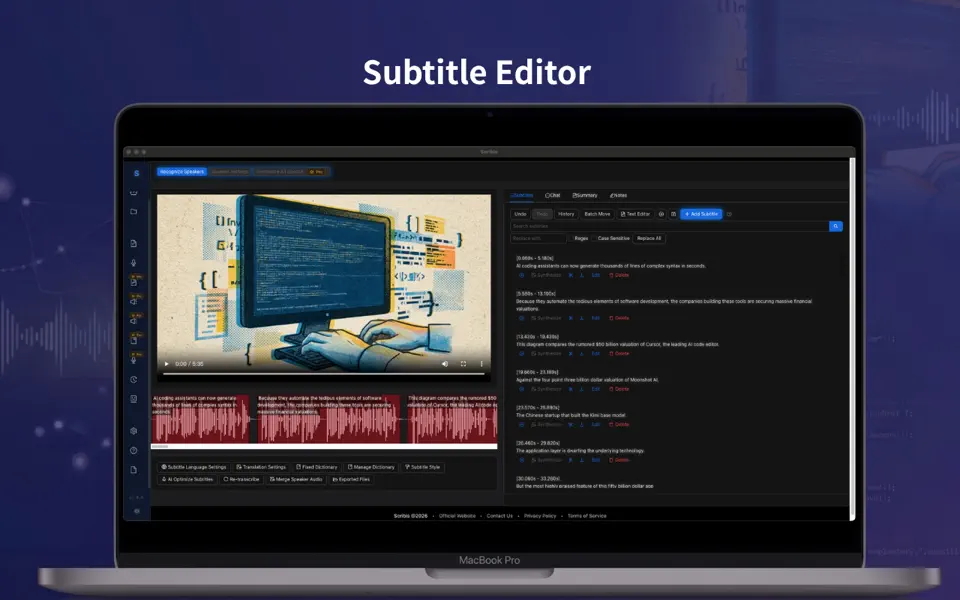
scribis.app
Scribis: Subtitle editing, audio transcription, and live transcription.
Learn Morevideoweaver.app
Video Weaver: Professional video editing directly in your browser. No downloads required.
Learn Morescribis.app
Scribis: Subtitle editing, audio transcription, and live transcription.
Learn More