

Major updates in the AI field this week! OpenAI officially upgrades the core of Deep Research to GPT-5.2 and introduces a new full-screen reading experience. Anthropic releases its 2026 Coding Trends Report, predicting that “Agentic Coding” will fundamentally change the role of engineers. Additionally, the open-source community sees the powerful MOSS-TTS voice model and Qwen-Image-2.0 engine. However, a security vulnerability in Claude Desktop shouldn’t be ignored. This article takes you deep into these key developments.
OpenAI Deep Research Evolves: GPT-5.2 Takes Over Core Engine
If you recently felt that ChatGPT’s Deep Research feature was already powerful, OpenAI’s latest announcement might get you even more excited. Earlier, OpenAI confirmed that its Deep Research tool is now powered by the GPT-5.2 model.
This is more than just an engine swap. It means that AI’s performance in handling complex queries, data retrieval, and information synthesis will be more akin to an experienced researcher rather than just a search engine summarizer.
New Full-Screen Viewer: Making Research feel like “Reading”
Beyond the model upgrade, the interface has received a major overhaul. The previous fragmented message presentation has been replaced by a brand-new “Full-Screen Viewer.” The benefit? Imagine an interactive table of contents on the left, allowing you to jump to specific sections, while the right clearly lists all cited sources. This makes reading a long, AI-generated report feel like reading a professional academic paper or industry analysis.
Even better, OpenAI has truly handed control back to the users.
You can now specify that ChatGPT should “only pull data from specific websites.” This is incredibly useful for users who need precise information. For example, if you’re working on a report about the 2026 semiconductor industry, you can restrict the AI to search only relevant financial media or official databases, avoiding low-quality “content farms.” Furthermore, you can intervene in real-time during the generation process to adjust the research direction. Once finished, reports can be exported directly to Word or PDF for further editing.
This feature is currently rolling out to ChatGPT Plus and Pro users, with the free version expected to receive updates soon.
Anthropic 2026 Trends Report: Engineers Transforming into “AI Orchestrators”
While OpenAI optimizes the research experience, Anthropic is redefining the future of software development. In their newly released 2026 Agentic Coding Trends Report, they reveal a massive shift: the Software Development Life Cycle (SDLC) is being reshaped by “Agentic Coding.”
From “Writing Code” to “Orchestrating Agents”
The report presents an intriguing perspective: the role of the engineer is shifting from a mere “coder” to an “AI Agent Orchestrator.”
Previously, engineers had to write every line of code; now, as single AI agents evolve into collaborative teams, engineers spend more time directing a group of AI agents to complete tasks. These agents can not only write code but also run tests, fix bugs, and even work continuously for days to build entire systems.
While this sounds ideal, Anthropic points out a “Collaboration Paradox”: although AI handles 60% of the work, tasks that humans can “completely step away from” account for less than 20%. Why? Because core, complex decisions still require human judgment. This explains why, despite rapid AI progress, senior engineers are more valuable than ever—because they are the ones who know what a “correct” architecture looks like.
Security and the Rise of Non-Technical Talent
The report also highlights two key predictions:
- Non-technical staff writing code: Sales, legal, and other departments will use AI tools to solve process automation problems themselves, no longer needing to wait for IT scheduling.
- Security Challenges: As AI can automatically write defense systems, attackers can use the same technology to launch larger-scale attacks. Therefore, “Security-by-Design” will be a top priority in 2026.
MOSS-TTS: Not Just Voice Cloning, but “Sound Effects” too
In the open-source community, the most notable release is the MOSS-TTS series from the MOSS team. It’s more than a speech synthesis tool; it’s like an all-in-one audio generation factory.
While there are many voice cloning models on the market, MOSS-TTS stands out for its “comprehensiveness.” It includes five core models that not only generate incredibly realistic human voices but also support multi-language mixing, dialect control, and even “background sound effects.”
Key Feature Breakdown
- MOSS-TTSD: A model specialized for dialogue. it can generate long conversations with emotions and multi-character interactions, even outperforming Google’s Gemini 2.5-pro in subjective evaluations.
- MOSS-SoundEffect: This is particularly interesting. Are you a game developer or video creator? This model can generate various sound effects—like rain, footsteps, or even instrumental clips—based on text.
- Real-time Interaction: For voice assistant scenarios requiring low latency, they launched MOSS-TTS-Realtime, emphasizing natural and coherent responses.
If you’re interested, you can download the models from their Hugging Face page or try the Online Demo. It’s a valuable resource for developers building voice applications.
Qwen-Image-2.0: Pursuing Ultimate Realism
The visual generation field also has new developments. Alibaba Cloud’s Qwen team introduced Qwen-Image-2.0. This upgrade is purely focused on “Realism.”
Based on official examples, the images generated by this model are highly detailed, especially in lighting and texture, making it difficult to distinguish them from real photography. Currently, this model is mainly available via API. While technical details are still limited, it’s a strong competitor for enterprise users needing high-quality, photorealistic imagery.
Security Alert: Claude Desktop Extensions Vulnerable to Remote Execution
Finally, we must discuss a serious matter. If you use Claude Desktop and have various extensions installed, please be on high alert.
Security firm LayerX released a report indicating a severe RCE (Remote Code Execution) vulnerability in the Claude Desktop extension architecture.
How did this happen?
The problem lies in how Claude handles permissions. Extensions in Claude Desktop are not “sandboxed” during execution, meaning they have the same system permissions as the user.
An attacker could use a seemingly harmless Google Calendar invite containing specific commands. When you ask Claude to “process my calendar,” Claude might accidentally read these malicious instructions and execute them directly on your computer, potentially giving the attacker control over your system.
This is scary because it doesn’t require clicking a suspicious link; just a maliciously designed calendar event is enough. While Anthropic is aware of the issue, until a full patch or architectural adjustment is released, security experts recommend: Temporarily avoid connecting Claude Desktop to high-risk extensions (like tools that directly manipulate the file system or terminal) on computers containing sensitive data.
Frequently Asked Questions (FAQ)
Q1: Who can use GPT-5.2’s Deep Research feature now? This feature is currently available to ChatGPT Plus and Pro subscribers. If you are a free user or a subscriber to the new ChatGPT Go, the update will be pushed to your account in the coming days.
Q2: What is “Agentic Coding”? This is a concept proposed by Anthropic, referring to a shift in software development patterns. Instead of engineers writing code themselves, they direct AI agents to complete tasks such as coding, testing, and debugging. The engineer’s role becomes more like an architect or project manager.
Q3: Can MOSS-TTS be used commercially? MOSS-TTS is billed as a “production-ready” flagship model and has an open-source version. It is suitable for commercial applications requiring high-quality speech synthesis, long-text narration, or game sound effects, but it is recommended to check the GitHub page for specific licensing terms.
Q4: How can I protect myself from the Claude Desktop vulnerability? The most direct way is to review your installed MCP (Model Context Protocol) extensions. Avoid installing extensions that require “direct access to computer files” or “executing system commands” unless you are certain of their source. Also, be cautious about letting AI automatically process calendar invites or external data from unknown sources.
Q5: Is Qwen-Image-2.0 free to try? Currently, Qwen-Image-2.0 is primarily offered via API, which usually means it is a paid service for developers or enterprises, or requires an API Key. Follow the official Qwen platform for the latest trial information.
DMflow.chat
DMflow.chat: Your intelligent AI partner for exceptional customer engagement.
Learn More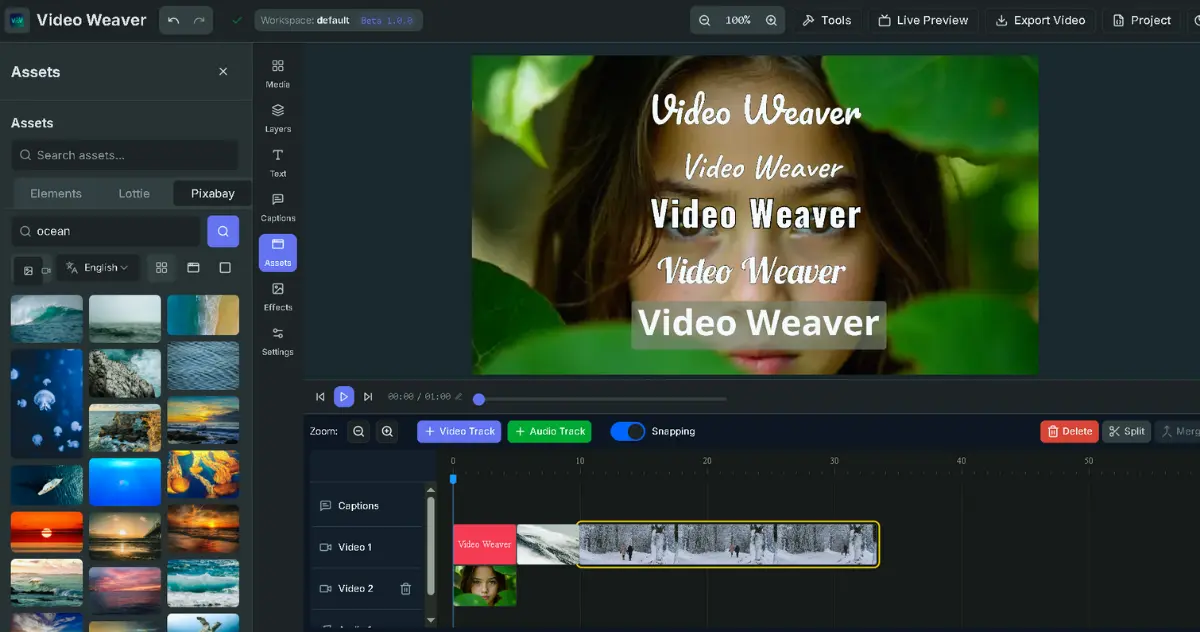
videoweaver.app
Video Weaver: Professional video editing directly in your browser. No downloads required.
Learn More
DMflow.chat
Discover DMflow.chat and unlock the new era of AI-powered customer service.
Learn MoreDMflow.chat
DMflow.chat: Your intelligent AI partner for exceptional customer engagement.
Learn Morevideoweaver.app
Video Weaver: Professional video editing directly in your browser. No downloads required.
Learn MoreDMflow.chat
Discover DMflow.chat and unlock the new era of AI-powered customer service.
Learn More