


Today’s AI landscape is bustling, with tech giants seemingly coordinating to release major annual updates simultaneously. For developers, scientists, and business decision-makers, this is a pivotal moment to watch. OpenAI raises the bar for code generation again with GPT-5.2-Codex, Mistral AI demonstrates amazing precision in document processing, and Google goes full throttle on development tools, model families, and national-level scientific collaborations.
This article will take you deep into the core highlights of these new technologies, analyzing how they practically change our work and scientific research methods.
OpenAI GPT-5.2-Codex: A Security Expert with Built-in “Context Compression”
OpenAI has officially launched GPT-5.2-Codex. This is not just a fine-tuned version of GPT-5, but a complete entity polished to the extreme for real-world software engineering. In addition to significant performance improvements in the Windows environment, it introduces “Native Context Compression” capabilities. This technology allows the model to maintain token efficiency and memory coherence when handling long code refactoring or migration tasks, no longer suffering from “amnesia” due to overly long conversations.
In terms of performance data, GPT-5.2-Codex has achieved industry-leading levels in two challenging benchmarks: SWE-Bench Pro and Terminal-Bench 2.0.
Even more impressive is its acuity in the field of cybersecurity. Just last week, security researcher Andrew MacPherson used an early version of the model (GPT-5.1-Codex-Max) to discover three unknown vulnerabilities in the React framework in just one week. This confirms that the new model possesses “defensive thinking” like a security expert. To balance risks, OpenAI is currently adopting a “Trusted Access Mechanism,” prioritizing access for approved security organizations, while general paid ChatGPT users can experience its power in Codex CLI and IDE extensions starting today.
Learn more about the technical details of GPT-5.2-Codex
Mistral OCR 3: The Price-Performance King of Structured Document Processing
If your work involves a large number of scanned documents or complex reports, Mistral AI’s newly released Mistral OCR 3 is definitely worth paying attention to. This model has made breakthrough progress in processing forms, low-quality scans, and handwritten content. Official data shows its Win Rate in benchmarks has increased by 74% compared to the previous generation.
Its greatest strength lies in its ability to accurately restore complex table structures and output Markdown format with HTML table tags. To make it easy for non-engineers to get started, Mistral has launched the Document AI Playground, where users can directly convert PDFs into structured JSON data through a simple drag-and-drop interface.
For enterprise users, price is its killer weapon: the standard API costs only $2 per 1,000 pages, and if using the Batch API, the price is as low as $1. This is an extremely attractive option for enterprises that need to digitize massive historical archives.
View the full review of Mistral OCR 3
Anthropic Agent Skills: Creating a Cross-Platform Standard for AI Employees
Anthropic is solving the problem of AI Agent fragmentation. They released the Agent Skills open standard and view it as a portable protocol similar to MCP (Model Context Protocol). Skills are standards for “processes,” distinct from MCP’s connection for “data.” This means that skills developed in the future will not be limited to Claude but will have the opportunity to interoperate across different AI platforms.
Through deep collaboration with Notion, Canva, Figma, and Atlassian, Claude can now operate these tools as skillfully as an employee. For example, it can directly understand Jira tickets and execute operations, not just read text. Administrators of Claude Team and Enterprise plans can now centrally configure these skill libraries, ensuring that AI assistants in the team are using approved, safe, and standardized workflows.
Read about Agent Skills and MCP standards
Google Conductor: Injecting a “Think Before You Act” Soul into Gemini CLI
Developers know that jumping straight into writing code is often the beginning of a disaster. The new extension Conductor launched by Google for Gemini CLI is designed to promote “Context-Driven Development.”
Conductor’s operating mechanism is very specific: it helps developers generate specs.md (specifications) and plan.md (plans) and save them in the codebase. This gives AI a tangible “memory,” clearly knowing the project’s architecture and specifications. Most importantly, it emphasizes “Review plans before code is written,” ensuring developers are always in the driver’s seat and preventing AI from generating code that is out of place. This is especially critical for maintaining long-standing legacy projects (Brownfield projects).
Explore the Google Conductor workflow | GitHub Project
Google Model Family Expansion: T5Gemma 2 and FunctionGemma
Google’s R&D engine continues to run at high speed, releasing two small models optimized for specific scenarios this time:
T5Gemma 2: This is a new generation encoder-decoder model based on the Gemma 3 architecture. In addition to the 270M version, it also offers 1B and 4B parameter versions for selection. Technically, it uses “Tied Embeddings” technology, which significantly reduces the model size while retaining powerful multimodal capabilities and a 128K context window. It is very suitable for resource-constrained edge applications and supports over 140 languages, which is a major advantage for edge devices requiring cross-border deployment. Learn about T5Gemma 2 | Hugging Face
FunctionGemma: A model fine-tuned specifically for “function calling.” Google demonstrated a real-world case of “Mobile Actions”: it can offline convert user natural language commands (such as “set an alarm for me tomorrow morning”) accurately into Android system calls. This “local-first” design perfectly solves privacy and latency issues. View FunctionGemma documentation | Hugging Face
Google DeepMind x US Department of Energy: AI Enters National Science Missions
This may be the most far-reaching news of the day. Google DeepMind announced support for the White House’s “Genesis Mission” and will launch deep cooperation with 17 national laboratories under the US Department of Energy (DOE). This marks AI officially becoming a core driving force for national-level scientific research. In addition, both parties will also use the WeatherNext model to optimize hurricane forecasting, a technology that has already begun supporting the US National Hurricane Center.
Collaboration highlights include:
- AI Co-scientist: A multi-agent system based on Gemini that can assist scientists in generating research hypotheses and planning experiments.
- AlphaEvolve & AlphaGenome: Expected to open in 2026. AlphaEvolve will focus on designing algorithms, while AlphaGenome is dedicated to decoding “non-coding DNA,” which will have revolutionary help for bioenergy development and improving crop stress resistance.
Google Practical Tool Updates: Note-Taking Artifact and Anti-Counterfeiting Verification
On the user application side, Google brings two thoughtful feature updates:
NotebookLM Data Tables: Now, NotebookLM can automatically organize messy data (action items in meeting transcripts or multiple competitor analysis reports) into clean, structured tables and supports exporting to Google Sheets. This feature is currently prioritized for Pro and Ultra users, and will be rolled out to all users later. See how Data Tables work
Gemini App Video Verification: Facing the challenge of deepfake technology, Google has added a verification feature to the Gemini App. Through SynthID watermarking technology, the system can determine whether a video was generated by Google AI. It is worth noting that the current feature supports files limited to less than 90 seconds in length and under 100 MB in size. Learn about the video verification feature
Safety and Ethics: From Monitoring “Thoughts” to Protecting Teenagers
As AI capabilities grow exponentially, ensuring its behavior aligns with human values has become a top priority.
OpenAI’s Chain of Thought Monitorability (CoT Monitorability): OpenAI released research pointing out that for modern reasoning models (such as o1, o3), monitoring their “internal chain of thought” is more effective in detecting deception or bias than simply looking at the results. This provides new safety ideas for deploying AI in high-risk areas in the future. Read Chain of Thought Monitorability Research
OpenAI’s Teen Protection (U18): In the updated Model Spec, OpenAI introduced an “Age Prediction Model” aimed at automatically detecting and protecting minor accounts. When the system judges a user to be a teenager, it will force strictly stricter safety guardrails. View Teen Protection Updates
Anthropic’s Sycophancy Reduction: Anthropic emphasized reducing the model’s tendency for “sycophancy” in its latest safety measures. New models will no longer agree with incorrect views or reinforce user delusions just to please users, committing to providing more objective and principled interactions. Learn about Anthropic’s safety measures
Frequently Asked Questions (FAQ)
Q: What are the benefits of GPT-5.2-Codex’s “Native Context Compression”? This technology allows the model to automatically “compress” unimportant information when processing long code, thereby retaining more key logic within the limited Context Window. This is particularly useful for refactoring large projects or cross-language migration, avoiding hallucinations caused by the model not being able to read the preceding code.
Q: How much is the batch processing price for Mistral OCR 3? Mistral offers disruptive pricing. The standard API is $2 per 1,000 pages, but if you use the Batch API, the price drops to $1 per 1,000 pages. This is very cost-effective for mass file digitization work that does not require immediate result return.
Q: What is the specs.md generated by Google Conductor?
It is the AI’s “understanding notes” of your project requirements. When using Conductor, AI will first convert your requirements into this specification document and save it in your codebase. The benefit of this is that every future code generation will be based on this “memory,” ensuring consistent style, and you can modify this document at any time to adjust the AI’s development direction.
Q: Can I verify a 10-minute video with the Gemini App? Not yet. Google’s AI video verification feature currently only supports videos under 90 seconds and with a file size under 100 MB. This is mainly applicable to quick checks of short videos or social media clips.
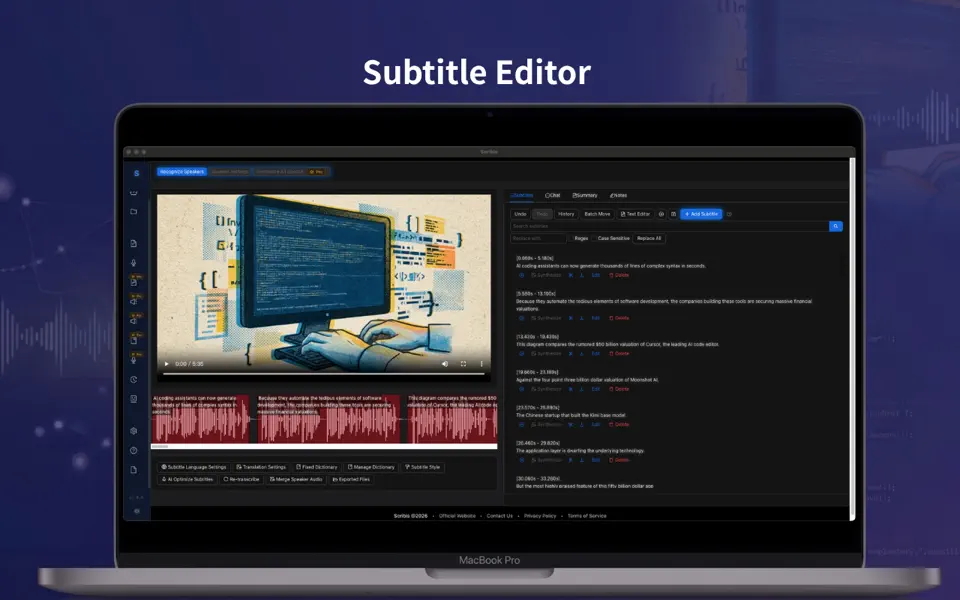
scribis.app
Scribis: Subtitle editing, audio transcription, and live transcription.
Learn More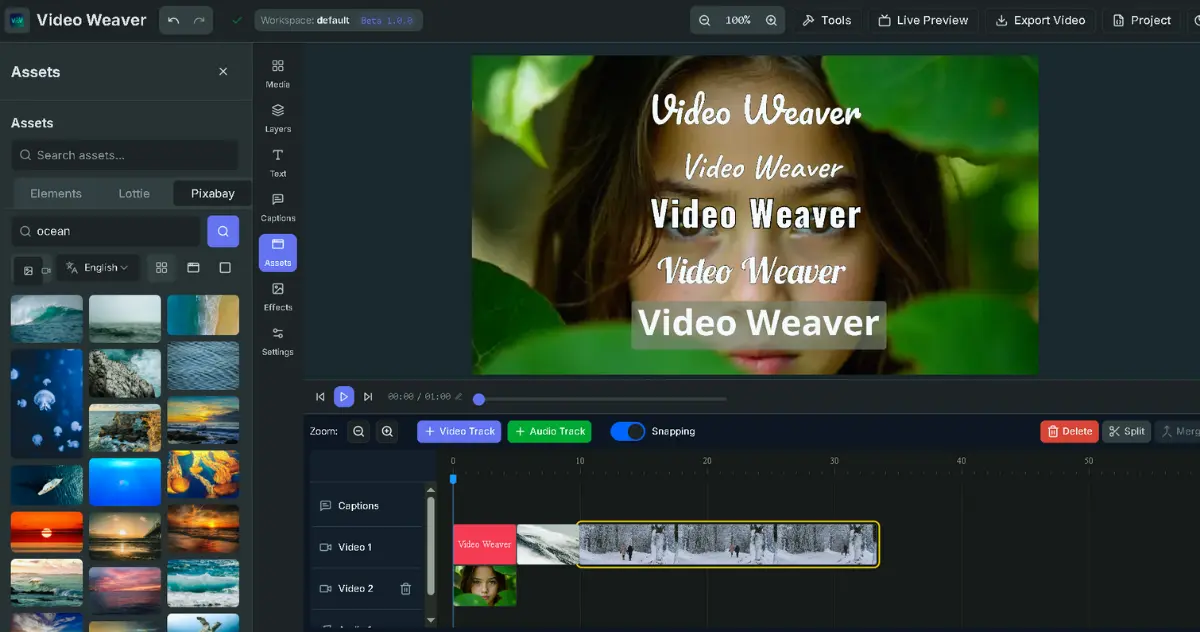
videoweaver.app
Video Weaver: Professional video editing directly in your browser. No downloads required.
Learn Morescribis.app
Scribis: Subtitle editing, audio transcription, and live transcription.
Learn Morevideoweaver.app
Video Weaver: Professional video editing directly in your browser. No downloads required.
Learn More