


A Comprehensive Upgrade from Agent Models and Infrastructure to Privacy Protection
From Google TPU architecture, OpenAI and Anthropic’s agent systems, to Qwen dense models and the latest open-weight privacy tools, this guide helps readers easily grasp the pulse of future technology and practical applications.
To be honest, the trajectory of artificial intelligence technology evolution is always full of surprises. While many are still adapting to basic chatbots, the focus of the tech community has quietly shifted to more autonomous agent systems that can operate independently. This involves a complete overhaul of software architecture, which in turn necessitates a major upgrade in hardware infrastructure. This article summarizes recent noteworthy tech trends to give readers an inside look.
Building Solid Hardware: The Perfect Synergy Between Google TPU and PyTorch
It is an indisputable fact that hardware development cycles are typically much longer than software cycles. To meet increasingly massive computing demands, Google has introduced the eighth-generation Tensor Processing Unit (TPU), with architectures specifically designed for training and inference. The TPU 8t, focused on high-intensity training, boasts massive scalability, with a single supercluster capable of expanding to 9,600 chips and 2 PB of shared high-bandwidth memory. Meanwhile, the TPU 8i, specialized for low-latency inference, increases SRAM by 3x (reaching 384 MB) and utilizes the new Boardfly topology, which not only halves network latency but also delivers an 80% improvement in price-performance. Readers can learn how these custom chips help enterprises handle extremely challenging workloads through the article Our eighth generation TPUs: two chips for the agentic era.
Top-tier hardware alone is not enough; software framework support is equally crucial. Many developers are used to relying on PyTorch for model training, and in the past, getting PyTorch to run smoothly on TPUs required significant adjustments. Interestingly, with the technical integration of TorchTPU: Running PyTorch Natively on TPUs at Google Scale, the engineering team adopted an “Eager First” development philosophy. This allows development teams to run models by simply changing the initialization environment to “tpu” without modifying core logic. Even better, TorchTPU features a built-in Fused Eager mode, which automatically fuses operations into high-density compute blocks during runtime, providing a 50% to over 100% performance boost without extra configuration. This seamless experience has certainly come as a relief to many engineers.
Agent Systems Enter Daily Life: New Standards for Enterprise Applications
Readers might wonder, what exactly is an automated agent? Simply put, it’s like a virtual employee capable of using specific tools and following established workflows to complete tasks based on trigger conditions. To integrate these virtual employees into daily enterprise operations, major tech companies have presented unique solutions.
Google Cloud announced the Gemini Enterprise Agent Platform lets you build, govern and optimize your agents., a centralized management platform combining infrastructure with data security. The platform integrates Vertex AI’s model building services and supports Anthropic’s Claude series models, helping technical teams easily build and optimize their own agent systems. Meanwhile, OpenAI launched Workspace agents, focusing on embedding these automated workflows—which require consistency and standardized handovers—directly into the familiar ChatGPT interface. Tedious and repetitive administrative tasks finally have the potential for automated processing.
For agent systems to be truly effective, the key lies in how they communicate with external systems. As mentioned in the article Building agents that reach production systems with MCP, Anthropic’s Model Context Protocol (MCP) has received a major upgrade for production environments. The newly introduced Tool Search feature dynamically loads required tools, reducing Token consumption by up to 85%. Furthermore, the new MCP Apps and Elicitation mechanisms allow servers to return interactive charts and forms directly, and even request user input when a task is interrupted. This significantly enhances development efficiency while making the entire software ecosystem healthier.
Development Tool Explosion: Enhancing Collaboration Efficiency in Coding and Design
In the realm of coding, several eye-catching tools have recently emerged. First is Qwen3.6-27B: Flagship-Level Coding in a 27B Dense Model from the Qwen team. Why is a 27-billion parameter dense model causing such a stir? Because it avoids the complex routing mechanisms of Mixture-of-Experts (MoE) models while achieving a high score of 77.2 on the SWE-bench Verified benchmark, delivering code-writing performance that surpasses the previous generation 397B flagship model. For teams with limited resources needing a stable deployment environment, this is undoubtedly an attractive choice.
Debugging is also a major pain point in the development process. The latest testing feature in Claude Code, New in Claude Code: /ultrareview (research preview) runs a fleet of bug-hunting agents in the cloud., can launch an entire fleet of automated agent systems in the cloud to help with debugging. Imagine a group of tireless virtual assistants checking authorization mechanisms and database migration issues before merging critical code. Discovered issues are automatically sent to the CLI or desktop application, and Pro and Max users even receive 3 free review credits, which indeed saves a lot of trouble.
Collaboration between design and development has also seen a new open-source standard. The Stitch by Google team under Google Labs recently open-sourced the draft specification for DESIGN.md. This specification allows AI agent systems to accurately understand visual elements like colors and fonts in design systems, and even automatically checks whether a designer’s choices comply with WCAG accessibility guidelines (such as minimum contrast ratios). This way, designers and engineers no longer have to play the “guessing game.”
Refined Upgrades in Privacy Protection and Multimodal Technology
As application scenarios become more complex, data privacy issues naturally surface. Traditional masking tools often rely on fixed formats to identify phone numbers or emails, making it easy to miss some implicit personal information. To address this, OpenAI introduced the OpenAI Privacy Filter. This is a compact but powerful 1.5-billion parameter open-weight model. It natively supports a context window of up to 128,000 tokens and can perform context-aware Personal Identifiable Information (PII) and API key/password masking directly on local devices without an internet connection. For industries dealing with highly sensitive data, like healthcare or finance, this is a very practical piece of infrastructure.
Next, let’s look at progress in multimodal technology. The release of Xiaomi MiMo-V2.5 demonstrates impressive visual and auditory understanding. It not only natively supports a context window of up to one million tokens but also achieved top-tier performance in complex chart analysis and long-shot video understanding (e.g., scoring 87.7 on Video-MME). This indicates that future systems will move beyond pure text-based communication and instead rely on tools with keen visual and auditory capabilities to handle more complex real-world tasks.
Frequently Asked Questions (FAQ)
To clarify the technical concepts mentioned above, here are some common technical questions:
Q: What exactly is an automated agent? A: It is a virtual system that can automatically use various tools and follow established workflows to complete target tasks based on trigger conditions such as schedules or specific events. For example, an agent system can periodically summarize marketing data and automatically send email reports to team members.
Q: Why are developers increasingly inclined to use dense models for coding? A: Because the overall architecture of dense models is relatively simple. Without the complex routing mechanisms of Mixture-of-Experts (MoE) models, deploying the model to a production environment is more straightforward and stable, a characteristic perfectly suited for practical scenarios requiring high-volume code generation.
Q: What problem does the Model Context Protocol (MCP) solve? A: MCP not only provides a unified standard communication layer, solving the M×N integration pain point of repeatedly writing integration code, but the latest extensions also further address “Token consumption” and “interaction limitation” issues. Through dynamic Tool Search and MCP Apps, agent systems can not only save 85% of Tokens but also return charts and forms directly within conversations to interact with users.
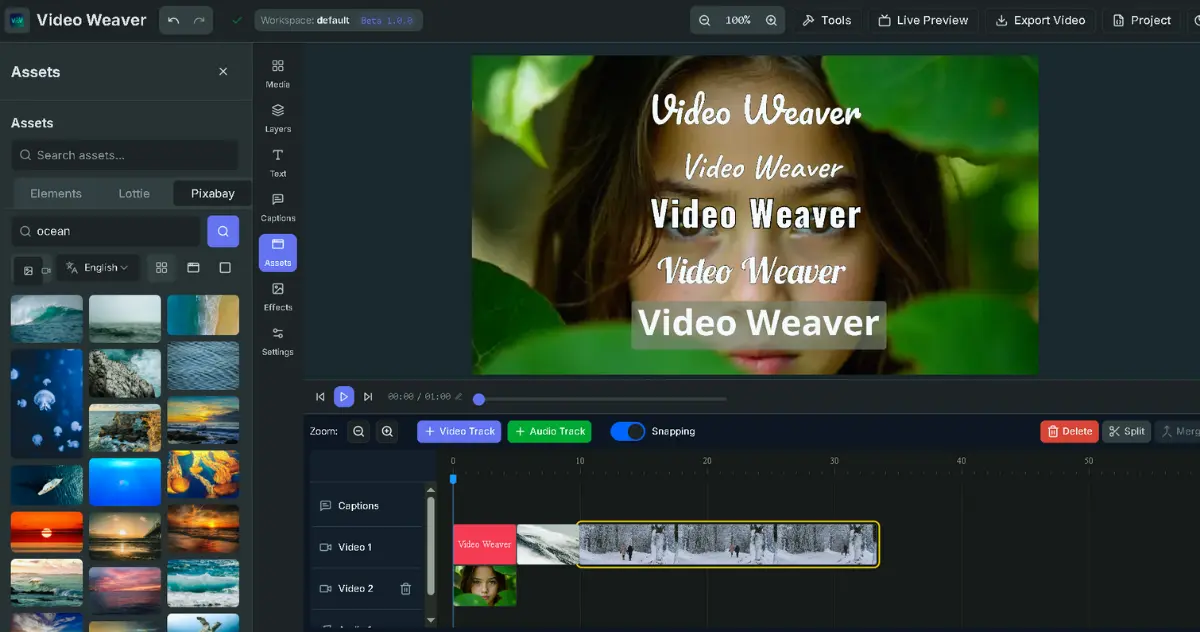
videoweaver.app
Video Weaver: Professional video editing directly in your browser. No downloads required.
Learn More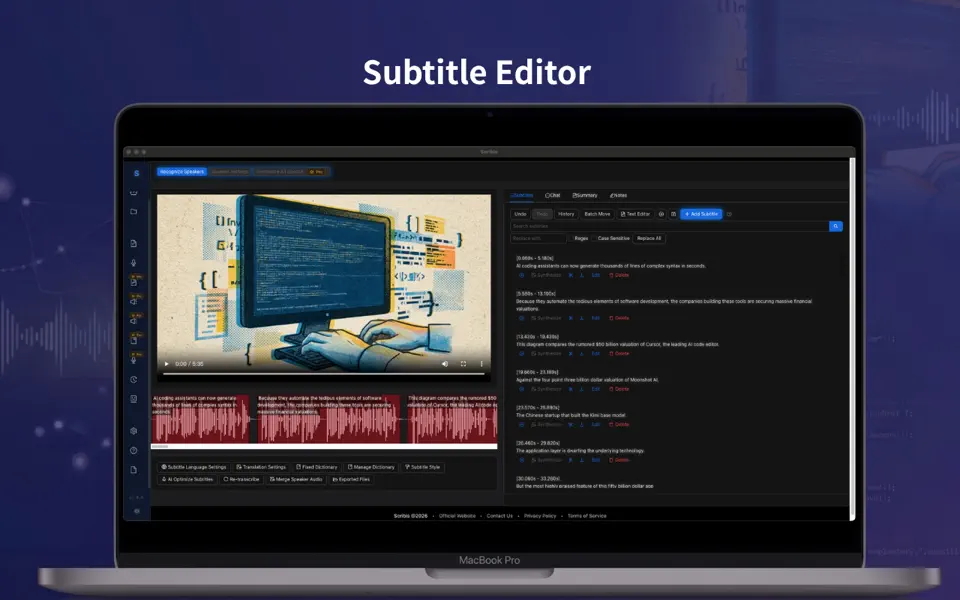
scribis.app
Scribis: Subtitle editing, audio transcription, and live transcription.
Learn Morevideoweaver.app
Video Weaver: Professional video editing directly in your browser. No downloads required.
Learn Morescribis.app
Scribis: Subtitle editing, audio transcription, and live transcription.
Learn More