


Daily AI Tech Focus: Google Shifts to New Agent Tools, Comprehensive Upgrades in Compute and Innovative Applications
Did you know? The trajectory of artificial intelligence development is always full of surprises. Technologies that were in the spotlight yesterday might be replaced by entirely new solutions today. Currently, tech giants are pulling out all the stops to innovate. From the strategic shift in AI agent tools to breakthroughs in underlying hardware and network architectures, and even revolutions in creator tools—every advancement pulses through the entire industry. Let me explain how today’s latest developments will influence the future direction of technology.
Strategic Pivots and Re-evolution of AI Agent Tools
Here’s the situation: Web-browsing AI was once seen as the next major breakthrough. But plans change. Google recently quietly shut down its experimental project Project Mariner, moving the associated technology and personnel to other products. This technology was originally designed to allow systems to browse the web and perform tasks on behalf of users. However, massive computational demands and occasional precision issues hindered the development of such tools. One might ask, does the closure of Project Mariner mean web-browsing AI has failed? Not exactly; it marks a shift in the industry’s focus toward command-line control tools similar to the OpenClaw style. These tools execute operations directly through system commands, significantly improving stability and efficiency.
A Google spokesperson confirmed that relevant computer operation capabilities will be integrated into future agent strategies, such as the upcoming Gemini Agent. Similarly, Anthropic has launched Claude Cowork, which doesn’t require opening a terminal, while Meta is developing a personalized assistant codenamed Hatch.
Moreover, software learning capabilities are reaching a breakthrough. As tasks repeat, can systems learn from them? Manus’s new self-updating feature for Projects aims to solve this pain point. This new feature can transform valuable conversations into project instructions and file updates. When workflows change, Manus can identify reusable decisions and patterns and suggest updates. This means every future task will be executed better than the last. Team members no longer need to spend time repeatedly explaining the same context.
Some might wonder if Manus will secretly update projects without approval. The answer is no. All update suggestions require explicit user authorization. You might also ask how this differs from simply uploading new files. Uploading files only changes the raw material; this new feature allows the system to understand a broader context, including changes in instructions and workflows. Users can even manually trigger reviews at any time to request modification suggestions from the system.
Underlying Revolutions Breaking Compute Bottlenecks
To be honest, hardware technology can sometimes sound dull, but it is precisely the foundation supporting those cool applications. In response to massive computational demands, Anthropic recently announced a compute partnership with SpaceX. Accompanying this partnership is the announcement of higher usage limits for Claude. The official announcement directly doubles the five-hour rate limits for plans like Pro and Max, while also significantly increasing the API rate limits for the Claude Opus model. On the surface, this seems to give everyone more room to maneuver.
However, there’s a potential contradiction worth considering. While the five-hour processing rate limit has increased, the official announcement did not explicitly state whether long-term total quotas (such as seven-day totals) have been increased synchronously. If long-term quotas remain unchanged, it means heavy users will consume their base quota much faster. When the quota runs out early, developers will inevitably have to purchase more API credits to maintain operations. This might be a very clever business strategy behind Anthropic’s compute boost.
On the other hand, OpenAI is working to solve network congestion issues in supercomputers. When tens of thousands of GPUs operate synchronously, a single data delay can trigger a domino effect. OpenAI’s published MRC network protocol was born for this purpose. Developed in collaboration with giants like AMD, Broadcom, Intel, NVIDIA, and Microsoft, this multipath reliable connection technology can distribute packets across hundreds of paths. Even if some network nodes fail, MRC can bypass errors within microseconds, significantly reducing downtime during model training.
Speaking of model training, developers are always pursuing higher efficiency. Unsloth and NVIDIA teamed up to identify hidden bottlenecks slowing down LLM training. They found that once major mathematical operations are optimized to the limit, GPUs often get stuck in tedious tasks like metadata processing and memory copying. By using techniques like cached packed sequence metadata and double buffering, they successfully increased the forward pass speed of models like Qwen3-14B by over 43%. This is undoubtedly a boon for development teams that need to fine-tune models frequently.
Search Experience Upgrades and New Sparks in Music Creation
The search engines we use every day are also receiving notable updates. Google is bringing more diverse ways of exploration to its products. Google Search’s generative AI has launched five new features, making information retrieval more intuitive. When you’re interested in a topic, the system not only provides answers but also actively suggests angles for further reading. This update also makes it easier for the public to access subscribed news sources and even preview real experiences from social forums directly from the responses.
Meanwhile, the application of technology in the field of art is becoming increasingly mature. Music creators now have a brand-new assistant. Google Labs announced a partnership between Flow Music and Believe, a global artist development company. This tool, driven by the Lyria 3 Pro model, can help musicians brainstorm lyrics, experiment with new melodies, and even create entirely new instrument sounds. Worried about copyright? Google has clearly stated that they will not claim ownership of original content generated by Flow Music. This commitment undoubtedly gives creators peace of mind, allowing technology to truly become a catalyst for inspiration.
Q&A
Q1: Why is Google shutting down Project Mariner? What is the future direction of AI agent tools? A1: Web-browsing AI (like Project Mariner) faced massive computational demands and occasional precision issues because it needed to process large amounts of screenshots and information, hindering its development. Currently, the industry is shifting its focus toward command-line control tools similar to the OpenClaw style (such as Claude Cowork or Meta’s Hatch), which control computers directly through terminal commands, significantly improving stability and efficiency.
Q2: Will Manus’s Project self-updating feature secretly modify project files without consent? A2: No. While Manus can learn from team conversations and transform valuable information into project instructions, files, or skill updates, all update suggestions must undergo explicit user review and authorization. This ensures that the project context only changes after human approval.
Q3: How do Anthropic’s recent compute partnership with SpaceX specifically affect user quotas? A3: According to the official announcement, Anthropic has used the increased compute capacity to directly double the “five-hour rate limit” for plans like Pro and Max, and removed limit reductions during peak hours. Simultaneously, the API rate limits (maximum input and output tokens per minute) for the Claude Opus model used by developers have also been significantly increased.
Q4: How does OpenAI’s MRC network protocol solve network congestion in supercomputers? A4: Traditional network protocols usually require data transmission to follow a single path, which easily leads to packet collisions and congestion. MRC (Multipath Reliable Connection) subverts this model by distributing (spraying) packets from a single transmission across hundreds of network paths. If a path fails or becomes congested, MRC can detect and bypass the error within microseconds, significantly reducing downtime and latency during model training.
Q5: What “hidden bottlenecks” did Unsloth and NVIDIA address for LLM training? A5: They found that once major mathematical operations reach their peak, GPUs often get stuck in repetitive bookkeeping and waiting. Through three key technologies—cached packed sequence metadata, hiding memory copy latency using double buffers, and optimizing MoE routing models—they successfully eliminated these hidden bottlenecks, increasing overall GPU training speed by about 25%.
Q6: Will there be copyright disputes if music creators use Google’s Flow Music to generate music? A6: No. Google has explicitly promised that they will not claim ownership of original content generated using Flow Music. This tool, driven by Lyria 3 Pro, is designed to be a creative collaborator, assisting artists with lyrics, melodies, or new instrument sounds, allowing creators to securely maintain their own rights to their work.
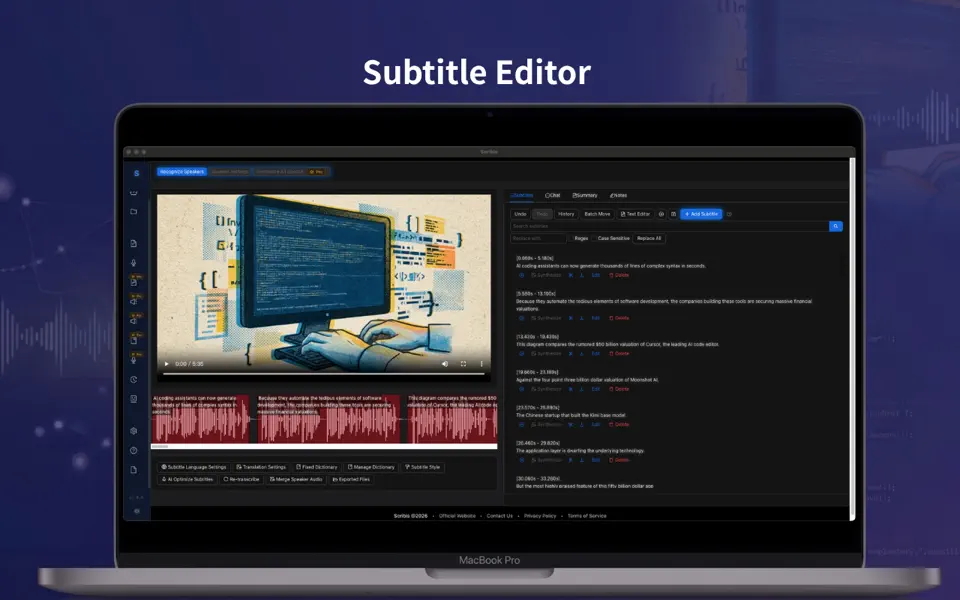
scribis.app
Scribis: Subtitle editing, audio transcription, and live transcription.
Learn More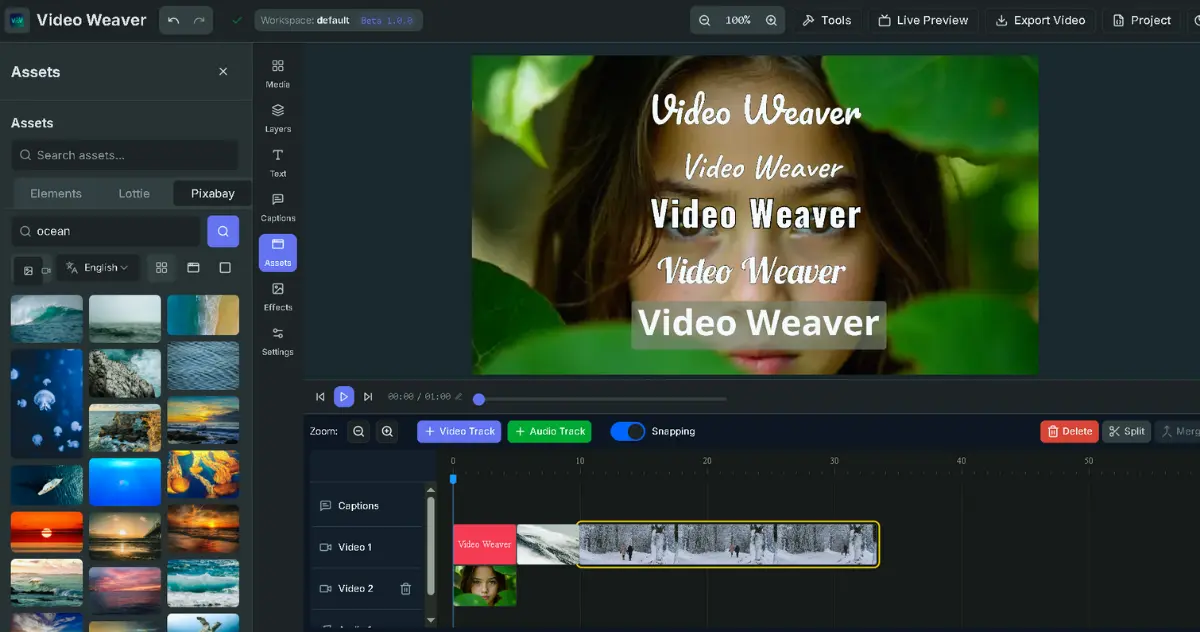
videoweaver.app
Video Weaver: Professional video editing directly in your browser. No downloads required.
Learn Morescribis.app
Scribis: Subtitle editing, audio transcription, and live transcription.
Learn Morevideoweaver.app
Video Weaver: Professional video editing directly in your browser. No downloads required.
Learn More