

2025 has been a year for the history books in the field of Artificial Intelligence. If 2024 was about laying the foundation for multimodal models, 2025 marks the point where AI truly began to think, act, and explore the world alongside humans.
This post dives into Google’s new annual research report, exploring how Gemini 3 is changing the game. We then discuss Kilo’s new App Builder and how it challenges existing AI code generation tools, as well as the surprises in Windsurf’s Wave 13 update. Plus, the year-end deals you care about most, including offers from Google One, Claude, and Codex.
Google 2025 Year in Review: When AI Truly Starts Thinking and Exploring
Looking back at 2025, the role of artificial intelligence has undergone a fundamental shift. It is no longer just a tool used unilaterally by people, but has transformed into a practical utility capable of proactively assisting in work. Google’s report card for the year is impressive. According to Google’s official 2025 Research Breakthroughs Report, progress this year spans everything from foundational models to scientific discoveries.
Gemini 3 and Model Evolution
The most notable development this year is undoubtedly the continuous evolution of the Gemini series. From Gemini 2.5 early in the year to the debut of Gemini 3 in November, Google has constantly pushed the technological ceiling. Especially Gemini 3 Pro, which not only topped the LMArena leaderboard but also demonstrated amazing reasoning capabilities in challenging tests like Humanity’s Last Exam.
Did you know? It’s not just about higher scores. Gemini 3 Pro set a new record in the mathematics field, achieving a score of 23.4% in the MathArena Apex test. This signifies that AI models are getting closer to human thought patterns when processing mathematics, writing code, and performing complex logical reasoning. And the subsequent release of Gemini 3 Flash in December, with its high cost-performance ratio and low latency, proved that the new generation of Flash models can even outperform the previous generation of Pro models in performance.
AI as a Scientist’s Right Hand
Beyond general-purpose models, Google’s contribution to the scientific field is equally immense. On the fifth anniversary of AlphaFold, the system has solved the protein folding problem that had plagued the scientific community for half a century, with its influence even helping researchers win the Nobel Prize.
Furthermore, Google researcher Michel Devoret and his team were jointly awarded the 2025 Nobel Prize in Physics for their foundational research in quantum computing. These applications prove that AI technology is moving out of the laboratory. Whether it’s hyper-local weather forecasting via the WeatherNext 2 model or early wildfire detection via the FireSat system, AI is tackling the most thorny climate and health issues in the real world.
New Frontiers in Creativity and Robotics
In the software development realm, the launch of Google Antigravity and the asynchronous Coding Agent Jules marks a new era for AI-assisted development. In the physical world, the introduction of Genie 3 has opened up a new battlefield for general world models, allowing robots to more accurately understand and interact with their physical environment.
Kilo App Builder Debuts: Not Just a Toy, A Dev Tool for Serious Projects
There are many tools on the market that claim to “let anyone write code,” such as Lovable or Bolt. They are indeed cool, but for professional developers, when complex modifications or maintenance are needed, the code produced by these tools can sometimes be frustrating.
Bridging the Gap Between “Prototype” and “Product”
Kilo Code has clearly spotted this pain point. Their newly launched App Builder is positioned as “Lovable for serious projects.” Its core philosophy is straightforward: you can still use natural language to describe requirements and watch the application generate and preview in real-time in the browser.
But the biggest difference is that when you are ready for more advanced development, you can seamlessly switch to Kilo Code’s professional environment (supporting VS Code, JetBrains, or CLI). This relies on Orchestrator Mode and Managed Indexing technologies, meaning you don’t need to discard the original prototype and rewrite it, nor will you lose context by switching tools.
A True “Vibe Coding” Experience
The “Kilo Speed” emphasized by Kilo is about eliminating valuable friction. No need to set up tedious environments, no need to handle deployment configurations, just focus on your ideas. And the threshold is extremely low; as long as your Kilo account has a balance of $1 and a payment history, you can start using it. For engineers who are fed up with the limitations of No-code tools but want to speed up development, this is definitely an attractive option.
Windsurf Wave 13 Update: Parallel Agents and Free SWE-1.5 Model
Competition in development tools has reached a fever pitch at the end of the year. The Cognition team released the Windsurf Wave 13 update, codenamed “Merry Shipmas,” full of festive atmosphere.
The Ultimate in Multitasking: Cascade Panes
This update introduces multiple Cascade panes and tab features. What’s the benefit? Imagine you can run multiple Agent sessions simultaneously and display them side-by-side. You can have one Agent write tests on one side, while another Agent refactors code on the other, monitoring their progress in the same window. This makes Windsurf no longer just an editor, but more like a multitasking command center.
Git Worktrees Solves Conflicts
Another feature that will make developers smile is support for Git Worktrees. This saves you from frequently switching directories or stashing changes just to switch branches. You can open multiple Cascade sessions in the same repository to handle different branches without interfering with each other.
No More Stuck Interactive Terminals
Wave 13 also introduces the Beta version of Cascade Dedicated Terminal. It switches to a more stable zsh environment, and most importantly, supports “interactive commands.” This means that when your script requires user input (such as confirming file overwrites or entering configuration values), the Agent won’t get stuck, making the automation process smoother.
Shipmas Gift: Free SWE-1.5
The Windsurf team also sent a big gift: for the next three months, all users can use the new SWE-1.5 model variant (codenamed Penguin Alpha) for free. It will directly replace SWE-1 as the default model. Although its speed is standard (the high-speed version of the non-paid version), it retains full intelligence and coding capabilities. In addition, the new “Context Window Indicator” allows you to keep track of Token usage at any time, preventing the model from “getting dumb.”
Year-End Deals Special: Google One Half Price, Double Usage for Claude & Codex
To celebrate the end of 2025 and welcome the New Year, major AI giants have launched limited-time offers and usage upgrades. If you are a heavy user, now is the best time to act.
Google One AI Premium Half Price Offer
To promote its powerful AI capabilities, Google has launched a killer deal for new members. If you are a new subscriber, you have the chance to get a 50% discount on the Google AI Pro annual plan. After subscribing, you not only get access to the higher-level Gemini 3 Pro and Nano Banana Pro, but also gain Deep Research features and 2TB of cloud storage. Even better, this plan can be shared with up to 5 family members and friends. You can check if you are eligible on the Google One event page.
Claude & Codex Usage Bonanza
If you are a Claude enthusiast, Anthropic announced good news: from Christmas to New Year’s Eve (NYE), the usage limits for Claude Pro and Max plans will be doubled (2x). Please note that this benefit is limited to individual subscribers and does not apply to Team or Enterprise plans.
Coincidentally, the Codex team under OpenAI (confirmed by Sam Altman’s retweet) also released Tibo’s announcement. To thank users, they have reset all Rate Limits and increased the usage cap to twice the usual amount. This benefit will last until January 1, 2026. Take advantage of this time to finish those long-backlogged Side Projects!
Frequently Asked Questions (FAQ)
Q1: What is the main difference between Google Gemini 3 and Gemini 3 Flash? Gemini 3 Pro is Google’s current most powerful flagship model, possessing top-tier reasoning and multimodal capabilities, even setting new highs in the MathArena Apex math test. Gemini 3 Flash, on the other hand, is a version optimized for speed and cost-effectiveness. Although lightweight, its performance has already surpassed the previous generation Gemini 2.5 Pro model, making it very suitable for applications requiring fast response times.
Q2: How is Kilo App Builder different from other No-code tools? The core difference of Kilo App Builder is that it doesn’t lock you into its development process. Utilizing Orchestrator Mode and Managed Indexing technology, it allows you to seamlessly transfer the project to a professional IDE (like VS Code) for continued development after generating a prototype via chat in the browser. The code generated is also clean, standard code, suitable for “serious” commercial projects.
Q3: Are there any limitations to the free version of Windsurf’s SWE-1.5? According to the official description, this free version (codenamed Penguin Alpha) possesses the full intelligence and coding capabilities of SWE-1.5. The only difference is that the generation speed is standard, not the ultra-fast experience of over 900 tokens per second found in the paid version. It will automatically become Windsurf’s default model.
Q4: Can existing members claim the Google One half-price offer? Current offer terms state that this is a limited-time event for “new members.” If you are already a Google One subscriber, it is recommended to check your account page to see if there are upgrade offers for existing users, or consider subscribing via another Google account.
Q5: How long will these AI model usage doubling events last? Claude’s doubling event lasts until December 31st (New Year’s Eve) and is limited to individual Pro/Max users; Codex’s reset and doubling event lasts until January 1, 2026. It is recommended to seize this golden time for high-intensity development or testing work.
DMflow.chat
Discover DMflow.chat and unlock the new era of AI-powered customer service.
Learn More
DMflow.chat
DMflow.chat: Your intelligent AI partner for exceptional customer engagement.
Learn More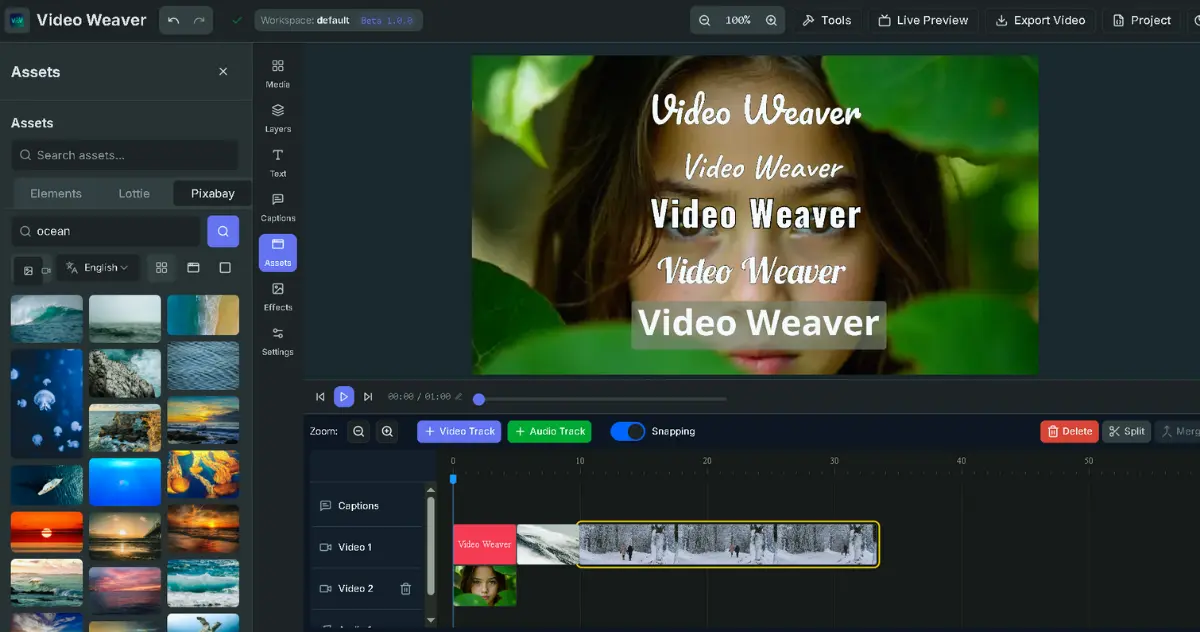
videoweaver.app
Video Weaver: Professional video editing directly in your browser. No downloads required.
Learn MoreDMflow.chat
Discover DMflow.chat and unlock the new era of AI-powered customer service.
Learn MoreDMflow.chat
DMflow.chat: Your intelligent AI partner for exceptional customer engagement.
Learn Morevideoweaver.app
Video Weaver: Professional video editing directly in your browser. No downloads required.
Learn More