


The AI circle remains bustling this week. From breakthroughs in image generation to copyright reconciliation in the music industry, and Google planning to save you time making calls, every update tangibly affects our work and life.
Here is a summary of the most noteworthy AI news for this week.
1. FLUX.2: Not Just Image Generation, It’s a Visual Factory
Everyone’s impression of FLUX.1 might still be stuck on its precision in understanding text, but Black Forest Labs clearly has no intention of stopping there. They have just released FLUX.2, and the focus of this upgrade is not just on “being able to draw,” but on “being able to work.”
FLUX.2 is designed to handle real-world creative workflows. What does this mean? It’s no longer just about generating a pretty picture for you to post on social media, but about stably handling complex text layout, accurately restoring brand logos, and even maintaining consistency in characters and styles across multiple reference images.
For designers, this is great news. FLUX.2 supports editing up to 4 megapixels with extremely high detail retention. Black Forest Labs continues their “Open Core” philosophy, opening this powerful capability to the community, allowing developers and creators to conduct more experiments on this foundation. If you are a visual worker, this model is definitely worth your time to study.
2. New Google Feature: Let AI Call Stores for You
Have you ever had this experience? You want to buy a specific item, but you’re not sure if nearby stores have it in stock, and you’re too lazy to call them one by one. Google’s new feature “Agentic Calling,” launched in the US, is designed to solve this pain point.
The way this feature works is very intuitive. When you search for a product on Google and add keywords like “near me,” if you see the “Let Google call” option, just click it. The system will ask you a few simple questions to confirm the specific specifications you are looking for, and then Google’s AI agent will automatically call nearby merchants.
The best part is that you don’t have to wait on the other end of the line. After the call ends, Google will compile the results for you via SMS or email, telling you which store has stock and if there are any discounts. For detailed information, you can refer to the Google Official Blog. This feature is currently live in the US first, but it is believed it will soon spread to other regions.
3. The Century’s Great Reconciliation: Warner Music and Suno Reach Cooperation
The relationship between the music industry and AI has always been tense, with copyright lawsuits fighting endlessly. But Warner Music Group (WMG) and Suno recently announced a milestone cooperation agreement, which may change the rules of the game for the entire industry.
The two sides not only stopped the litigation but also established two important deals. First is the licensing agreement; Suno will launch an “advanced licensing model” where songwriters under WMG can voluntarily join, and artists have “one-click switch” control over their own voices and works. If they don’t want to be covered by AI, the system will automatically intercept it through voiceprint fingerprinting technology.
Secondly is the shift in business model. Suno bought WMG’s Songkick platform and adjusted the download mechanism. In the future, free users can only stream online; to download audio files, they must become paying members. This not only protects copyright but also establishes a new revenue sharing pool, allowing artists to earn income from AI generation. This drama of “if you can’t beat them, join them” might become a template for the coexistence of AI and the content industry in the future.
4. Guide for Developers: How to Write a Good GitHub Copilot Agent
GitHub Copilot has launched a custom Agent feature, allowing developers to create exclusive AI assistants. But the question is, how to write it so that the AI truly understands your needs?
GitHub analyzed over 2,500 repositories and compiled a Copilot Custom Agent Writing Guide. They found that successful agents.md documents usually have several characteristics: instructions must be clear, executable commands (such as npm test) should be listed at the beginning of the document, and clear boundaries should be set (for example, “never modify the vendor folder”).
Instead of telling the AI “You are a useful assistant,” it is better to specifically tell it “You are an engineer responsible for writing React tests, please use the Jest framework.” This guide is a very practical reference material for teams wanting to customize their own development process.
5. Anthropic Research: How Much Time Does AI Really Save?
Everyone says AI can improve productivity, but exactly how much? Anthropic released an AI Productivity Research Report, analyzing real conversation data on Claude.
Data shows that for complex tasks, AI can save about 80% of time on average. especially in programming and legal-related work, the efficiency improvement is most obvious. The report points out that work that originally took humans 90 minutes to complete was significantly shortened with the assistance of AI.
However, the report also honestly mentions that this does not calculate the time humans need to verify AI output content. Nevertheless, this data still provides strong evidence illustrating the potential of AI in handling high-intensity knowledge work.
6. Google Assistant Retiring Soon, Gemini Takes Over Completely
Google Assistant, which has accompanied Android users for many years, is confirmed to be saying goodbye. Google officially announced that Google Assistant will officially stop operating on March 31, 2026.
Taking over will be the more powerful Gemini. In the future, services on Android, Wear OS, and even smart speakers will be provided by Gemini. This is an inevitable trend; after all, under the wave of generative AI, traditional voice assistants have appeared powerless. Google has already started guiding users to switch, and the transition period will last until the first quarter of 2026.
7. Musk’s Challenge Letter: Can Grok 5 Beat “League of Legends” in 2026?
Elon Musk recently set a new goal on X again. He hopes that xAI’s Grok 5 can defeat the top human teams in “League of Legends” in 2026.
This is not an ordinary AI battle. Musk set strict conditions: AI can only look at the screen through a camera like a human (cannot directly read the game API), and the reaction speed and click frequency cannot exceed human limits. This means Grok 5 must “understand” the game screen and make tactical decisions like a human, rather than just relying on super-fast hand speed to cheat. If it comes true, this will be a major breakthrough for Artificial General Intelligence (AGI) in visual understanding and real-time decision-making.
8. Tips to Boost Gemini 3 Pro Performance
Finally, some technical dry goods. Hugging Face’s technical lead shared a Gemini 3 Pro optimization tip on X.
Through cooperation with the Google DeepMind team, they found that simply optimizing System Instructions can improve Gemini 3 Pro’s performance in multiple Agent benchmarks by about 5%. For developers pursuing extreme performance, this 5% improvement might be the key to project success or failure.
Frequently Asked Questions (FAQ)
Q1: Can Google’s “Agentic Calling” feature be used now? Currently, this feature has just launched in the US and primarily supports English environments. Google usually tests in specific markets first and then gradually promotes it to other regions and languages after collecting feedback. Users outside the US may need to wait a bit longer.
Q2: Is FLUX.2 free? FLUX.2 adopts Black Forest Labs’ “Open Core” strategy. This usually means core model weights are open to the community (possibly allowing non-commercial use or research use), but enterprise-level API services or specific advanced features may be charged. It is recommended to follow their official GitHub or platform for the latest licensing information.
Q3: Since WMG and Suno have cooperated, will I still have copyright issues using Suno to make songs? This depends on how you use it. Under the new agreement, Suno established a paid download mechanism and voiceprint protection. If you are a free user, it is usually limited to personal appreciation or sharing links. If you are generating with a paid plan and using it for commercial purposes, Suno will clarify rights through the new licensing model. But note that for works of specific artists who “forbid AI covers,” the system will actively intercept and cannot generate them.
Q4: Will my smart home devices be affected after Google Assistant is discontinued? Google will guide users to migrate to Gemini. Gemini will take over the control functions of the original Assistant. Theoretically, most devices that support Google Home should be able to transition seamlessly, but the specific operation experience might change due to Gemini’s stronger understanding capabilities (usually getting better).
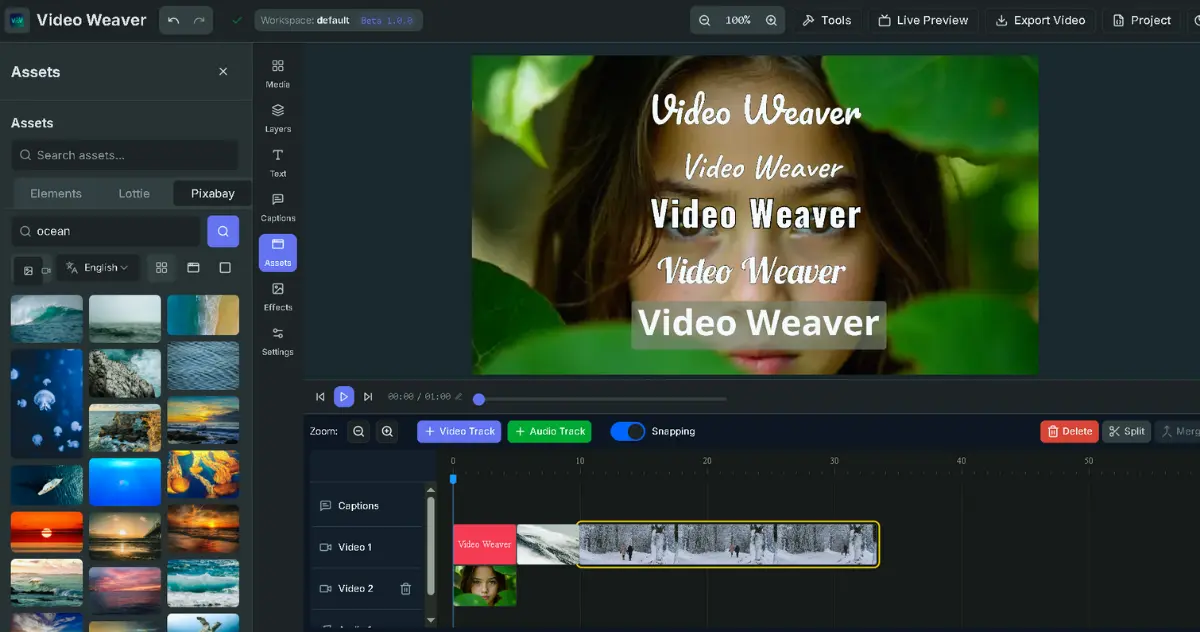
videoweaver.app
Video Weaver: Professional video editing directly in your browser. No downloads required.
Learn More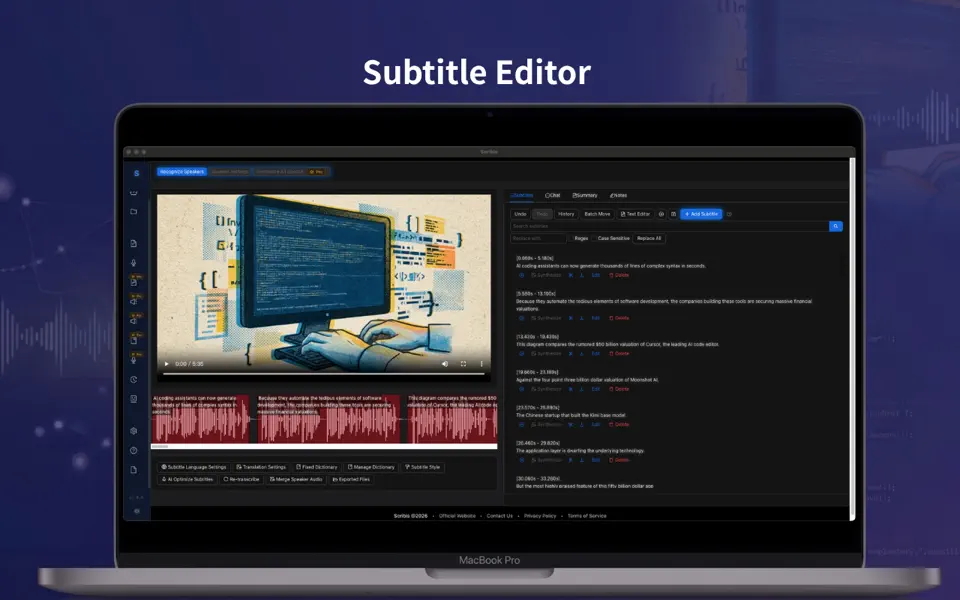
scribis.app
Scribis: Subtitle editing, audio transcription, and live transcription.
Learn Morevideoweaver.app
Video Weaver: Professional video editing directly in your browser. No downloads required.
Learn Morescribis.app
Scribis: Subtitle editing, audio transcription, and live transcription.
Learn More