

AI Daily: Cursor 3’s New Interface, Major Pricing Shifts, and Alternative Solutions
The pace of advancement in the AI field is breathtaking. Major platforms have recently introduced significant updates to their pricing mechanisms and tool interfaces. As precise control over compute costs and development efficiency becomes a top priority for every engineer, understanding these shifts is crucial. Today’s highlights cover the new editor interface, a major reshuffling of big-tech pricing models, and the latest alternatives and expert insights.
Cursor 3: Redefining the Agent Collaboration Experience
Software development is evolving daily. As AI writes a larger portion of code, managing these tools effectively has become a challenge. The newly released Cursor 3 is designed to solve exactly this. This version provides an integrated workspace for building software alongside agents.
Users can now manage all AI agents within a single interface. Whether local or cloud-based, agents are clearly visible in the sidebar. The new version even supports running multiple agents in parallel, allowing development teams to handle tasks across different repositories simultaneously without wasting time.
Another highlight is the seamless handoff between local and cloud environments. For long-running tasks, users can move sessions from their local machine to the cloud. Close your laptop, grab a coffee, and the cloud task continues. Conversely, if you want to test on your desktop, you can easily pull cloud tasks back locally. Additionally, Cursor 3 integrates PR merging, a built-in browser, and a plugin marketplace, significantly smoothing the coding and review workflow.
OpenAI Codex Pricing Revamp: Precise Token-Based Calculation
While tools are improving, the bottom line is always a concern. OpenAI recently launched a new pricing structure and rate card for Codex. For new and existing ChatGPT Business customers, as well as new ChatGPT Enterprise customers, billing has shifted from “per message” to “per API Token usage.” Existing Enterprise and Edu customers will temporarily remain on the old pricing until further notice.
What does this mean for daily expenses? The new rate card separates input, cached input, and output tokens to reflect actual compute consumption. For GPT-5.4, every million input tokens cost 62.5 points, while output tokens are significantly higher at 375 points. If your work involves heavy output or frequent use of the “Fast Mode” (which consumes double points), your budget will be affected.
Market Observation: The Era of Cheap AI is Over The shift from per-message to token-based billing at OpenAI, combined with Anthropic’s strict limitations on third-party tools, points to a clear trend. The old “flat-rate” or “all-you-can-eat” models cannot sustain modern agent workflows with hundreds of thousands of context tokens. By moving to token-based billing, platforms are passing high compute costs directly onto advanced developers. This forces developers to optimize prompts, utilize caching, or switch to cheaper small models to manage budgets.
Claude Ecosystem Shock: Removing Third-Party Support and Offering Credits
While OpenAI changed its rules, Anthropic also made a major move. Starting tomorrow at 12:00 PM PT, Claude’s basic subscription will no longer cover the use of third-party tools like OpenClaw. This is a critical change for developers relying on third-party integrations.
However, the company isn’t leaving users empty-handed. To celebrate the launch of extra usage packages, Anthropic is offering one-time extra usage credits. Pro users get $20, Max 5x and 20x users receive $100 and $200 respectively, and Team plans get a $200 credit.
A key detail: users must enable the “Extra Usage” toggle and click the claim button via the web version of settings before April 17, 2026. The mobile app does not currently support this. These credits expire 90 days after claiming. To continue using third-party tools after the deadline, users will need to use API keys or purchase discounted packages.
Harnessing Claude’s Intelligence for High-Performance Apps
Speaking of Claude, Anthropic recently shared development tips. Building apps often requires balancing intelligence, latency, and cost. A recent post on the Anthropic blog suggests three practical architectural patterns.
First, “use tools Claude knows well,” such as bash and text editors. Second, “ask what you can stop doing.” Instead of piping all tool results back into the context window (wasting tokens), give Claude code execution permissions. Let it filter results itself and manage context via skill files and memory folders.
Finally, “set boundaries carefully.” To improve cache hit rates, place static content like system prompts and tools at the beginning, while appending dynamic updates at the end using <system-reminder> tags. For risky external API calls, use declarative tools for manual review to find the sweet spot between safety and efficiency.
Xiaomi MiMo Plan: Support for Major Tools, but is it Worth it?
With Claude removing direct support for OpenClaw, many are looking for alternatives. Xiaomi’s MiMo Token Plan has emerged as an attractive option. It covers flagship models like MiMo-V2-Pro, MiMo-V2-Omni, and MiMo-V2-TTS, and is perfectly compatible with tools like OpenCode and OpenClaw.
Regarding subscriptions, currently, a verified account can only purchase one package at a time, and auto-renewal is not yet supported (expected within a week). Once a package expires, any first-purchase discounts are lost. Most importantly, unused credits do not roll over to the next month. Users should choose their monthly quota based on actual needs and monitor usage closely.
Developer Guide: A Nightmare for Power Users While the MiMo plan offers tiers from Lite to Max (with an 88% discount for the first purchase), it may not be ideal for heavy Agent framework users. Under the official rules, using the flagship MiMo-V2-Pro model deducts 2 credits for every 1 token. If the context exceeds 256k, it deducts 4 credits.
For example, a 99 RMB “Standard” package offers 200 million credits, which effectively translates to only 100 million (or even 50 million) tokens. Real-world tests show that intensive agent tasks can burn through 130 million tokens in just 5 days. This means a 99 RMB package could be exhausted in less than two days. With no rollover and high multipliers, cost management becomes a significant challenge. It functions more like a “high-speed toll” than an “all-you-can-eat” plan.
Q&A
Q1: I am a ChatGPT Plus user. Will the OpenAI Codex shift to token-based billing affect me immediately? A: No. The new token-based billing currently applies to new and existing ChatGPT Business customers and new ChatGPT Enterprise customers. Existing Plus, Pro, Enterprise, and Edu customers remain on the old rates until they receive a formal transition notice.
Q2: Are there any “traps” in claiming the Claude compensation credits? A: Yes, two key points: First, you must claim via the web version, as the mobile app doesn’t support the “Extra Usage” toggle. Second, you must claim by April 17, 2026, and the credits expire after 90 days.
Q3: Why is the Xiaomi MiMo plan considered a “nightmare” for some power users? A: Primarily due to the high consumption multipliers for high-end models and the lack of credit rollover. Flagship models can cost up to 4 credits per token for long contexts. Since unused credits vanish at the end of the term, heavy users face extreme pressure to either over-purchase or constantly upgrade.
Q4: How does Cursor 3’s “Seamless Handoff” help developers? A: It solves the pain point of “long tasks preventing shutdown.” When an agent is handling a time-consuming task, you can move the session to the cloud. Even if you close your laptop or go offline, the cloud task continues. You can then pull it back to your local machine whenever you’re ready to test.
DMflow.chat
DMflow.chat: Your intelligent AI partner for exceptional customer engagement.
Learn More
DMflow.chat
Discover DMflow.chat and unlock the new era of AI-powered customer service.
Learn More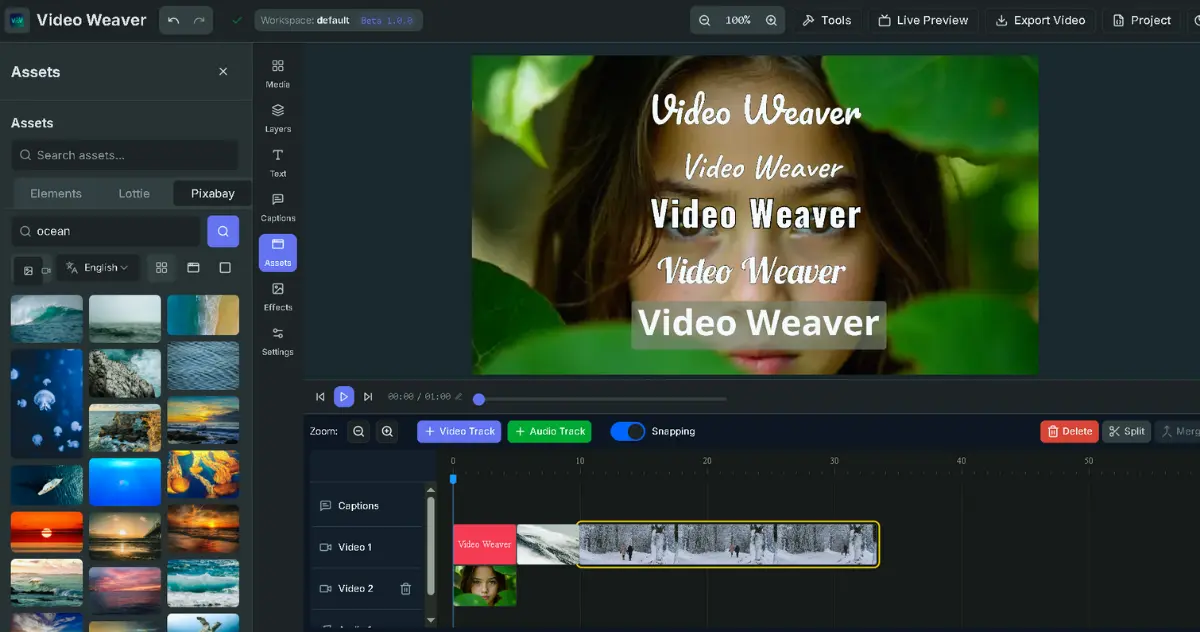
videoweaver.app
Video Weaver: Professional video editing directly in your browser. No downloads required.
Learn MoreDMflow.chat
DMflow.chat: Your intelligent AI partner for exceptional customer engagement.
Learn MoreDMflow.chat
Discover DMflow.chat and unlock the new era of AI-powered customer service.
Learn Morevideoweaver.app
Video Weaver: Professional video editing directly in your browser. No downloads required.
Learn More