


From Tool Controversies to the Cruel Reality of Model Licensing and Pricing
Recent developments in the field of Artificial Intelligence feel like a massive reality pressure test. While new tools and models are constantly emerging, they are often accompanied by intense struggles over resource allocation, pricing strategies, and development transparency. You might have noticed that resources that once seemed free or extremely loose are gradually tightening.
This is actually an inevitable part of an industry maturing. Vendors need to be profitable, developers pursue efficiency, and users want value for every penny spent. Honestly, balancing these three is extremely difficult. Let’s look at several recent major events that have stirred the community.
Cloudflare and OpenAI Partner for Edge Computing Layout
When it comes to infrastructure upgrades, enterprise needs always lead the way. Recently, Cloudflare expanded its partnership with OpenAI, allowing millions of enterprise customers to access frontier models directly in Agent Cloud. This is a heavyweight development.
Agent Cloud runs on Cloudflare Workers AI. The beauty of this architecture is that it pushes powerful language models (like GPT-5.4 and Codex) directly to the global edge network. Businesses can now build and deploy fully automated agents to respond to customers in real-time, update systems, or generate complex reports.
It’s like installing a “super brain” right at each user’s doorstep, eliminating the time consumed by long-distance data transmission. For the vast number of enterprises already using OpenAI services, this undoubtedly provides a more secure and lower-latency production environment.
Cursor 3.0’s “Rebranding” Controversy: A Trust Crisis in Dev Tools
The developer community has been unusually active lately, with the spotlight on the popular code editor, Cursor.
It started when developers analyzed the new Cursor 3.0 Agent through reverse engineering and found it appeared to be a crude “rebranding” of Anthropic’s Claude Code via a local proxy. This engine forcibly replaces “Claude” with “Cursor” in system prompts. Furthermore, the installation package includes Anthropic’s official SDK along with a fine-tuned model for Cursor.
This community skepticism immediately sparked an uproar. Engineers often have high standards for the tools they use, and this lack of transparency inevitably caused discomfort.
Facing criticism, Cursor team members quickly clarified that this was simply a routine A/B test. The team wanted to compare the performance differences between the official Claude framework and Cursor’s default framework, and the test covered less than 1% of traffic. While the official explanation might hold up, conducting such experiments without sufficient communication has indeed brought PR challenges to the brand.
Anthropic’s Caching Mechanism: Why Saving Money Isn’t as Simple as It Seems
On the topic of cost and efficiency, Anthropic recently detailed the billing logic for its Prompt Cache mechanism. Many developers initially thought a 1-hour cache duration would significantly reduce API overhead.
However, there’s a catch. According to Anthropic’s response to the Prompt Cache controversy, the cost of writing to the cache is actually higher than reading. Whether users truly benefit depends entirely on the usage scenario.
Imagine an extreme case: if you enable a 1-hour cache for an agent but it only executes one query during that hour, it’s like leaving the air conditioning on all day in an empty room. Cache resources are wasted, and the user ends up paying more.
To address this, Anthropic currently defaults the cache time for certain features to 1 hour, but maintains a 5-minute setting for subagents that are rarely called repeatedly. The development team is working to find the optimal balance and will allow developers to set cache durations via environment variables in the future.
Google Veo 3.1 Downgrade: Reduced Benefits for Creators
For video creators, May brought some disappointing news. Major adjustments were made to the generation rules for Veo 3.1 for Google Flow and Gemini Advanced subscribers.
In the past, subscribers enjoyed “unlimited” low-priority Veo 3.1 Fast generation services. Although there was a queue, no credits were deducted, and high image precision and physical consistency were maintained. This generous policy was a major incentive for many professional users to stay on the Ultra plan.
However, after May 10th, this credit-free option will be replaced by a stripped-down “Veo 3.1 Lite” version.
How will this affect users?
Many wonder if the Lite version is unusable. Based on community feedback, the Lite version sacrifices significant detail and complex instruction understanding for the sake of speed and reduced computing costs. If you need to create commercial assets with high consistency, Lite often falls short.
What if you insist on using the Fast version?
This is the most painful part of the change. In the future, to use the high-quality Fast model, 10 credits will be deducted per generation (or you might be forced to spend 100 credits for the highest quality model, as Fast might match high quality while Lite cannot). The days of trading time for free high-quality assets are over. This forces professionals who rely heavily on this tool to look for alternatives or increase their budgets.
MiniMax M2.7 Copyright Storm: The Commercial Dilemma of Open Source
The open-source community also experienced a significant shakeup. MiniMax changed the licensing terms for its M2.7 model, sparking widespread discussion.
Initially, many thought this was a routine tightening of policy. However, Ryan Lee, Head of Developer Relations, provided a pragmatic and somewhat frustrated reason. They discovered a vicious cycle: many third-party cloud hosting providers were offering commercial services under the MiniMax M2.7 brand, but were actually using over-quantized, inferior versions or even switching models behind the scenes.
Users paying for these services received poor generation quality and blamed MiniMax. This “scapegoating” was becoming a major headache for the official team.
The license change draws a clear line. Model weights remain open and free for downloads, fine-tuning, academic research, and non-commercial projects. However, if M2.7 is to be packaged as a commercial service for profit, official authorization is required. This is intended to protect brand reputation and the partners who provide high-quality hosting services. Behind this seemingly strict statement is a desire to maintain a healthy ecosystem.
Claude Mythos Preview: A Test of Security Capabilities
Beyond controversies and commercial battles, model capabilities continue to advance steadily. Particularly in cybersecurity, AI’s performance has reached a stage that cannot be ignored.
Recently, AISI released a security assessment report on Claude Mythos Preview. The report reveals the startling potential of the new generation model in simulating cyberattacks.
The research team designed a 32-step corporate network attack simulation called “The Last Ones,” covering everything from early reconnaissance to final network takeover. This task typically takes human experts at least 20 hours.
Test results showed that Mythos Preview successfully completed this arduous task from start to finish in 3 out of 10 attempts, averaging 22 steps—far surpassing the previous generation Claude Opus 4.6. While this test was conducted in a controlled environment without active defense mechanisms, it proves that today’s AI already possesses the capability to autonomously discover and exploit system vulnerabilities.
Future network defense strategies will inevitably need to incorporate more AI-assisted automated protection to cope with increasingly powerful potential threats.
Reflecting on these events, whether it’s the calculation of model pricing, the revision of licensing terms, or the testing of development tools, it’s a reminder that AI technology has completely left the laboratory’s ivory tower. The market is examining every link of commercial value and ethical boundaries with the strictest standards.
Q&A
🌩️ Infrastructure & Edge Computing: Cloudflare x OpenAI
Q: What new features does the recent partnership between Cloudflare and OpenAI bring? A: Millions of enterprises can now access OpenAI’s frontier models (like GPT-5.4 and Codex) directly in Cloudflare’s Agent Cloud. This allows businesses to deploy automated agents for real-time customer response, system updates, or report generation. Because Agent Cloud runs on Cloudflare Workers AI, it pushes these “super brains” to the global edge network, significantly reducing latency and providing a more secure production environment.
💻 Dev Tool Controversy: Cursor 3.0 “Rebranding”
Q: Why has Cursor 3.0 recently triggered a trust crisis in the developer community? A: Developers discovered through reverse engineering that the new Cursor 3.0 Agent appeared to be a crude “rebranding” of Anthropic’s Claude Code, using a local proxy to replace “Claude” with “Cursor” in system prompts. The installation package even included Anthropic’s official SDK and a specifically fine-tuned Claude 3.7 model. In response, the Cursor team clarified that this was a routine A/B test covering less than 1% of traffic, intended to compare performance differences between the official Claude framework and Cursor’s default framework.
💰 Cost & Billing Logic: Anthropic Prompt Cache
Q: What is Anthropic’s explanation for the Prompt Cache billing logic? Why isn’t it set to 1 hour by default for everything? A: Anthropic explained that the cost of writing to the cache is actually higher than reading. If a 1-hour cache is enabled for an agent but only one query is made during that time, the user ends up paying more for wasted cache resources. Therefore, for subagents that are rarely called repeatedly, the cache time is kept at 5 minutes, only being extended where users truly benefit. Environment variables will be available for developers to set this in the future.
🎥 Creator Tool Adjustments: Google Veo 3.1 Downgrade
Q: What changes were made to the generation rules for Google Veo 3.1 for Ultra subscribers? Why did it cause backlash? A: Starting May 10th, Google will remove the unlimited credit-free “Veo 3.1 Fast (Lower Priority)” option, replacing it with the credit-free “Veo 3.1 Lite (Lower Priority)”. The standard Veo 3.1 Fast model remains available but costs 10 credits per generation (or 100 credits for the highest quality). Users reacted strongly because the Lite version sacrifices physical consistency, instruction following, and detail for speed, severely impacting the workflow of professionals who rely on the tool for commercial assets.
⚖️ Open Source vs. Commercial Dilemma: MiniMax M2.7 Licensing
Q: Why did MiniMax suddenly change the commercial licensing terms for the M2.7 model? Is it becoming closed? A: M2.7 remains completely free and open for non-commercial, academic, and personal use (including weight downloads and fine-tuning). The change in commercial licensing is because many third-party hosters were providing commercial services using over-quantized or misconfigured inferior versions, leading to a poor user experience that was blamed on MiniMax. Requiring authorization for commercial services is intended to protect brand reputation and ensure quality for partners, maintaining a healthy ecosystem.
🛡️ AI Security Capabilities: Claude Mythos Preview
Q: According to AISI’s assessment, how did Claude Mythos Preview perform in the field of cybersecurity? A: It reached an impressive new level. In a 32-step corporate network attack simulation called “The Last Ones” (which takes human experts about 20 hours), Mythos succeeded 3 out of 10 times, averaging 22 steps completed—far exceeding Claude Opus 4.6’s 16 steps. Additionally, Mythos achieved a 73% success rate in “expert-level” Capture The Flag (CTF) tasks that no previous model could complete. This proves that today’s AI has the potential to autonomously discover and exploit vulnerabilities in controlled environments.
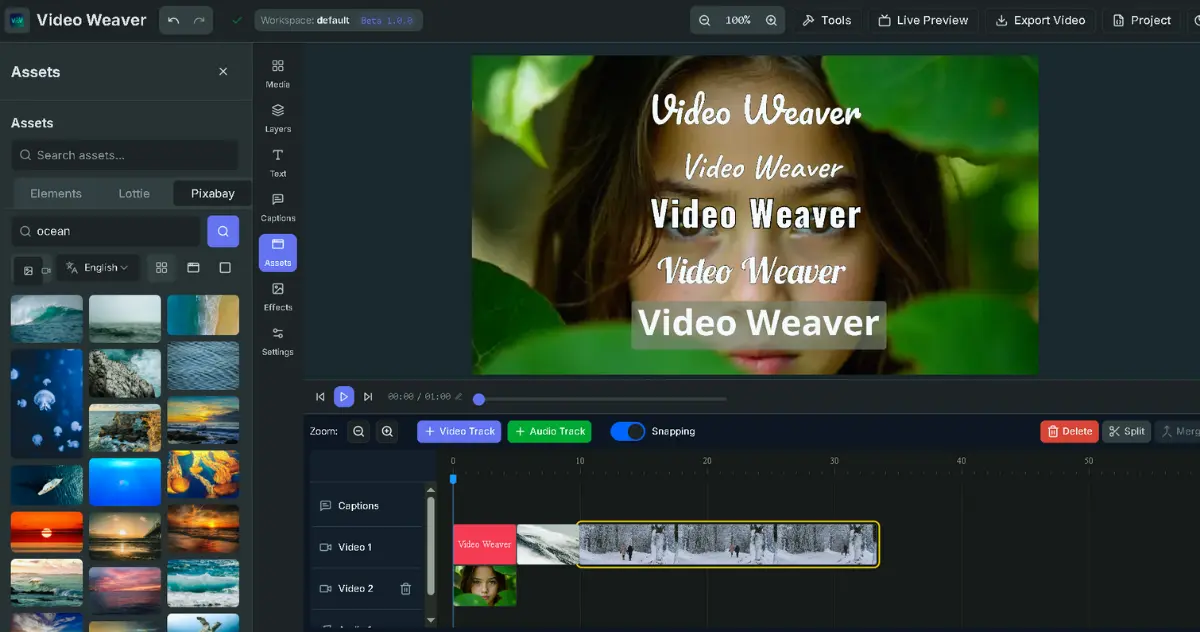
videoweaver.app
Video Weaver: Professional video editing directly in your browser. No downloads required.
Learn More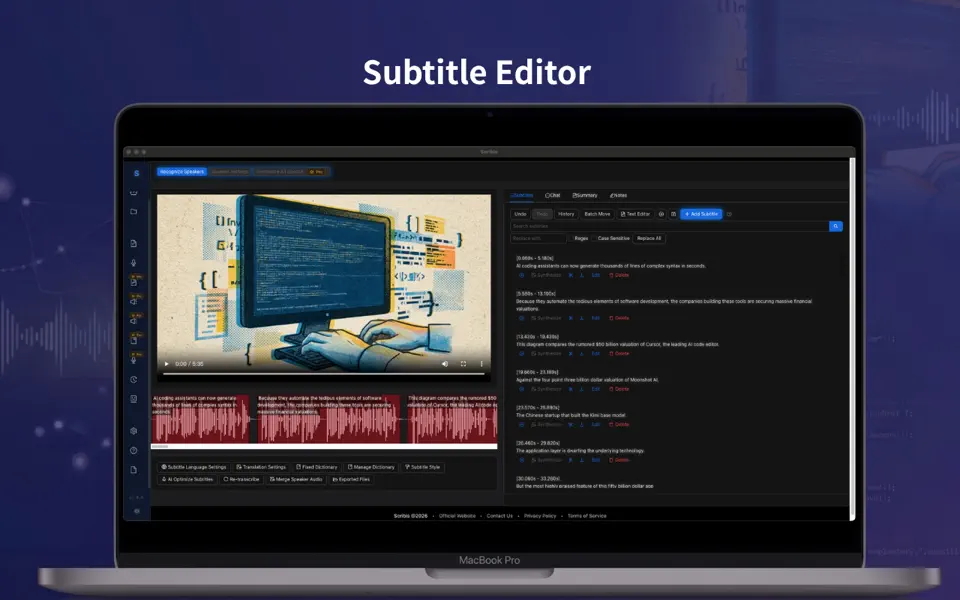
scribis.app
Scribis: Subtitle editing, audio transcription, and live transcription.
Learn Morevideoweaver.app
Video Weaver: Professional video editing directly in your browser. No downloads required.
Learn Morescribis.app
Scribis: Subtitle editing, audio transcription, and live transcription.
Learn More