


Today’s AI tech world is full of major updates, from productivity tools to entertainment applications. Anthropic has launched the more powerful Claude Sonnet 4.6, challenging existing model limits; Google has equipped Gemini with advanced music creation capabilities and even strengthened NotebookLM’s presentation features. Additionally, OpenAI has turned its attention to blockchain safety, and the open-source community welcomes a surprisingly lightweight speech model. This article takes you through these important technological breakthroughs.
Anthropic Launches Claude Sonnet 4.6: A Smarter, More Computer-Literate AI Assistant
Anthropic has raised the bar again with the official release of Claude Sonnet 4.6. Officially touted as the most powerful Sonnet version to date, this model features comprehensive upgrades in key areas such as coding, Computer Use, long-context reasoning, and Agent Planning.
For developers and power users, the most exciting news is that Sonnet 4.6 now supports a 1 million token context window in Beta. This means it can process an entire novel, a massive codebase, or complex legal documents in one go without “forgetting” earlier content. Currently, this model has become the default for claude.ai and Claude Cowork, available for immediate experience by both free and Pro users.
Beyond basic capabilities, Sonnet 4.6 has made significant strides in “Computer Use” skills. Anthropic introduced the concept of AI operating computers like humans back in October 2024. Now, after sixteen months of refinement, Sonnet 4.6 shows vastly improved performance on the OSWorld benchmark. It can now more fluidly handle tasks like browsing the web, filling out multi-step forms, and even switching between multiple browser tabs. While its speed and precision haven’t fully reached human expert levels, this marks a shift for AI from a mere “conversationalist” to an “executor” that can actually help you perform tedious work.
Google Gemini Integrates Lyria 3: Compose Music with Text and Images
If chatting with AI feels a bit monotonous, Google’s new feature might catch your eye. Google announced the integration of DeepMind’s most advanced music generation model, Lyria 3, into the Gemini App. This feature is currently in beta, but it allows anyone to generate a 30-second high-quality music track simply by describing it in text or even uploading an image.
The interesting part of this technology is its multimodal nature. You don’t need to know music theory; just tell Gemini: “Give me a slow R&B song about a sock that lost its pair,” and seconds later, a track with vocals, melody, and accompaniment is born. You can even upload a photo of your dog in the forest and ask AI to create a soundtrack that fits the mood.
Of course, with the proliferation of generative music, copyright and safety are key concerns. Google emphasizes that all audio tracks generated by Lyria 3 will embed SynthID watermarks. This is a marker imperceptible to human hearing but identifiable by machines, used to prove the audio is AI-generated. This not only protects creators but also makes AI content identification more transparent. Currently, this feature has been rolled out in multiple countries and supports various languages, making music creation as simple as sending a message.
OpenAI Releases EVMbench: Guarding Blockchain Smart Contracts with AI
In the fintech sector, Smart Contracts manage hundreds of billions of dollars in assets, making their security paramount. OpenAI, in collaboration with Paradigm, has launched a new benchmark tool called EVMbench, designed to evaluate AI agents’ ability to detect, patch, and exploit vulnerabilities in blockchain environments.
The launch of EVMbench shows that OpenAI is taking the application of AI in cybersecurity defense seriously. This tool contains 120 curated high-severity vulnerabilities, mostly from real code audit competitions. Its operation mode is divided into three parts: Detect, to see if AI can find vulnerabilities in the contract; Patch, to test if AI can fix the vulnerability without breaking original functionality; and Exploit, which is essentially a “red team exercise” to see if AI can simulate hacker attacks to verify the vulnerability’s authenticity.
Current test results show that models like GPT-5.3-Codex perform well in “Exploit” mode but still have room for improvement in detecting and patching subtle vulnerabilities. The core purpose of this research is to encourage developers to use AI for defensive audits, identifying potential risks before contract deployment rather than fixing them after a hack occurs.
NotebookLM Major Update: Modify Presentations with One Sentence
Google’s note-taking and research assistant, NotebookLM, also received a highly requested feature update today. Users can now directly modify generated slide content using natural language prompts.
Previously, if the style of AI-generated slides was off or the focus was skewed, users often had to adjust manually page by page. Now, you simply need to type “change all titles to a livelier tone” or “condense the text on page three,” and the system will automatically complete the revision. Additionally, NotebookLM finally supports exporting to PPTX format. For professionals accustomed to using PowerPoint for presentations, this is undoubtedly a boon (Google Slides support is also coming soon). This makes the workflow from data organization to final presentation much smoother.
Kitten ML Releases Ultra-Lightweight Open Source TTS Model: Small Enough to Run on Any Device
Remember the previous KittenTTS? For developers who love tinkering with local AI applications, Kitten ML’s new release is definitely worth attention. They have open-sourced three extremely lightweight Text-to-Speech (TTS) models: Kitten TTS.
The hallmark of these models (Mini 80M, Micro 40M, Nano 14M) is “small.” The smallest Nano version has only 14 million parameters and a file size of less than 25MB. This means you don’t need expensive GPUs; high-quality speech generation can run smoothly on edge devices like Raspberry Pis or old phones using just the CPU.
This set of models provides 8 expressive voices (4 male, 4 female) and is completely free for commercial use under the Apache 2.0 license. This breaks the limitation where high-quality TTS often relied on cloud APIs, opening new possibilities for local voice assistants and offline applications.
Google AI Impact Summit: $15 Billion Investment in Infrastructure and Talent
Finally, we turn our gaze to India. At the Google AI Impact Summit, Google announced a series of major initiatives aimed at bridging the digital divide. This includes investing $15 billion in building AI infrastructure in India and launching the “America-India Connect initiative” to enhance network resilience in the Global South through new subsea cables.
Beyond hardware, Google also pledged resources to nurture talent, including partnering with the Indian government to train millions of civil servants in using AI tools, and providing funding for global researchers to support their use of AI in solving complex problems like climate change and healthcare. These moves indicate that while tech giants drive product innovation, they are also attempting to ensure the benefits of AI are shared more equitably across the globe.
FAQ
Q: Is Claude Sonnet 4.6 free? A: Yes, Claude Sonnet 4.6 is currently the default model for free and Pro users on claude.ai. However, free users may have more restrictions on usage frequency and rate.
Q: Where can I use Google’s Lyria 3 to create music? A: Lyria 3 is currently integrated into the Gemini App. If the feature is supported in your region, you just need to enter a text prompt or upload an image in the App to start creating music.
Q: Can NotebookLM exported PPTX files be opened in Keynote or LibreOffice? A: Generally, PPTX is a universal presentation format that software like Keynote and LibreOffice Impress can open, but layout might differ slightly. It is recommended to use PowerPoint for the best results.
Q: Does Kitten TTS support Chinese? A: According to current release information, Kitten TTS V0.8 mainly supports English, but officials state that future versions will add multi-language support. Since it is open source, the community might also quickly release fine-tuned versions for other languages.
scribis.app
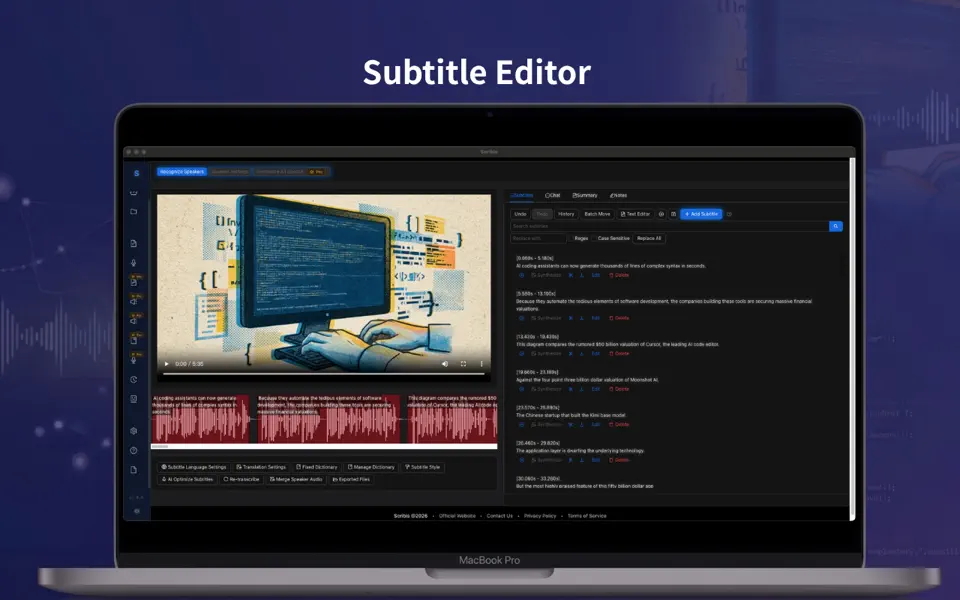
Scribis: Subtitle editing, audio transcription, and live transcription.
Learn More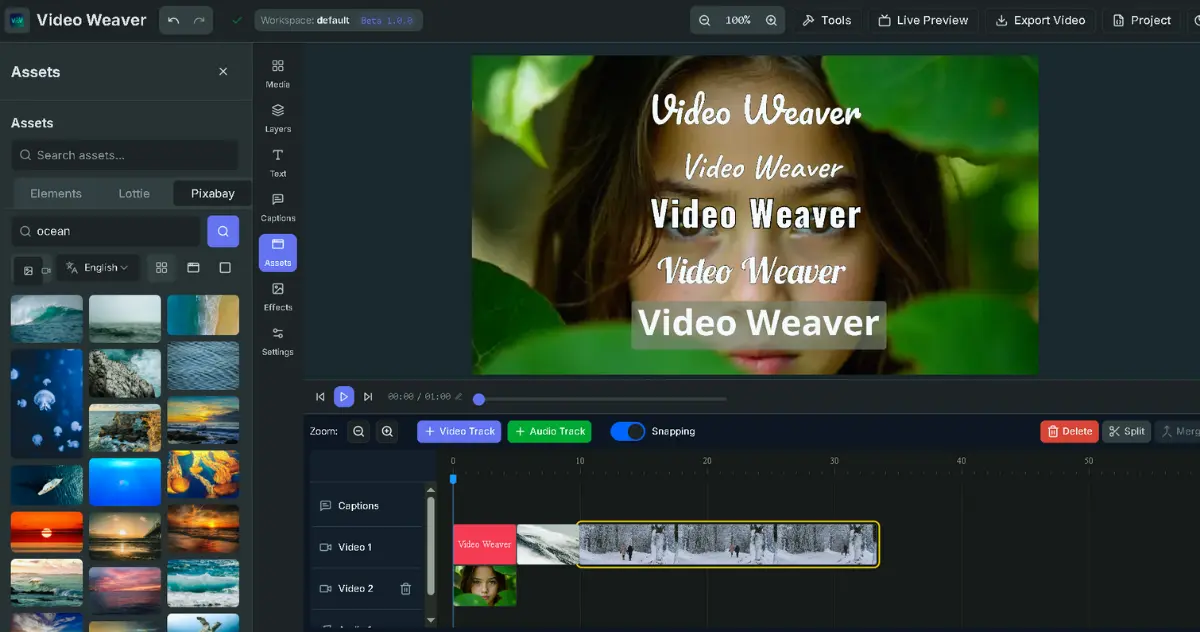
videoweaver.app
Video Weaver: Professional video editing directly in your browser. No downloads required.
Learn Morescribis.app
Scribis: Subtitle editing, audio transcription, and live transcription.
Learn Morevideoweaver.app
Video Weaver: Professional video editing directly in your browser. No downloads required.
Learn More