


Claude Opus 4.7 Shocks and Sparks Controversy, OpenAI Codex Evolves
The pace of AI development today is dizzying. Every day, we adapt to new tools and technologies. To be honest, it’s sometimes overwhelming to keep up with the deluge of information. However, staying updated is key to working smarter. April has brought several industry-shaking announcements, from model upgrades and community controversies to precise strategic moves by tech giants in specific fields. Let’s take a closer look at how these changes will impact our daily work.
Claude Opus 4.7 Debuts: Leap in Capability or Stealth Price Hike?
Anthropic announced the official launch of Claude Opus 4.7 this month, highlighting its exceptional performance in software engineering. It handles long-running tasks more rigorously and features three times the visual resolution of its predecessor. Sounds perfect, right? But the devil is in the details.
Many developers are wondering: Is Opus 4.7 actually better? Strong skepticism has erupted on Reddit. Users are complaining that Opus 4.7 uses a new tokenizer, resulting in a 1.0x to 1.35x increase in token consumption (up to 35%, depending on the content type) for the same input. This feels like a stealth price increase to many. Furthermore, scores on the MRCR long-context retrieval benchmark plummeted from 78.3% in version 4.6 to 32.2% in version 4.7. While Anthropic developers clarified that they prioritize “Graphwalks” performance in real-world applications and plan to phase out MRCR, user concerns about model regression persist.
Another common question: How should we handle the massive 1-million-token context window? While powerful, such large memory spaces are prone to “context rot.” According to Thariq’s share on X, managing sessions effectively is crucial. When the model starts to lose track or give poor suggestions, use the /compact command to summarize the conversation or simply start a new session. Keeping too much irrelevant history is counterproductive, slowing down reasoning and creating noise.
Your Dedicated Virtual Assistant: Can Codex Really Take Over Your Computer?
Turning to the Microsoft and OpenAI camp, the major update to Codex is a huge win for developers. Did you know it has moved beyond simple code assistance?
Codex can now operate silently in the background while you work. It can “see” your screen, click your mouse, and even type text. A common concern for developers is whether this background activity will interfere with their work. The answer is no. Multiple agents can run in parallel on a Mac without interfering with each other. This design significantly improves the flow of frontend design and app testing. It even features a built-in browser to provide precise editing suggestions directly on web pages, eliminating the need to toggle between applications.
Lightweight yet Powerful: Why Qwen3.6-35B-A3B Stands Out
The open-source community is equally impressive. The team at Alibaba released Qwen3.6-35B-A3B, an open-source model using a Mixture-of-Experts (MoE) architecture that has garnered significant attention.
While it has 35 billion total parameters, only about 3 billion are active during inference. This lightweight design allows it to rival much larger dense models in agentic coding tasks. For developers looking to deploy high-performance models on a budget, this is a very attractive option. The model weights are already available for download on Hugging Face.
Specialized Guardians: GPT-Rosalind and Cybersecurity Grants
AI is also extending its reach into specialized scientific and security domains. OpenAI introduced GPT-Rosalind, designed specifically for life sciences. It specializes in chemistry, protein engineering, and genomics, helping scientists navigate vast literature and complex experimental data to shorten drug discovery timelines.
Meanwhile, cybersecurity challenges are mounting. To bolster digital infrastructure, OpenAI announced two major initiatives. First, they are committing $10 million in API credits through the Cybersecurity Grant Program to support open-source security teams and vulnerability researchers. Additionally, they launched the “Trusted Access for Cyber” project, providing secure access to advanced defense models like GPT-5.4-Cyber for global business leaders and government agencies (such as AI Safety Institutes in the US and UK). The goal is simple: democratize cutting-edge defense capabilities to protect the digital systems we all rely on.
Ending Tab Chaos: Chrome AI Mode and Gemini Convenience
Finally, let’s look at practical upgrades for everyday browsing. Google has introduced a new AI mode for Chrome. Tired of constantly switching tabs while researching? Now, when you click a link, the page can open side-by-side with the AI mode.
You can ask the AI questions directly about the page content or even have it search and synthesize information across multiple open tabs. This makes absorbing and comparing information much more intuitive. Additionally, Google is offering attractive promotions. If you’re looking for a subscription, check out the limited-time discounts for Gemini. Eligible users in regions like the US and Japan can get 12 months of YouTube Premium at a discount; after 12 months, they can bundle it with Google One at a lower renewal rate. For more details, visit the Google One promotion page.
Technology continues to evolve at a breakneck pace. From programming and research to daily browsing, AI is integrating into our lives in unprecedented ways. By staying curious and leveraging these new tools, we can all find our place in this wave of innovation.
Q&A
On Claude Opus 4.7 and Context Management
Q1: The 1-million-token window in Claude Opus 4.7 is powerful, but what are the practical challenges and solutions? A1: While the large window allows for long-running tasks, it risks “context rot.” As conversations grow, the model’s attention can drift, and irrelevant history can interfere with the task. Effective strategies include:
- Use
/rewindto correct errors: Instead of telling the model “that didn’t work,” rewind to the point before the error and provide a more precise instruction to avoid polluting future logic. - Start new sessions: For entirely new tasks, use
/clearwith a summarized prompt to keep the context clean. - Use Subagents: For tasks generating many intermediate results, spawn subagents with independent context windows and have them report only the final result back to the main session.
Q2: Why are developers unhappy with the token consumption of Claude Opus 4.7? A2: Based on community discussions, the primary reason is the new tokenizer, which splits text into more tokens—roughly 1.0x to 1.35x more than the previous generation. Additionally, Opus 4.7 performs deeper reasoning on difficult problems, generating more output tokens. This feels like a price hike to many users who find their credits depleting much faster.
On OpenAI Codex Updates
Q3: Besides code assistance, what background features does the new OpenAI Codex offer? A3: The latest Codex can operate in the background, “seeing” the screen, clicking, and typing to control various applications. It allows multiple agents to run in parallel on a Mac without interrupting the user’s work. It also features a built-in browser for precise instructions directly on web pages, boosting frontend and game development efficiency.
On Qwen3.6-35B-A3B
Q4: Why is Qwen3.6-35B-A3B getting so much attention in the developer community? A4: Alibaba’s Qwen3.6-35B-A3B uses an MoE architecture. Despite having 35 billion parameters, it only activates about 3 billion during use. This lightweight, high-performance design allows it to rival much larger dense models (like Qwen3.5-27B and Gemma4-31B) in agentic coding tasks. It is easily deployable via Hugging Face or ModelScope.
On GPT-Rosalind and Scientific Research
Q5: What pain points does GPT-Rosalind address for scientists? A5: In the US, it takes an average of 10 to 15 years for a new drug to move from discovery to market. Scientists are often bogged down by vast literature and complex data. GPT-Rosalind is a reasoning model for chemistry, protein engineering, and genomics. Combined with life science plugins, it connects to over 50 public databases and tools, accelerating literature reviews, sequence analysis, and experimental planning.
On OpenAI’s Cybersecurity Initiatives
Q6: How is OpenAI strengthening the cybersecurity ecosystem? A6: OpenAI has launched two key programs:
- Cybersecurity Grant Program: $10 million in API credits to support open-source security teams and researchers (like Socket and Semgrep).
- Trusted Access for Cyber: Providing secure access to advanced models like GPT-5.4-Cyber for major corporations (e.g., Bank of America, NVIDIA) and government agencies to protect critical infrastructure.
On Chrome AI Mode
Q7: How does the new Chrome AI mode solve “tab chaos”? A7: Instead of switching between tabs, users can now open links side-by-side with an AI mode. This allows for direct questioning without leaving the page. The AI can also search across multiple open tabs (notes, slides, PDFs) to synthesize information and provide tailored answers.
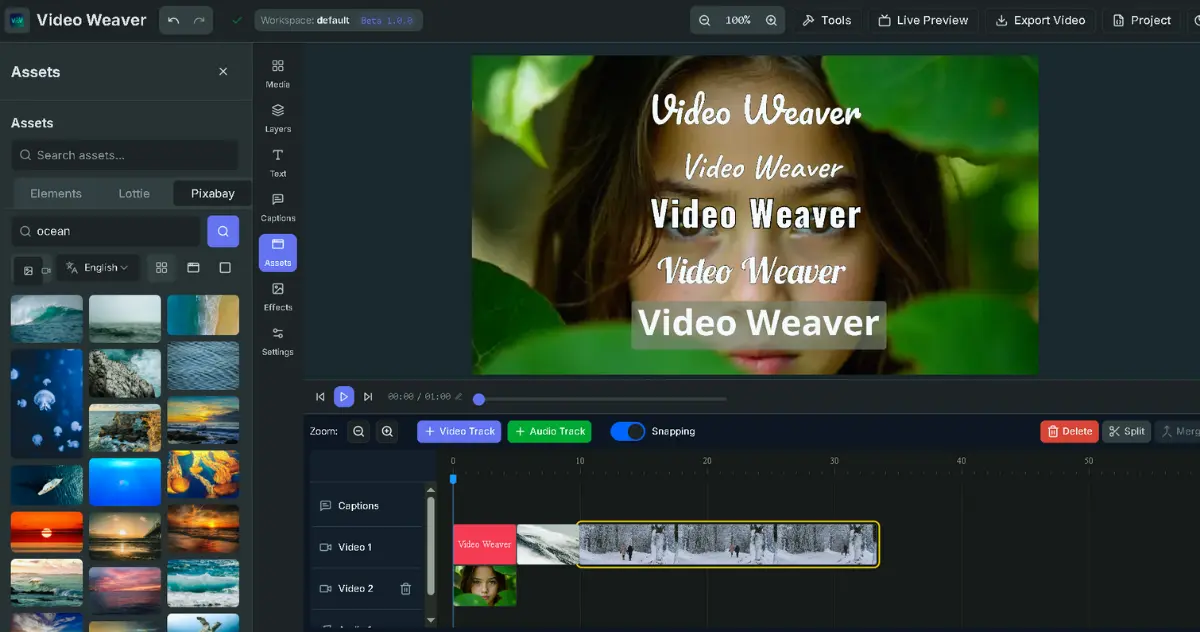
videoweaver.app
Video Weaver: Professional video editing directly in your browser. No downloads required.
Learn More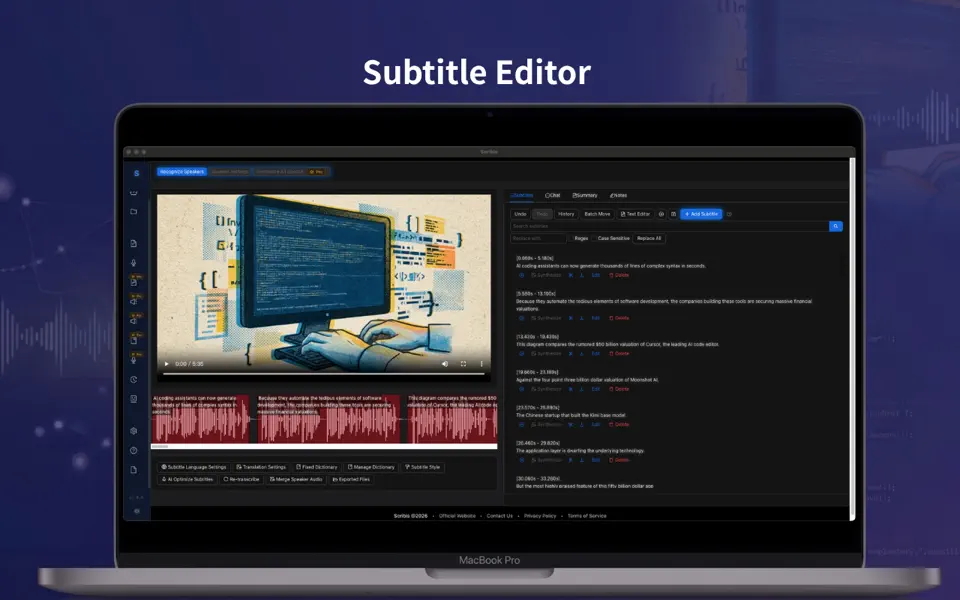
scribis.app
Scribis: Subtitle editing, audio transcription, and live transcription.
Learn Morevideoweaver.app
Video Weaver: Professional video editing directly in your browser. No downloads required.
Learn Morescribis.app
Scribis: Subtitle editing, audio transcription, and live transcription.
Learn More