


AI Tech Spotlight: Claude Enters Design and Google Unveils New Music Generation Tools
Every morning, the tech news cycle brings something that truly stands out. Today, the industry released several heavyweight updates spanning visual design, music creation, and 3D virtual environment construction. Simultaneously, there are critical security warnings for developers and noteworthy legal precedents regarding copyright. Let’s dive into these essential updates.
Claude Design: Making Design as Simple as Chatting
When we think of design tools, we often imagine complex professional software interfaces. Anthropic Labs has just launched Claude Design, powered by the robust Claude Opus 4.7 vision model. This means users can now collaborate with Claude through natural conversation to produce beautiful design drafts, interactive prototypes, or presentations.
This is fantastic news for product managers or founders without a design background. By describing specific needs in plain text, Claude automatically constructs initial versions. Even better, it seamlessly integrates wireframes with projects. While it might sound too good to be true, it isn’t meant to replace designers entirely. The core value lies in helping teams materialize early concepts, making the handoff to professional designers for fine-tuning much smoother. This feature is currently available in preview for Pro, Max, Team, and Enterprise subscribers.
Google Flow Music: Turning Inspiration into Full Tracks
Google has officially announced a new member of the Flow family on X (formerly Twitter): Google Flow Music. Formerly known as ProducerAI, Flow Music extends the capabilities of the Flow series—previously focused on images and video—into the realm of songs and playlists.
This service is now a standalone music creation platform. Users can transform their imagination into well-produced musical tracks using natural language prompts. It is powered by Google’s latest Lyria 3 model. While creating a song used to require proficiency in various instruments and mixing techniques, it now only takes a few lines of text. The service is currently free to start, with no credit card required.
Real 3D Spaces: NVIDIA Lyra 2.0 Overcomes the Forgetting Problem
In the realm of 3D virtual generation, current AI models often face bottlenecks when generating large-scale environments. For instance, after a virtual camera moves for a while, the model might “forget” what the previous space looked like, leading to distorted objects or misplacements. NVIDIA showcased the Lyra 2.0 framework to solve these issues, known as spatial forgetting and temporal drifting.
Lyra 2.0 can generate persistent, explorable large-scale 3D worlds. It achieves this by retaining 3D geometric data for every frame, precisely establishing spatial correspondences. Through self-augmented training, the model learns to correct drifting caused by the passage of time.
For developers interested in the technical details, the Arxiv paper and GitHub source code are publicly available. The potential of turning a flat image into a walkable, 3D space for real-time rendering and robot simulation is significant.
Security Alert: Vercel April Incident
Beyond exciting new features, there is serious security news. Vercel released a security bulletin for April 2026. The incident stemmed from a compromise of Context.ai, a third-party AI tool, which led to the hijacking of some Vercel employees’ Google Workspace accounts.
Although Vercel quickly took protective measures and emphasized that environment variables marked as “Sensitive” showed no signs of being accessed, it serves as a stark reminder. Any unprotected API keys or database credentials are at risk.
- Regularly check account and environment activity logs.
- Immediately update and rotate unprotected environment variables.
- Use the “Sensitive Environment Variables” feature to protect confidential data.
Maintaining a habit of reviewing deployment settings is the best way to ensure project security. Users are strongly advised to verify their credential status immediately.
AI and Copyright: Insights from a German Court Ruling
Finally, an interesting legal development: as generative tools become more common, copyright disputes are on the rise. Recently, the Higher Regional Court of Düsseldorf (OLG Düsseldorf) issued a ruling regarding the use of AI to edit and use a copyrighted photo of an underwater dog.
While many initially assumed this would be a clear case of infringement, the court ruled that the adaptation did not infringe on the original work’s copyright. The core concept is that content generated by software without sufficient human creative intervention is difficult to recognize as an original work. Furthermore, if the generated result does not have substantial creative overlap with the original, it does not necessarily constitute infringement. This case provides a valuable reference for the future boundaries of digital creation.
Q&A
🎨 About Claude Design
Q: What is Claude Design, and who is it for? A: Claude Design is a new product from Anthropic Labs, powered by the Claude Opus 4.7 vision model. It allows users to generate design drafts, interactive prototypes, and presentations through natural conversation. It’s suitable for designers to quickly explore directions, as well as product managers and founders who want to materialize their ideas without a design background.
Q: How does Claude Design ensure consistency with company branding? A: During onboarding, Claude can read your team’s codebase and design files to automatically build a custom design system. Subsequent projects will automatically apply the brand’s colors, fonts, and components.
🎵 About Google Flow Music
Q: How does Google Flow Music differ from previous Flow tools? A: Previous Flow tools focused on image and video generation, while Flow Music expands into song and playlist creation. Formerly ProducerAI, it is now a standalone platform using Google’s Lyria 3 music model.
Q: Are there any barriers or limits to using Google Flow Music? A: The barrier is very low; you only need natural language prompts to turn ideas into tracks. Currently, the platform is free to start and does not require a credit card.
🌐 About NVIDIA Lyra 2.0
Q: What bottlenecks in 3D generation does NVIDIA Lyra 2.0 address? A: Current models often face spatial forgetting and temporal drifting when generating large environments. Lyra 2.0 retains 3D geometric data for every frame to route information and overcome forgetting, using self-augmented training to allow the model to correct drift automatically.
Q: What is the practical value of the 3D spaces generated by Lyra 2.0? A: It transforms flat images into walkable 3D worlds. The output can be exported as 3D Gaussians (3DGS) or meshes and imported directly into physics engines like NVIDIA Isaac Sim for robot navigation and Embodied AI simulation.
🛡️ About the Vercel Security Incident
Q: How did the Vercel April 2026 security incident occur? A: It was caused by the compromise of Context.ai, a third-party AI tool, which led to the takeover of some Vercel employees’ Google Workspace accounts. Attackers accessed some internal environments and environment variables not marked as “Sensitive.”
Q: How can users protect sensitive data like API keys in environment variables? A: Vercel strongly recommends that users immediately review and rotate environment variables not marked as “Sensitive,” especially those containing API keys or database credentials. Moving forward, use the “Sensitive Environment Variables” feature, as these were not leaked in this incident.
⚖️ About the German Ruling on AI Image Copyright
Q: According to the German court ruling, are AI-generated works protected by copyright? A: The ruling states that if the generation process is entirely automated by software, it does not qualify for copyright protection. Protection requires human creative intervention. Users must demonstrate independent creativity and free choice in the prompting process; simply “picking” one result from several AI options is insufficient.
Q: Does using AI to modify a copyrighted photo always constitute infringement? A: Not necessarily. The ruling notes that while AI modification of a copyrighted image (like the underwater dog photo) usually doesn’t create a new “work,” it doesn’t mean publishing it is always infringement. The key is whether the “creative elements” of the original are significantly extracted and retained in the final output.
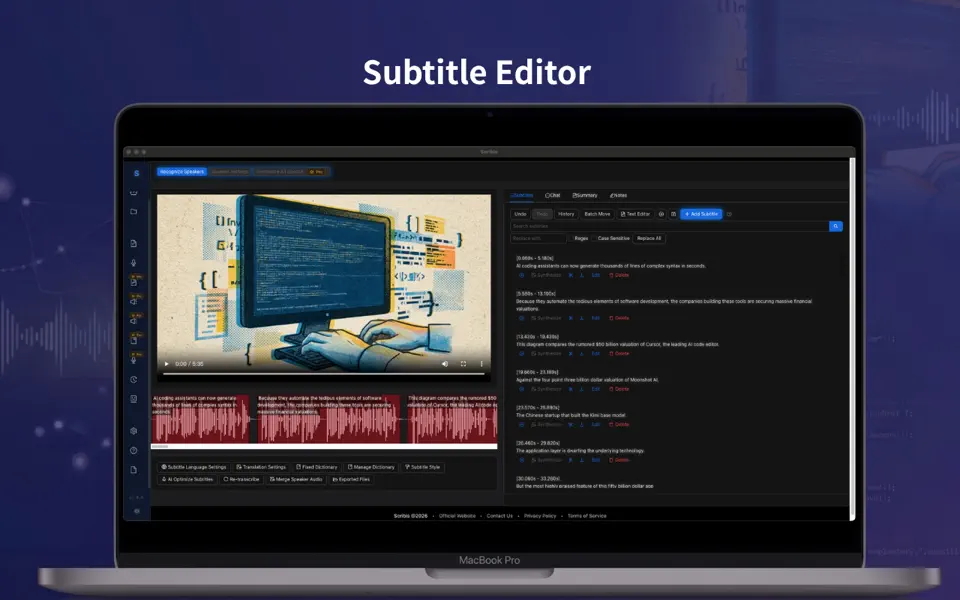
scribis.app
Scribis: Subtitle editing, audio transcription, and live transcription.
Learn More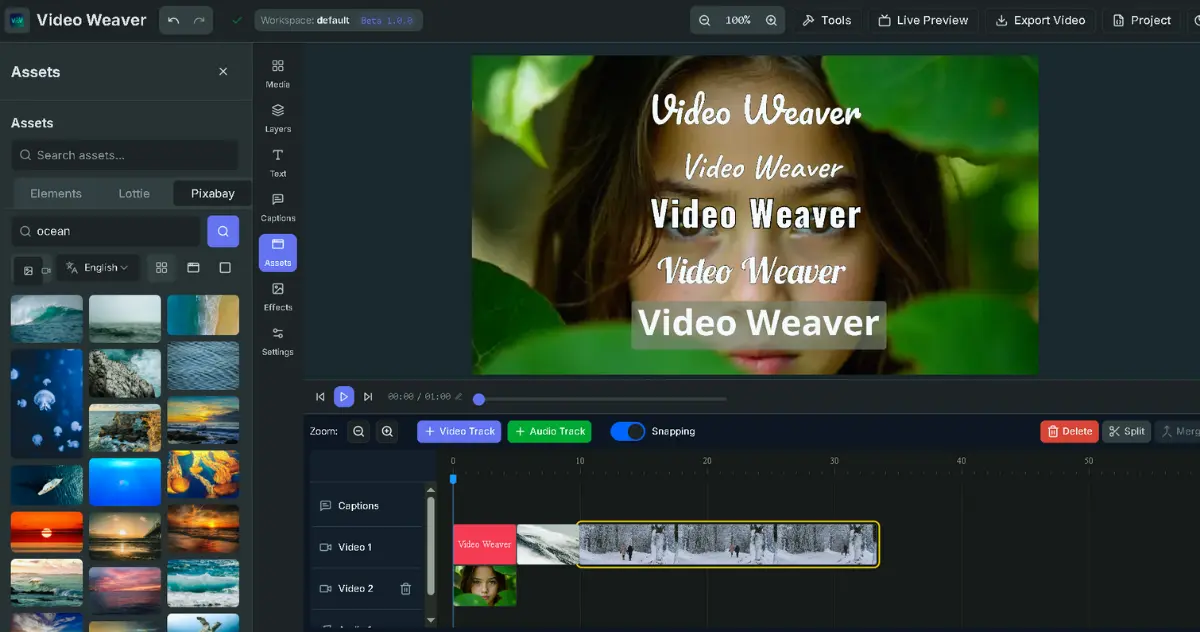
videoweaver.app
Video Weaver: Professional video editing directly in your browser. No downloads required.
Learn Morescribis.app
Scribis: Subtitle editing, audio transcription, and live transcription.
Learn Morevideoweaver.app
Video Weaver: Professional video editing directly in your browser. No downloads required.
Learn More