

Latest AI Trends: Claude 1M Context Fully Open, OpenAI Launches Automated Workflows
New tools and technologies emerge every day, and the pace of AI development is breathtaking. To keep up with the latest industry trends, just focus on a few key points. This article summarizes today’s three most important developments. Claude has fully opened its million-token context window and added a limited-time double usage promotion for off-peak hours. OpenAI has introduced practical Automations for developers. Additionally, ByteDance’s video generation model has been forced to pause its global launch due to Hollywood copyright controversies.
Claude Upgrade: 1M Context and Off-Peak Double Usage
Anthropic announced that the 1M context feature for Claude Opus 4.6 and Sonnet 4.6 is now officially GA (General Availability). What does one million tokens mean? Users can now feed entire codebases, thousands of pages of contracts, or full trace logs from long-running agents directly into the model. The model can easily digest this massive amount of data.
Best of all, this upgrade comes at no extra cost. Standard pricing now applies to the entire 1M context window. Whether a request contains 9,000 or 900,000 tokens, the rate per token remains the same. Limits on media files have also been significantly relaxed. Each request can now include up to 600 images or PDF pages, making the processing of complex documents incredibly easy.
Alongside the functional upgrade, Claude has launched a practical limited-time double usage promotion. The event runs from March 13 to March 27, 2026. During this period, usage limits for every five hours will automatically double if used during off-peak hours. The official off-peak hours are outside of 8 AM to 2 PM Eastern Time (ET). This promotion applies to Free, Pro, Max, and Team plans.
How do you participate? No manual setup is required. The double limit is automatically applied to eligible accounts. Enterprise plans are not included in this promotion. Additionally, the extra usage is calculated independently and will not deduct from weekly overall quotas. After the event ends on March 27, all usage limits will return to normal levels without any impact on existing billing.
Easing Developer Burden: OpenAI Automations Now Live
Developers are always looking for ways to reduce repetitive labor. Tedious daily maintenance can often consume a significant amount of coding energy. Now, OpenAI Automations is officially GA, specifically addressing this pain point. This set of automation tools allows software engineers to spend their valuable time on more high-value tasks.
Through this new feature, development teams can customize many execution details. Engineers can freely set the model to be used and the level of logical reasoning based on specific task requirements, providing great flexibility. The system even allows these automated workflows to run independently in a separate worktree or be applied directly to an existing branch. If a particular workflow is especially useful, it can be saved as a template for reuse in other projects.
What specific roles can these features play? For those managing software projects daily, this is an invaluable assistant. For example, daily repository briefings, initial issue triage, and follow-ups on Pull Request comments can now be handled by Automations. This not only saves a lot of time spent on trivial manual operations but also significantly improves the smoothness of team collaboration.
Crossing the Hollywood Line: ByteDance Pauses Seedance 2.0 Global Rollout
The pace of technological innovation sometimes hits the hard wall of traditional law. According to recent reports, ByteDance has been forced to pause the global launch of its latest AI video generation model, Seedance 2.0. As the parent company of TikTok, ByteDance’s technical moves are closely watched worldwide. This incident highlights the copyright minefields that AI must navigate during its development.
Seedance 2.0 was launched in China this past February. The model can generate short videos, and clips of Tom Cruise and Brad Pitt “fighting” generated by the model have circulated online, with a level of realism that is startling. This powerful generative capability immediately drew strong backlash and criticism from Hollywood.
Hollywood studios have taken action, sending numerous cease-and-desist letters to ByteDance. The industry’s stance is very firm; Disney’s lawyers even described the behavior as a virtual “smash-and-grab” of Disney’s intellectual property.
ByteDance had originally planned to bring this powerful tool to the global market in mid-March. However, facing mounting legal pressure, they chose to temporarily halt the rollout, allowing engineers and legal teams to address potential legal issues. ByteDance responded by promising to introduce stricter intellectual property protection mechanisms. This incident serves as a wake-up call for all tech companies developing generative models. How AI balances higher generative quality with existing intellectual property systems will be an unavoidable and critical issue in the future.
DMflow.chat
DMflow.chat: Your intelligent AI partner for exceptional customer engagement.
Learn More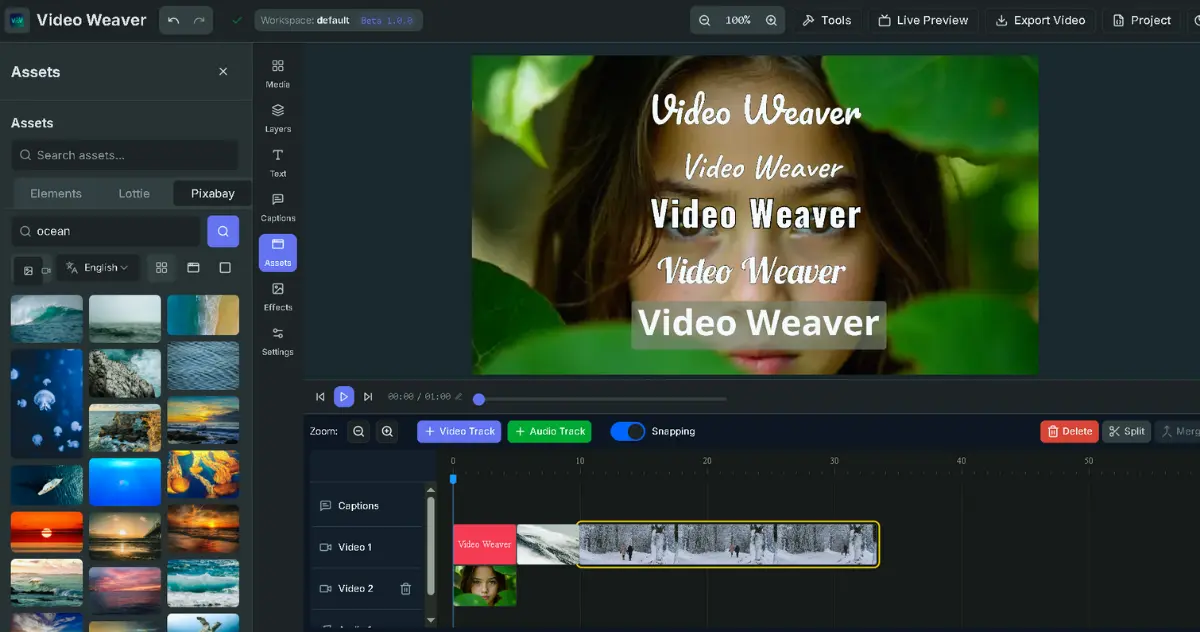
videoweaver.app
Video Weaver: Professional video editing directly in your browser. No downloads required.
Learn More
DMflow.chat
Discover DMflow.chat and unlock the new era of AI-powered customer service.
Learn MoreDMflow.chat
DMflow.chat: Your intelligent AI partner for exceptional customer engagement.
Learn Morevideoweaver.app
Video Weaver: Professional video editing directly in your browser. No downloads required.
Learn MoreDMflow.chat
Discover DMflow.chat and unlock the new era of AI-powered customer service.
Learn More