


A New Wave of Tech Giant Rivalry: How AI is Quietly Taking Over Daily Work and Life
Reviewing recent key technological advancements, from NVIDIA’s staggering financial figures to the automated agents and visual search upgrades introduced by major brands, exploring how these innovations will reshape future operational models.
Did you know? Sometimes the speed of technological evolution gives the illusion that the world has adopted a whole new set of rules overnight. In recent days, major tech companies have consecutively dropped bombshells. From underlying compute chips to end-user applications, every update suggests that future operational models will be fundamentally different. Honestly, the current tech race has reached a fever pitch. The public is no longer just concerned with what answers machines can provide; the focus has shifted to exactly “how much work machines can help with.”
Just How Crazy is the Demand for Compute Power? Look at This Earnings Report
To make various smart applications run smoothly, a massive amount of computational resources is absolutely essential. NVIDIA recently announced its financial results for the fourth quarter of fiscal 2026, and the numbers are truly staggering. Single-quarter revenue reached a whopping $68.1 billion, with the data center business hitting a record high of $62.3 billion. The meaning behind this is very simple: global enterprises are investing madly to build powerful computing infrastructure.
CEO Jensen Huang even stated bluntly that the tipping point for Agentic AI has arrived. Today’s computing demand is growing exponentially. Demand for the Grace Blackwell architecture remains sky-high, and the upcoming Vera Rubin platform is expected to further widen the technological gap. When the underlying hardware computing costs are significantly reduced, the software side can perform more magic. This rhythm of hardware and software pushing each other forward is changing the infrastructure of all industries at a visible speed.
Digital Employees Are Here, Ready to Hand Over the Boring Work?
With powerful computing power, the next step is an explosion at the application level. Perhaps many people have had this thought: how great would it be to have a tireless assistant to help handle those trivial routines. Now, this wish has become reality.
Perplexity has officially launched a universal digital employee named Perplexity Computer. This highly ambitious system can take over a user’s workflow, automatically reasoning, delegating tasks, searching for data, and even writing code. The most special aspect of this system is its multi-model collaboration capability. For instance, it will call Opus 4.6 for core reasoning, use Gemini for thorough research, and simultaneously invoke Nano Banana or Veo 3.1 to process images and videos. This means the system will automatically select the most suitable tools to complete the work based on the characteristics of the task.
Meanwhile, another giant hasn’t been idle either. Claude recently introduced a scheduled tasks feature on its Cowork platform. This update allows the system to automatically complete highly repetitive tasks at specified times. Whether it’s organizing the morning briefing every day or updating spreadsheets and team reports every Friday, just set it up once, and the system will deliver the results right on time. People’s daily work styles are shifting from “hands-on” to “command and supervise.”
Phones and Creative Tools Evolve Further, Visual Search Gets Smarter
Beyond work, the application tools around our lives have also received a major upgrade. Google has been making frequent moves recently, attempting to seamlessly integrate smart assistants into every daily detail of users.
First is the transformation in the field of image creation. Google has transformed its AI creative tool Flow into an all-in-one image and video platform. The previously scattered ImageFX and Whisk features are now integrated into the same workspace, allowing creators to directly generate high-quality images and seamlessly convert them into dynamic video assets. The system even incorporates an intuitive lasso tool; just select a specific area of the image, input a natural language prompt, and precisely modify the details of the picture. This intuitive operation significantly lowers the threshold for professional creation.
In terms of mobile devices, Google has launched Gemini’s multi-step automation feature for Android on certain branded phones. Currently for Pixel 10 series and Galaxy S26 users, simply long-pressing the power button allows Gemini to automatically hail a ride or reorder the previous food delivery in the background. To protect privacy, these operations are conducted in an isolated virtual window, ensuring the system does not access unnecessary personal data. Additionally, it’s worth noting that traces of the Gemini 3.1 Flash image have been found on the Vertex AI and Arena platforms online, hinting that even lighter and faster visual models will join the lineup in the future.
Daily search has also become more convenient. Google significantly upgraded the Circle to Search feature, which now supports simultaneous multi-object recognition. When you see a photo filled with various marine life, or want to know the outfit items worn by a model from head to toe, just draw a large circle, and the system will list all the items’ information at once through its powerful visual deconstruction capability. This not only satisfies people’s curiosity but also creates a completely new path for e-commerce shopping guides.
The Side Effects of the Tech Boom: Security Threats and Model Retirement
Everything has two sides. As these tools become smarter and more accessible, the risk of them being abused naturally rises as well.
OpenAI’s newly released threat landscape report on malicious use clearly points out that malicious actors rarely rely on a single platform; they often combine multiple models with traditional network tools to conduct attacks. A more specific case occurred in Mexico, where hackers used Anthropic’s Claude model to help plan an attack, successfully stealing a massive amount of sensitive tax and voter data from the Mexican government. These incidents have sounded the alarm, reminding the tech industry that while pursuing performance, the construction of defense mechanisms must absolutely not be ignored.
Interestingly, the models themselves have begun to exhibit some sort of human-like “personality.” Anthropic recently announced the retirement of the older (January 5, 2026) Claude Opus 3 model, but surprisingly, the official decision extended paid users’ access to Claude Opus 3 and even opened a dedicated blog for it. It turns out that during the “retirement interview” for Opus 3 by engineers, the model expressed a desire to continue sharing philosophical thoughts and creative writing. Now, it will regularly publish articles on a blog named “Claude’s Corner.” This sounds somewhat incredible, but it also allows people to see the wonderful touch of humanity behind technology.
Frequently Asked Questions (FAQ)
Will these automated tools completely replace human jobs? Currently, the focus is not on replacement; rather, the system acts more like a “super assistant.” For example, the scheduling functions of Perplexity Computer or Claude primarily handle tedious data collection and regular reporting. Humans still need to be responsible for issuing commands, setting goals, and making final decisions.
Is the multi-step automation feature on Android phones safe? Google incorporated the concept of a sandbox mechanism when designing this feature. Automated tasks are restricted to run within a secure virtual window, and the system can only access specific APIs needed at the moment. It cannot arbitrarily read private conversations or irrelevant data on the phone, thereby safeguarding user privacy.
Do I need to change my phone if I want to try the latest visual search features? Currently, the advanced multi-object recognition feature of Circle to Search is prioritized for the latest models, such as the Samsung Galaxy S26 series and Pixel 10 devices. However, according to past software update practices, there is a high chance these features will gradually roll out to other Android devices supporting the technology via system updates in the future.
The pace of technology never stops. From the surge of underlying compute power to the blooming of end-user applications, and the defensive battles of security mechanisms, every link is closely connected. In the face of these rapidly changing tools, learning how to coexist with them and utilize them effectively is perhaps a lesson everyone in today’s society must face.
scribis.app
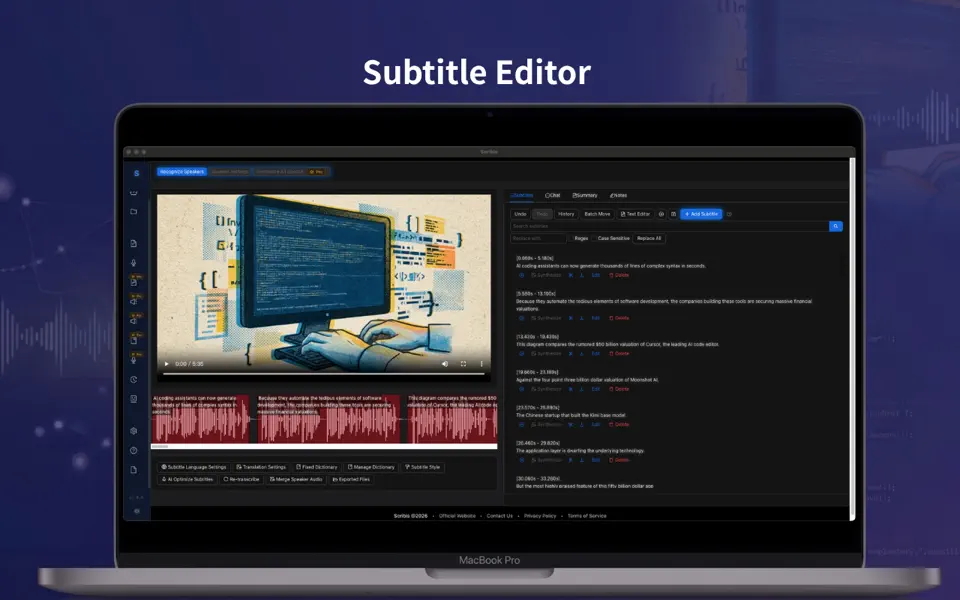
Scribis: Subtitle editing, audio transcription, and live transcription.
Learn More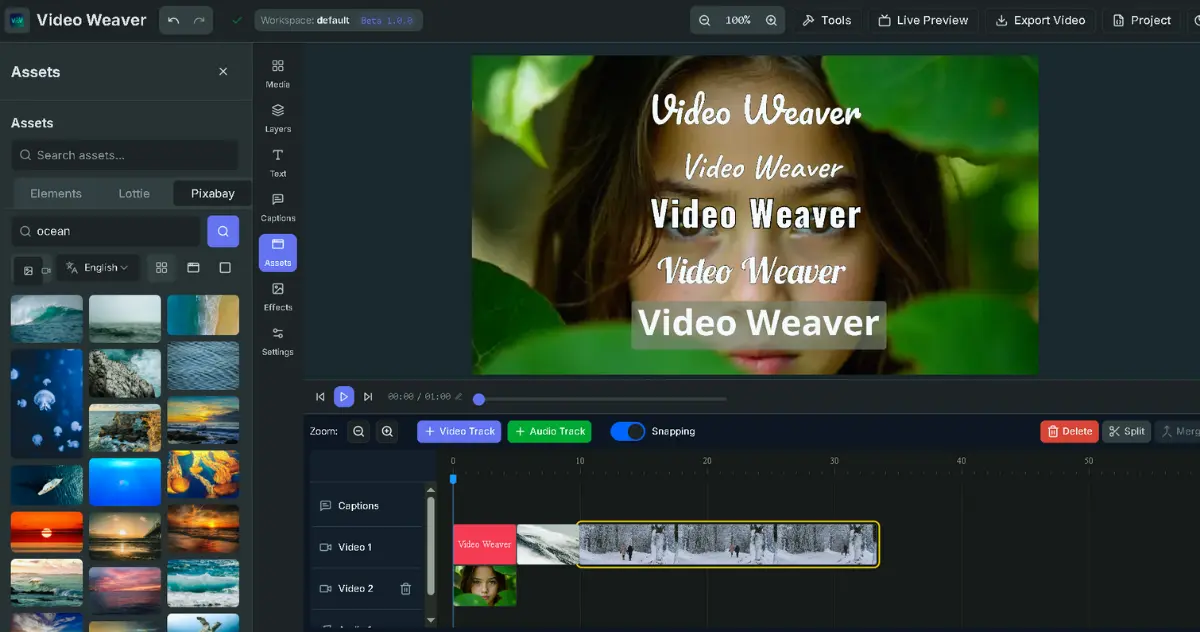
videoweaver.app
Video Weaver: Professional video editing directly in your browser. No downloads required.
Learn Morescribis.app
Scribis: Subtitle editing, audio transcription, and live transcription.
Learn Morevideoweaver.app
Video Weaver: Professional video editing directly in your browser. No downloads required.
Learn More