


Tech Giants Shake Silicon Valley: Apple Partners with Google Gemini, and the New Battlefield for AI Agents
It’s a moment full of variables. Just when we thought the AI race landscape was set, Silicon Valley’s tectonic plates shifted again. Today’s news isn’t just about tech upgrades, but how future ecosystems will operate. Apple’s choice to ally with Google is undoubtedly the biggest news recently, but it’s not the only highlight—from Anthropic’s new work mode to DeepSeek’s architectural breakthroughs, AI is moving from simple “chat” to true “action” and “efficiency”.
This article will guide you through these key developments and how they impact our work and life.
Apple and Google’s Deal of the Century: Siri Powered by Gemini
For a long time, the tech world has viewed Apple and Google as fierce competitors. But today, the two giants released a joint statement, announcing a multi-year partnership agreement. Simply put, the foundation model for the next generation of Apple Intelligence will be built directly on Google’s Gemini models and cloud technology.
What does this mean? It means the upcoming new Siri this year will possess unprecedented understanding and generation capabilities. After careful evaluation, Apple determined that Google’s AI technology offers the most powerful foundation for its users. Of course, Apple continues to emphasize its signature privacy standards, stating that Apple Intelligence will continue to run on-device and on Private Cloud Compute to ensure data security.
Too Much Power Concentration? Musk Has Something to Say
Not everyone is excited about this marriage. Shortly after the news broke, Elon Musk publicly expressed his concerns on X (formerly Twitter). He bluntly pointed out that considering Google already owns Android and Chrome, extending its reach into Apple’s ecosystem seems to constitute an “unreasonable concentration of power.” This view resonated in the tech community, as these two companies combined control almost all global mobile device gateways.
Claude Cowork: Not Just Coding, It Wants to Handle Your Chores
If Google and Apple are laying out infrastructure, Anthropic is redefining how we collaborate with AI. They just launched a new feature called Cowork. Originally designed as “Claude Code” for developers, it has now evolved into a work assistant for everyone.
This isn’t the kind of bot that just chats with you. The core concept of Cowork is “Agency”. You give it a task, like “organize my messy downloads folder” or “convert these screenshots into an Excel sheet,” and it formulates a plan and executes it step by step. It can even directly read, edit, or create files on your macOS.
This shifts AI’s role from “consultant” to “intern”. It utilizes the same underlying technology as Claude Code but with a more user-friendly interface. However, Anthropic honestly reminds users that this is currently a Research Preview. Granting AI permission to delete or modify files does carry risks, especially facing potential “Prompt Injection” attacks, so users need to remain vigilant. Additionally, Anthropic is pushing forward in the healthcare and life sciences fields, attempting to bring this precise analytical capability to more specialized vertical markets.
Cowork is currently limited to Claude Max subscribers and is only available as a macOS application.
DeepSeek Engram: Solving the “Memory” Problem of Large Models
Beyond the application layer, innovation in the underlying architecture is equally exciting. The DeepSeek team released a new module technology called Engram, attempting to solve a long-standing pain point of Large Language Models (LLMs): the balance between memory and computation.
Traditional Transformer architectures lack a native “knowledge lookup” mechanism, often relying on massive parameters for “rote memorization.” Engram introduces a Conditional Memory mechanism, somewhat like equipping the model with an efficient reference book. By combining classic N-gram embeddings with modern neural networks, Engram can significantly improve the model’s performance in knowledge reasoning, code, and mathematics without adding massive computational costs. This “separation of storage and computation” approach allows the model to do more with fewer resources, a technical paper definitely worth reading for developers pursuing extreme efficiency.
Simply put: If a traditional LLM is like a student who must memorize the entire encyclopedia to take an exam, then a model equipped with Engram is like a student allowed to bring an index into the exam room; they don’t need to memorize every static knowledge point but can quickly (O(1) efficiency) look up relevant content, saving their brain (computational resources) for more complex logical reasoning.
Comprehensive Upgrades for Developers and Productivity Tools
Besides the big news above, there are several practical updates today worth noting, especially for developers and efficiency seekers:
- Gemini API Limits Lifted: To make it easier for developers to build applications, Google drastically increased Gemini API file limits. Now, the size limit for embedded files has jumped from 20MB to 100MB. Even better, it now supports registering files directly from Google Cloud Storage (GCS) or using any public/signed URL. This means developers no longer need to repeatedly move data to handle large files, significantly lowering the development barrier.
- Manus Meeting Minutes: The AI note-taking tool market also welcomes a new player. Manus launched its Meeting Minutes feature, focusing on “turning conversation into action.” It’s not just speech-to-text; it identifies different speakers and directly generates presentation slides or website materials. The most interesting part is its stability—recording doesn’t stop even if the internet disconnects, making it perfect for face-to-face meeting scenarios.
FAQ
Before you start using these new tools, here are some questions you might care about:
Q: Can Manus Meeting Minutes be used without internet? A: Recording works. If the internet connection drops, recording continues without losing content. However, to generate notes and summaries from the recording, you need to wait until you are back online for analysis.
Q: Can Claude Cowork directly delete my computer files? A: Yes, it’s possible. Because Cowork is designed with higher execution permissions, if you issue relevant commands, it can indeed execute deletion or modification operations. Therefore, Anthropic advises being very clear and cautious when granting permissions and issuing commands.
Q: Is Manus Meeting Minutes suitable for recording Zoom or Google Meet online meetings? A: The official recommendation is primarily for “face-to-face” meetings, instant conversations, or monologues. It is not specifically designed for side-recording online meeting software, so the effect might not be as ideal as face-to-face recording.
Q: Can I pause Manus recording and resume later? A: Currently, no. The feature does not support pausing and resuming; you must record all at once or record in separate segments.
Q: What happens if I turn off the screen while recording with Manus Meeting Minutes? A: Recording will temporarily stop, but users can resume recording from where it left off.
Q: Is the recording feature of Manus free? A: The recording process itself is free, but subsequent analysis and note generation will consume credits.
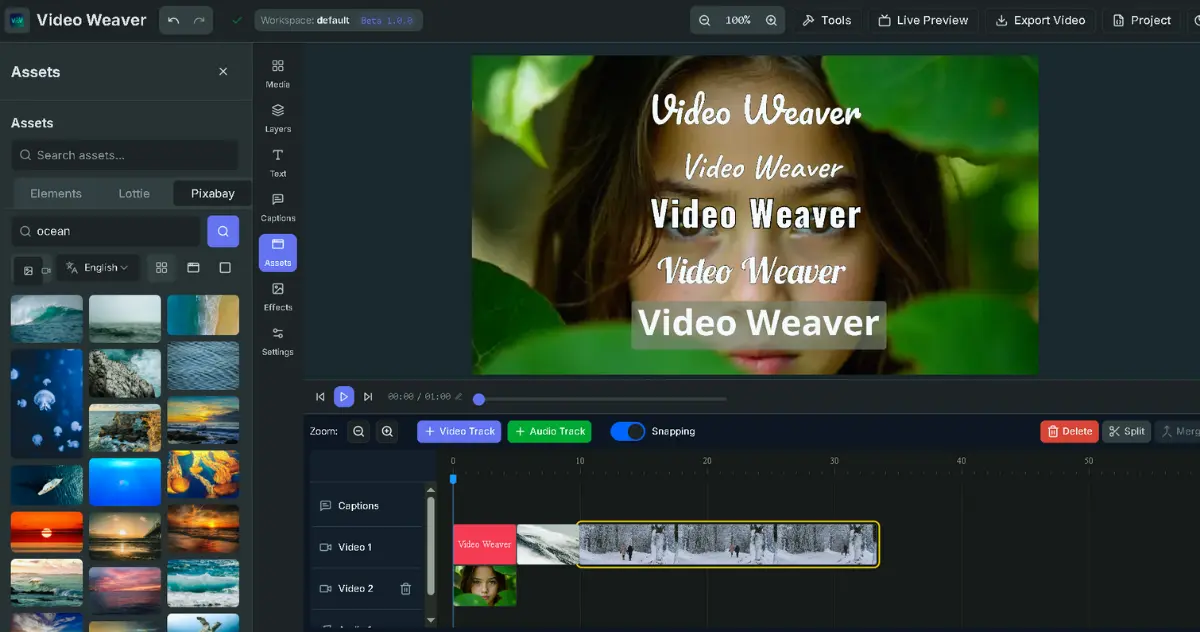
videoweaver.app
Video Weaver: Professional video editing directly in your browser. No downloads required.
Learn More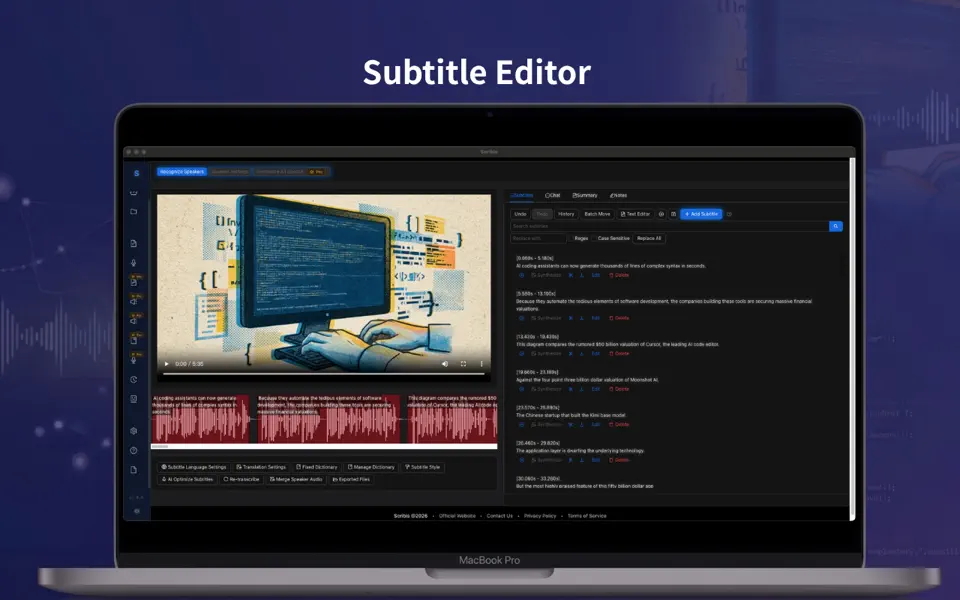
scribis.app
Scribis: Subtitle editing, audio transcription, and live transcription.
Learn Morevideoweaver.app
Video Weaver: Professional video editing directly in your browser. No downloads required.
Learn Morescribis.app
Scribis: Subtitle editing, audio transcription, and live transcription.
Learn More