


AI Industry Focus: Anthropic Partners with Wall Street Giants; Gemini and Vercel Release Practical Dev Tools
New technologies emerge daily, often making it hard to keep up. Today’s tech focus highlights several major updates with real-world impact. From massive Wall Street alliances to open-source projects that help engineers get home on time, these updates deserve your attention. Let’s dive into today’s four highlights.
Wall Street Capital Enters: Anthropic Teams Up with Financial Giants to Reshape Enterprise AI
Implementing AI in the enterprise often comes with unexpected challenges. Many mid-sized companies want to upgrade their systems but lack the internal resources to build cutting-edge models. To solve this, Anthropic has announced the formation of a new enterprise AI services company in collaboration with top institutions like Blackstone, Hellman & Friedman, and Goldman Sachs. The new venture is also backed by prominent asset managers including General Atlantic and Sequoia Capital.
What does this mean? Simply put, these financial giants are committing massive resources to bring the power of Claude models directly into the daily operations of mid-sized enterprises. For example, in a multi-location healthcare group, clinicians spend significant time on medical records, coding, and compliance reviews. The new company’s engineering teams will work alongside doctors and IT staff to observe actual workflows and build tailored tools. This allows medical professionals to dedicate more time to their patients.
System integrators like Accenture and Deloitte have long played a key role in large-scale enterprise transformation. However, demand for Claude has far outpaced the capacity of any single delivery model. Bringing in external capital and expanding the partner network is a strategic move that helps businesses integrate technology into existing workflows more smoothly, reducing the friction of transformation.
Say Goodbye to Inefficient Polling: Google Gemini API Formally Supports Webhooks
Nobody likes waiting. Previously, when using the Gemini API for long-running tasks like generating long videos or batch processing thousands of prompts, developers had to rely on continuous polling. This was inefficient and a waste of server resources.
Google has finally addressed this pain point by introducing event-driven Webhooks for the Gemini API. This push-based notification system sends an HTTP POST payload to your server the moment a task is completed. It adheres to standard specifications, ensuring idempotency and preventing replay attacks through specific signatures and timestamp headers.
Furthermore, it guarantees a 24-hour automatic retry mechanism. Developers can configure Webhooks globally or dynamically override settings for individual requests. For instance, you can easily set a dedicated route for a specific batch task via the Python SDK. This reduces network latency and results in a much cleaner application architecture, significantly lowering maintenance overhead.
No More Guessing for Bugs: Vercel Open-Sources Code Security Tool ‘Deepsec’
Engineers hate receiving useless, unactionable automated security reports. Vercel’s newly released open-source security tool, deepsec, targets this exact problem. Driven by coding agents like Claude and Codex, this tool runs directly on your laptop without needing privileged cloud service configurations.
For large codebases, it first uses static analysis to identify potentially sensitive files. Then, AI agents investigate data flow, check mitigation measures, and generate actionable recommendations with severity ratings. The workflow includes scanning, investigation, revalidation, enrichment, and exporting. Notably, the revalidation step uses agents to verify findings, effectively keeping the false positive rate between 10% and 20%.
Industry leaders have already seen its power. Steven Tey, founder of the marketing attribution platform Dub, praised deepsec for its thorough scanning and low false positive rate, calling it the first tool that identifies issues actually requiring a security engineer’s attention. Meanwhile, the Vercel team used deepsec on their own codebase to find hidden edge cases in authentication conditions, leading to the development of custom scanning plugins. For high-volume research, the tool supports distribution across Vercel Sandboxes, scaling up to over a thousand parallel sandboxes. This tool makes finding code vulnerabilities feel more like pair programming with an experienced security expert.
A Free Buffet for AI Agents: TinyFish Announces Free Search and Fetch APIs
For developers building AI agents, fetching clean web data is often a chore. Standard scraping often pulls in navigation bars, cookie banners, and messy scripts, which clutter the LLM’s context and inflate token costs.
TinyFish has announced that its Search and Fetch APIs are now completely free for all agents. The search function offers five free queries per minute, while fetching supports 25 URLs per minute. Through its custom Chromium infrastructure, TinyFish handles full JavaScript rendering in parallel, stripping away noise and returning clean Markdown, JSON, or HTML.
The system’s compatibility is also impressive. Whether calling via REST API or dragging an MCP server directly into Cursor or Claude, integration is seamless. If you use TinyFish’s CLI tool, results can be written directly to the file system, avoiding the need to use the model’s context window. This isn’t just about free web access; it’s about helping developers save money and lowering the barrier to building powerful AI applications.
These updates—from macro-level enterprise ecosystem expansion to micro-level API calling details—show that the technical environment is evolving toward more practical and intuitive solutions. Tech enthusiasts should grab a few of these tools and start testing these exciting new features today!
Q&A
1. Anthropic Enterprise Strategy
Q: What market pain point is Anthropic’s new enterprise AI services company trying to solve? A: It primarily addresses the lack of internal resources in mid-sized companies (such as community banks, mid-sized manufacturers, and regional healthcare systems) to build advanced AI models. The new company deploys Anthropic’s applied AI engineers to work alongside enterprise IT staff and frontline personnel (like clinicians) to observe operations and build tailored Claude-driven systems.
2. Gemini API Update
Q: What tangible benefits does the new Webhooks feature in the Google Gemini API provide? A: Previously, for long tasks like long video generation or batch processing, developers had to "poll" for progress, which was resource-heavy. The new Webhooks use event-driven real-time push notifications, alerting the server as soon as a task is done. It also features high security and a 24-hour automatic retry mechanism, significantly reducing architectural overhead.
3. Vercel’s Deepsec Tool
Q: How does Vercel’s open-source deepsec tool avoid the “flood of useless warnings” common in traditional security scans? A: deepsec combines static analysis with deep investigations by AI agents (Claude and Codex). It includes a critical "revalidate" step, where agents verify identified issues. This mechanism keeps the false positive rate between 10% and 20%. It provides actionable recommendations with severity ratings and has even helped the Vercel team find hidden authentication edge cases in their own code.
4. TinyFish Free APIs
Q: Why do TinyFish’s free Fetch APIs help developers “save on AI model token costs”? What are the current free limits? A: Standard scraping sends navigation bars, cookie banners, and scripts to the AI, wasting tokens. TinyFish Fetch renders JavaScript via its Chromium infrastructure and automatically strips all unnecessary noise, returning only clean Markdown, JSON, or HTML. Current free limits: Search API (5 queries/min), Fetch API (25 URLs/min).
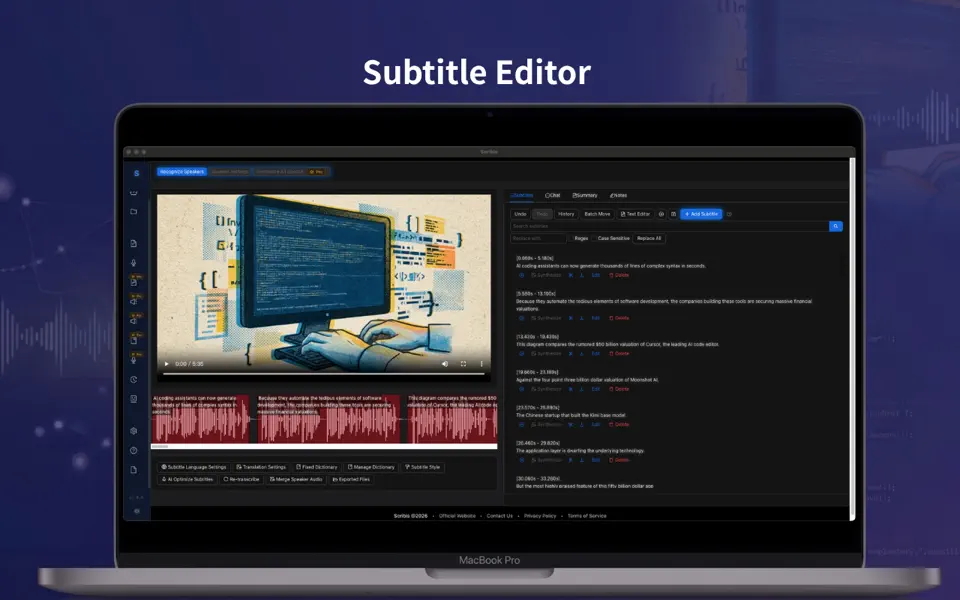
scribis.app
Scribis: Subtitle editing, audio transcription, and live transcription.
Learn More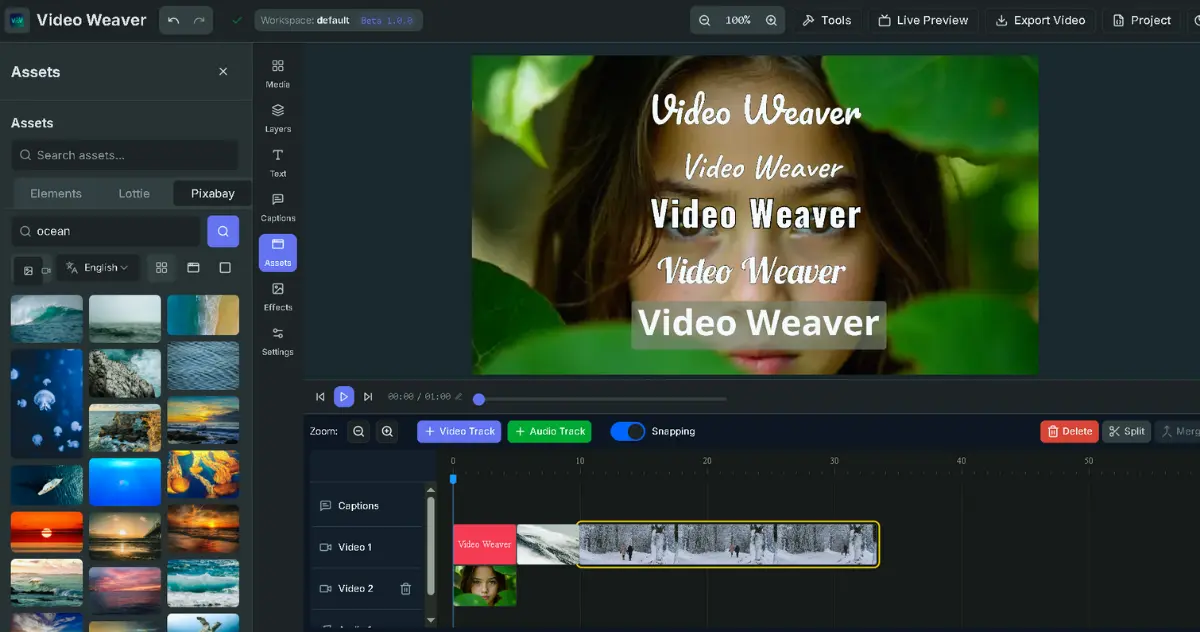
videoweaver.app
Video Weaver: Professional video editing directly in your browser. No downloads required.
Learn Morescribis.app
Scribis: Subtitle editing, audio transcription, and live transcription.
Learn Morevideoweaver.app
Video Weaver: Professional video editing directly in your browser. No downloads required.
Learn More