


The AI Industry’s Security Defense and Application Innovations: Blocking Model Theft, Reshaping Benchmarks, and Popularizing Education
The pace of development in the tech world is always dizzying. Honestly, sometimes even professionals find it hard to fully grasp all the details. On the one hand, tech giants are busy fending off various malicious attacks and data thefts, trying to protect the intellectual property they’ve invested huge sums to develop. On the other hand, the practical applications of AI are gradually permeating educational settings and the system updates of ancient programming languages. Let’s take a look at the important developments worth noting today; these events are quietly changing the direction of the entire tech industry.
Raising the Defense Line: Anthropic Uncovers Industrial-Scale Model Distillation Attacks
This sounds like a plot from an espionage movie. Anthropic recently discovered and prevented a large-scale model distillation attack. What is model distillation? Let’s explain. Simply put, it’s taking the output results of a powerful model to train another, weaker model. This is common in legitimate development; companies often use it to build smaller and cheaper customized versions.
However, there’s always another side to the story. When competitors (including DeepSeek, Moonshot, and MiniMax) use up to 24,000 fake accounts to generate over 16 million conversations to illegally acquire Claude’s capabilities, it becomes a serious security and intellectual property issue.
The goals of these labs were very clear, mainly targeting advanced capabilities like logical reasoning, tool use, and coding. Interestingly, they also used extremely complex prompts to force the model to spit out its internal thinking processes. This has sparked heated discussions in the industry about the effectiveness of export controls. These attacks actually prove that the restrictions on advanced chips have worked, forcing some overseas manufacturers to rely on stealing off-the-shelf models to advance their own technology. This also reminds the entire industry that cross-company technological defenses and information-sharing mechanisms are urgently needed.
The Culprit of Service Degradation: Malicious Abuse of Antigravity’s Backend
Similar abuses are not just happening to LLM giants. Antigravity’s backend system also recently suffered from massive malicious use. An abnormal influx of connection requests that violated the terms of service severely dragged down the service quality for normal users.
The operations team was forced to take emergency measures to quickly cut off these abnormal accesses. Of course, some users might not have realized their behavior violated the rules. Although the development team promised to provide an appeal channel to allow users who accidentally crossed the line to restore their access, resources are ultimately limited. Ensuring the rights of compliant users is absolutely the top priority right now. This once again highlights the daunting challenge of maintaining the stability of cloud services, especially when new tools come online, which always attract unexpected and extreme user behaviors.
When Tests Lose Their Discriminative Power: OpenAI Abandons Its Original Programming Language Benchmark
Evaluating a language model’s ability to write code has always been a challenging science. The industry has heavily relied on the SWE-bench Verified benchmark. This metric used to be very reliable, and almost all new models would use it to prove their strength upon release. However, OpenAI’s latest analysis points out that this test can no longer accurately reflect the true coding abilities of state-of-the-art models.
Why is this happening? There are two main reasons. First is the problem of data contamination. Since the test questions mostly come from public open-source projects, it’s very likely that the model has already seen the answers during its training phase. It’s like a student getting the answers before an exam; the score will naturally skyrocket, completely losing the meaning of the test.
Second, up to 59.4% of the error cases were actually due to poorly designed test conditions. Some tests were too strict, excluding perfectly functional code, while others requested extra features not even mentioned in the prompt. Therefore, OpenAI recommends the industry shift to using SWE-bench Pro or the private GDPVal benchmark to obtain more realistic performance data through more rigorous, unpublished datasets.
Decoding User Behavior: The Fluency Index of Human-AI Collaboration
As AI becomes an everyday tool, does everyone truly know how to harness it? The AI Fluency Index report published by Anthropic attempts to answer this question. Researchers analyzed thousands of anonymous conversations and found a very interesting phenomenon.
Iterative refinement in conversation is the strongest indicator of fluency. Users who know how to continuously ask follow-up questions and modify instructions usually get better results. This sounds perfectly reasonable, right? But it’s not that simple.
Paradoxically, when the system directly produces a seemingly complete product (such as an application, document, or interactive tool), the user’s critical thinking ability drops sharply. When people see a beautifully designed interface or a well-structured article, they often forget to question the logical flaws or factual errors within it. This reminds us that the more we face a seemingly perfect output, the more we need to maintain clear judgment, proactively set collaboration conditions, and fact-check.
Transforming the Educational Landscape: A Training Program for Six Million Educators Nationwide
Technology shouldn’t just be cold data; it should reach people and create real value. Google announced an unprecedented educational initiative, promising to provide free AI literacy training to 6 million K-12 and higher education faculty across the US.
Many teachers often feel overwhelmed when facing new technology. Their heavy daily teaching workload already leaves them stretched thin, making it hard to find time to figure out complex new tools on their own. Through a partnership with ISTE+ASCD, this program launched short, flexible, and modular courses designed specifically for educators.
For example, university professors can learn how to use Gemini to create personalized learning coaches for every student in a large class, or use NotebookLM to transform complex data into interactive study guides and podcasts. This not only significantly saves preparation time but also makes the distribution of educational resources more precise, helping students learn in the way that suits them best.
A Savior for Legacy Systems: Easily Overcoming the High Walls of COBOL Modernization
When it comes to corporate IT architecture, COBOL is definitely a love-hate existence. Did you know that 95% of ATM transactions rely on this ancient programming language? For decades, the financial industry and government agencies have wanted to update these systems. Unfortunately, the cost is terrifyingly high, and the number of senior engineers who understand COBOL is decreasing year by year.
Now, the situation has completely changed. Artificial intelligence has brought a massive breakthrough to COBOL modernization. The intricate logic that used to take huge consultant teams years to untangle can now be automatically explored and analyzed by Claude Code.
It can automatically map out hidden dependencies between files and find extremely important business workflows that no one remembers anymore. This allows engineers to focus their energy on risk assessment and strategic planning, completing system replacements in a gradual and safe manner, and shrinking what used to be a painful multi-year project into just a few quarters.
Frequently Asked Questions (FAQ)
What is model distillation? Why does it cause serious security and business controversies?
Model distillation is a training technique that transfers the knowledge of a large, powerful model to a smaller model. When companies use tens of thousands of fake accounts without authorization to massively extract the hard work of other companies to train their own products, it constitutes a serious infringement of intellectual property. This not only destroys fair market competition but could also bypass existing security mechanisms, bringing unpredictable national security risks.
Why is OpenAI urging the industry to abandon SWE-bench Verified?
The main reason is the increasingly serious problem of data contamination. Many language models have already been exposed to the answers to these test questions from public communities during their training phase, leading to artificially high test scores. Moreover, many test cases are poorly designed and reject correct code implementations without reason, making the benchmark unable to truly reflect a model’s actual independent coding ability.
How can regular users improve their AI fluency?
According to the latest fluency index report, the key is “continuous conversation and refinement.” Don’t easily settle for the first output result; try to ask follow-up questions and correct logical errors. Especially when the system provides a seemingly perfect, beautifully formatted product, you must deliberately stop, carefully check for factual accuracy, and question its reasoning process.
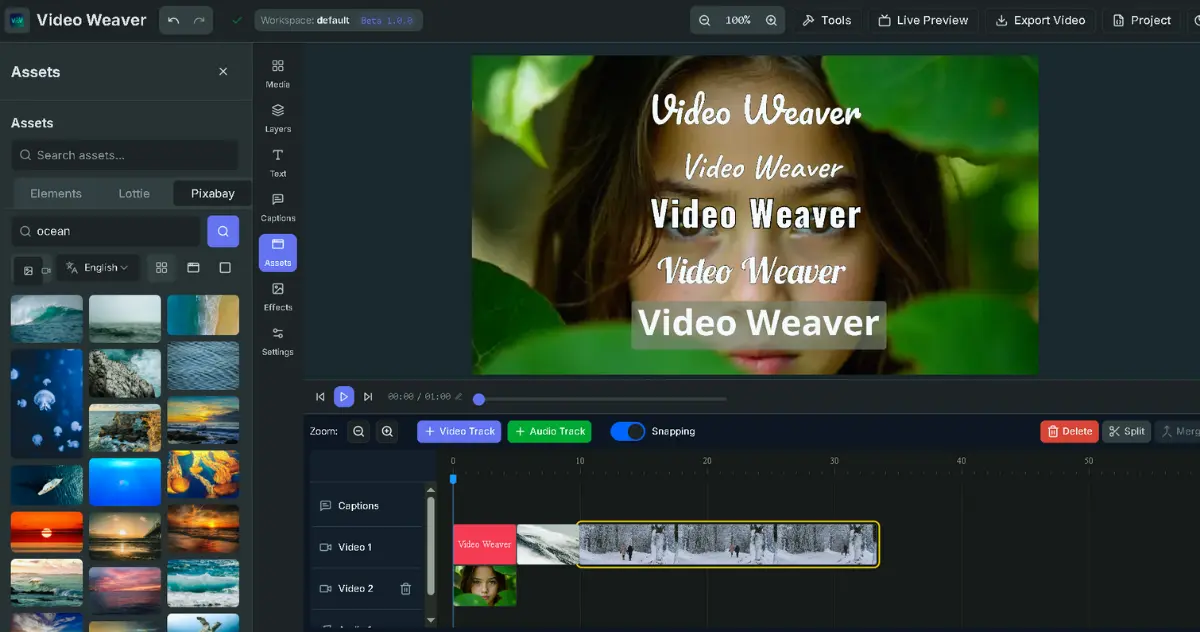
videoweaver.app
Video Weaver: Professional video editing directly in your browser. No downloads required.
Learn More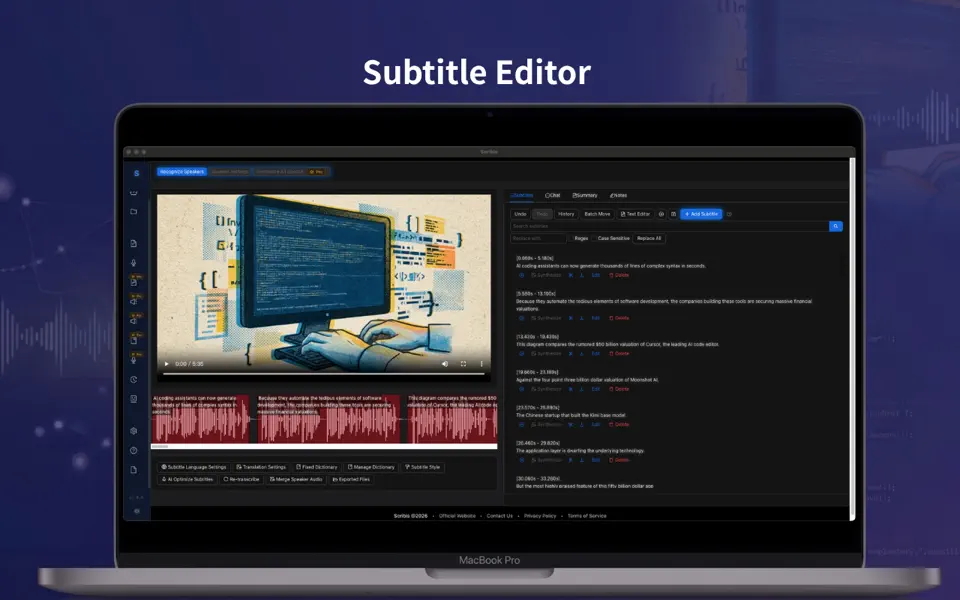
scribis.app
Scribis: Subtitle editing, audio transcription, and live transcription.
Learn Morevideoweaver.app
Video Weaver: Professional video editing directly in your browser. No downloads required.
Learn Morescribis.app
Scribis: Subtitle editing, audio transcription, and live transcription.
Learn More