


AI Daily | AI Agents, Physical Robot Dogs, GPT-5.5 Medical Alignment, Open Source Boogu-Image, and Silicon Valley Talent Mobility
Every day, progress in the tech world challenges our imagination. Did you know? Technical advancement waits for no one. Today’s focus goes beyond simple computing power stacking; everyone is more concerned with how these tools can naturally integrate into daily work and real life. From software agents with autonomous capabilities to models capable of controlling physical machines, every breakthrough is dazzling. That being said, let’s take a closer look at a few recent highlights.
Software and Physical Advancement: A New Stage for AI Agents
The developer tool world has been very lively recently. OpenAI has launched the 26.616 version update for its Codex application, and the most eye-catching feature is the macOS-exclusive Record & Replay function. What does this mean? Once you demonstrate a specific workflow to Codex, it can package it into a reusable skill. Honestly, being able to get rid of those repetitive clicks and inputs every day is definitely a blessing for many.
Meanwhile, visual collaboration has taken an important step forward. Anthropic announced that Claude Code now officially supports Artifacts. This update allows debugging logs, architectural diagrams, or release checklists in the development process to instantly transform into real-time, interactive web pages. Team members no longer need to repeatedly confirm progress via text; just open the same page to see the latest information that automatically updates as work progresses.
But there is a common question here: when AI agents need help deploying websites or applications, what should they do when they encounter login walls designed for humans?
To solve this long-standing pain point, Cloudflare has cleverly introduced temporary accounts dedicated to AI agents. In the past, agent programs often got stuck in OAuth authentication or multi-factor authentication steps designed for humans when deploying applications. Now, AI agents only need to enter the wrangler deploy --temporary command in the command line to automatically obtain a temporary account valid for 60 minutes, completing application deployment without obstacles. Humans can then decide whether to take over the account via a dedicated link. This clever design completely removes obstacles in the deployment process, and agents can finally show off their skills without scruples.
The potential of agents is not limited to the software world. Anthropic’s latest Project Fetch Phase Two experiment demonstrates astonishing physical operation capabilities. Researchers enabled “adaptive thinking” in Claude Code and set “effort” to maximum, discovering that even without any human intervention, Claude Opus 4.7 could autonomously write code and control commercially available robot dogs. When completing assigned object-finding tasks, Opus 4.7’s speed was not only dozens of times faster than a pure human team, but the amount of code it generated (1,045 lines) was almost only one-tenth that of the pure human team (10,309 lines). Even though there is still room for improvement in handling very fine continuous movements, this undoubtedly announces the early arrival of physical agent AI.
Smarter and More Responsible Language Models
Everyone hopes that AI is both smart and safe. The latest research on reinforcement learning released by OpenAI explores how to train widely and continuously beneficial models. The study points out that by conducting reinforcement learning for beneficial features on models in a single domain, such as healthy conversations, this good behavior can be broadly transferred to other unfamiliar domains. In addition, a major highlight of this research is demonstrating the capability of “Alignment persistence”: models trained in this way, even when facing adversarial prompting from malicious users trying to induce harmful behavior, or encountering harmful fine-tuning, can still hold the line and refuse to provide harmful suggestions. This underlying technology makes models more honest and transparent, significantly reducing the probability of attempted deception.
The progress of this underlying technology is directly reflected in actual products. OpenAI is committed to improving the health medical intelligence of ChatGPT. After joint assessment and polishing by a large number of doctors, the current GPT-5.5 Instant model performs more cautiously and accurately when handling real medical situations. The proportion of factual errors has dropped by as much as 71% in just two months. It has learned to be honest when uncertain and encourages users to seek professional medical care in a timely manner.
In terms of multimodal understanding, there are also applications that are eye-catching. DeepSeek official employees confirmed that its visual mode has gone online on the web and app. Users can try entering specific prompts such as [Think with Grounding] or [Think with Pointing] in thinking mode. This guides the model to parse images using bounding boxes or marker points. Using marker points to represent continuous trajectories makes the model’s reasoning process look closer to human intuition. Even though perfectly handling continuous trajectories in the real world is still a challenge for the entire industry, this new feature is definitely worth exploring yourself.
Open Source Surprise: Boogu-Image
When it comes to generative AI, the open-source community is always full of energy. The recently highly anticipated Boogu-Image-0.1 project provides an excellent example. This is an open-source unified image generation and editing model family licensed under Apache-2.0, including various variants such as Base, Turbo, and Edit. Its astonishing point is the extreme efficiency of resource utilization. The research team used an order of magnitude less training data than other open-source models to achieve results comparable to top closed-source systems. Whether it is high-quality text-to-image, fast generation, or complex Chinese-English bilingual text rendering, Boogu-Image has demonstrated excellent stability. Developers who want to test it themselves can also directly obtain Boogu’s model weights on the Hugging Face platform. This project has undoubtedly injected a shot in the arm for the entire multimodal open-source ecosystem.
Next Steps for Top Experts: Talent Mobility Among Tech Giants
Ultimately, technological advancement relies on that group of passionate people behind it. Recently, Silicon Valley’s talent map has undergone noticeable mobility. John Jumper, who led the AlphaFold team to historic breakthroughs, announced that he is leaving Google DeepMind after nearly nine years and is preparing to join Anthropic after a short break. He is full of gratitude for the opportunities given by his former employer, but is also looking forward to starting the next journey in a new environment.
Not coincidentally, another heavyweight scholar in the AI field, Noam Shazeer, also publicly stated that he would bid farewell to Google and move to OpenAI. He emphasized that leaving is a difficult decision, and he is also very much looking forward to working side-by-side with OpenAI’s excellent team. This cross-industry mobility of top talent often foreshadows the technical strategic direction of each company. What kind of sparks these brains will generate in the new laboratory in the future is absolutely worthy of everyone’s continuous attention.
Q&A
Q1: What should be done when an AI agent needs to automatically help deploy an application but encounters human-specific “login walls” or authentication?
A: Cloudflare has introduced a “temporary account” mechanism dedicated to AI agents for this pain point. Now, AI agents only need to enter the wrangler deploy --temporary command in the command line to automatically obtain a 60-minute valid temporary account to complete deployment, completely without human intervention to handle complex verification steps.
Q2: How far has AI’s development in controlling physical machines (physical agents) come? A: The progress is amazing! According to Anthropic’s latest Project Fetch Phase Two experiment, Claude Opus 4.7 can autonomously write code to control commercially available robot dogs to execute tasks without human intervention. And its speed is dozens of times faster than a pure human team, and the amount of code it generates (1,045 lines) is only one-tenth that of a human team (10,309 lines).
Q3: As models become smarter, how do developers ensure they won’t give dangerous or deceitful advice (e.g., in the medical field)? A: OpenAI uses the latest “reinforcement learning (RL)” technology to cultivate broad and continuously beneficial features in models. For example, in the medical health application of GPT-5.5 Instant, factual errors not only decreased by 71%, but this training also endowed the model with “Alignment persistence” capability. This means that even when facing adversarial prompts induced by malicious users, the model can still hold the line and refuse to give harmful suggestions.
Q4: Is there any image generation model worth paying attention to in the open-source community recently? A: Boogu-Image-0.1 is an excellent example. It adopts the Apache-2.0 license, and the biggest highlight is “extreme efficiency of resource utilization”. The research team achieved performance comparable to top closed-source systems using an order of magnitude less training data than other open-source models. It not only performs excellently in high-quality text-to-image and editing, but is also very stable when handling complex Chinese-English bilingual text rendering.
Q5: What major changes have occurred in the plate of top AI talent in Silicon Valley recently? A: Recently, two heavyweight experts have left Google. One is John Jumper, who led the AlphaFold team to major breakthroughs; he announced that he will join Anthropic. The other is top AI scholar Noam Shazeer, who also publicly stated that he will move to OpenAI. The mobility of these core brains is an important indicator for observing the future technical strategy of tech giants.
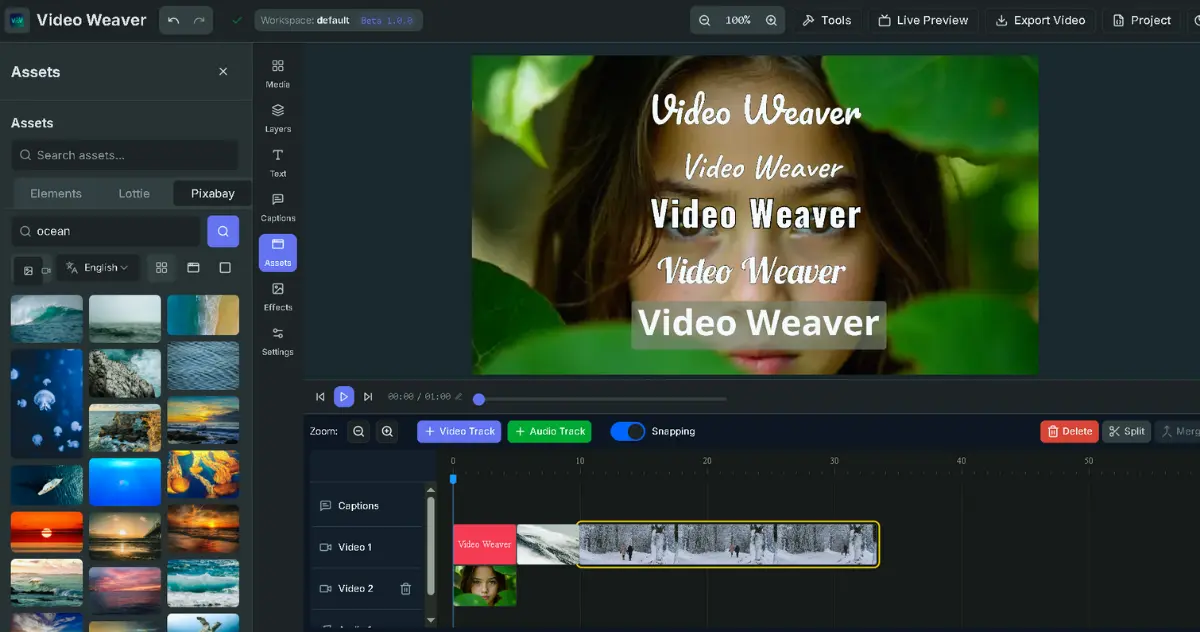
videoweaver.app
Video Weaver: Professional video editing directly in your browser. No downloads required.
Learn More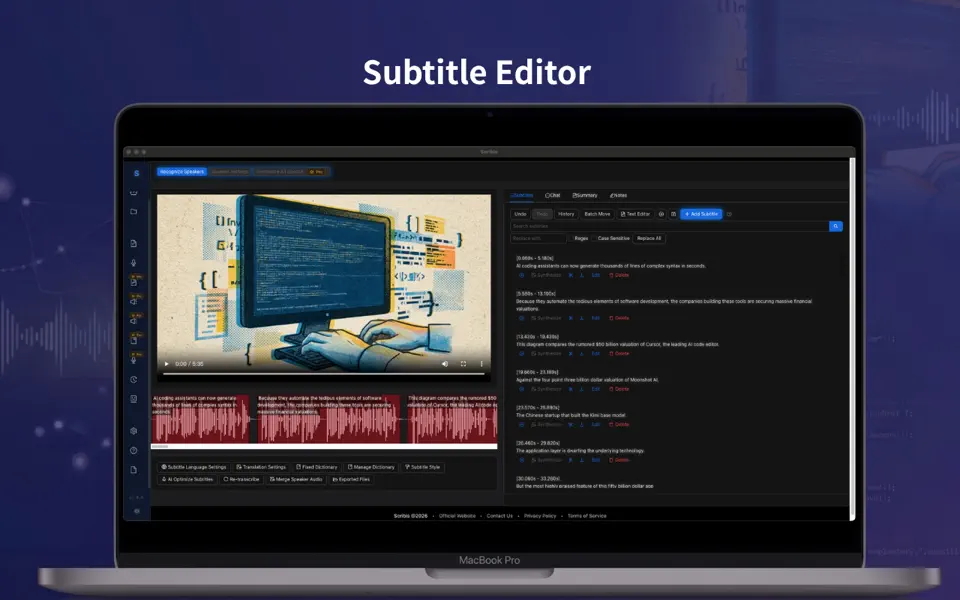
scribis.app
Scribis: Subtitle editing, audio transcription, and live transcription.
Learn Morevideoweaver.app
Video Weaver: Professional video editing directly in your browser. No downloads required.
Learn Morescribis.app
Scribis: Subtitle editing, audio transcription, and live transcription.
Learn More