AI Daily|Reflection AI Releases Beam Model, OpenAI Deploys EU Text Watermarks, and Manus Launches Video Editor
Model Releases & Updates
Beam — Reflection AI — Reflection AI
- Bottom line:Reflection AI introduced Beam, a sparse MoE open-weight model with 501B total parameters and 23B active parameters optimized for coding and agentic workloads.
- Architecture:Features a sparse Mixture-of-Experts architecture with 501B total parameters and 23B active parameters per token.
- Reasoning Efficiency:Engineered from scratch for frontier reasoning efficiency, achieving notable token economy on complex coding and agent tasks.
- Availability:Full model weights are scheduled for release later this month, with evaluation access provided to independent benchmarks.
- Source:MarkTechPost Coverage
Product Releases & Updates
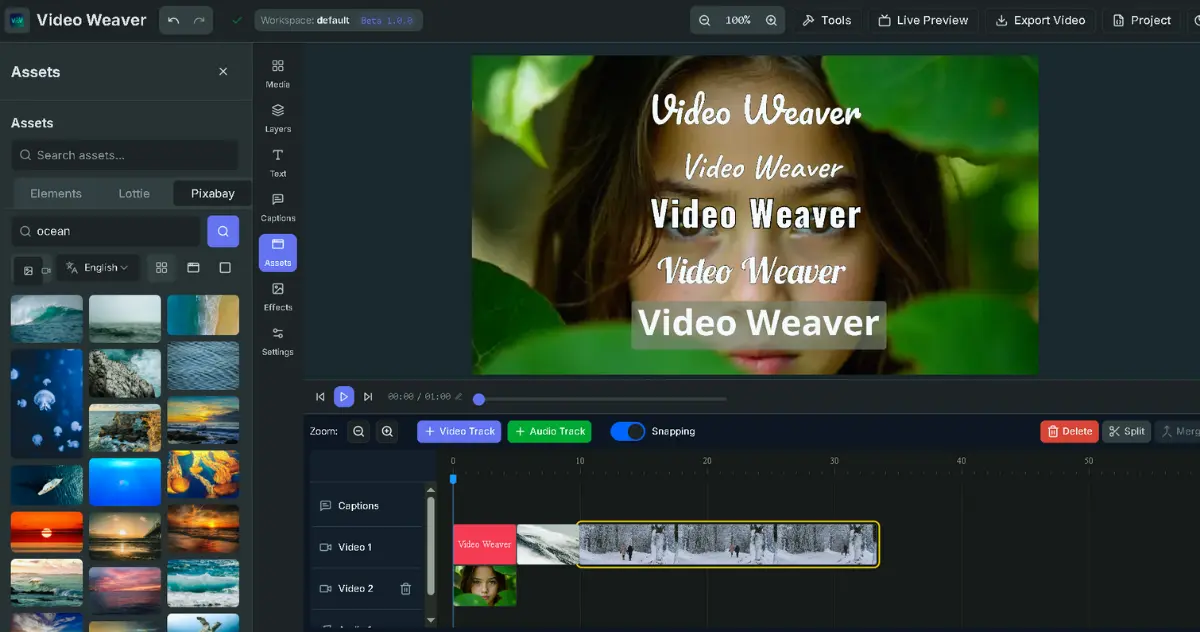
Manus Video Editor — Manus — Manus
- Bottom line:Manus launched an AI-powered video editor capable of autonomously searching web trends, writing dynamic graphic code, and editing raw footage into complete vlogs.
- Automated Production:Processes large batches of raw footage to extract highlights, add captions, synchronize music, and generate a polished first cut from a single prompt.
- Agentic Execution:Leverages multi-step agent workflows to research trending formats and programmatically construct layout and map graphics.
- Source:Manus Blog
Cursor SDK Agent Updates — Cursor — Cursor
- Bottom line:Cursor updated its SDK with real-time agent steering capabilities and MCP-annotated custom tools to improve developer control over local TypeScript and Python agents.
- Run Steering:Introduced
run.steer()allowing developers to inject messages and alter instructions while local agents are actively executing tasks. - MCP Tool Annotations:Custom tools now support annotations like
readOnlyHintanddestructiveHintto help models distinguish lookups from deletions before calling. - Source:Cursor Documentation
Devin ‘Dreaming’ & Agent Memory Repo — Cognition — Cognition
- Bottom line:Cognition introduced ‘Dreaming’ for Devin, an offline memory consolidation loop that constructs memory graphs and purges stale records across sessions.
- Offline Grooming:During off-hours, Devin processes cross-session work habits to build structured memory graphs and remove outdated records.
- Open Standard:Cognition launched an open-source standard called Agent Memory Repo to support interoperable agent memory frameworks.
- Source:Devin Blog
Industry News
OpenAI Deploys textGrain EU Watermarking — OpenAI — OpenAI
- Bottom line:OpenAI announced the rollout of textGrain, an invisible statistical text watermarking system for ChatGPT and Codex in the European Union to comply with the EU AI Act.
- Regulatory Compliance:Designed to meet transparency and content provenance rules under the European Union’s AI Act.
- Deployment Scope:Will be applied by default to eligible ChatGPT and Codex outputs in the EU, while global developers can opt-in via API settings.
- Detection Limits:Detection tools remain restricted to approved researchers and expert organizations due to technical vulnerabilities against text rewrites.
- Source:TechCrunch Report
- Source:OpenAI Blog
Meta and Microsoft Scale Down Internal Claude Usage — Meta & Microsoft — The Information / Industry Reports
- Bottom line:Reports indicate that Meta and Microsoft have reduced internal employee usage of Anthropic’s Claude, trimming budgets and pivoting toward in-house models and native tools.
- Budget Reductions:Microsoft scaled back its projected internal Anthropic spending budget by over one-third while directing engineers toward GitHub Copilot CLI.
- Internal Migration:Meta transitioned engineering teams toward its in-house Muse and MetaCode tools, significantly reducing active daily Claude deployments.
- Source:
Research Papers
CorpusMap: Entity-Driven Context Navigation for Agentic Search — Microsoft & Collaborators — Microsoft
- Bottom line:Researchers introduced CorpusMap, a navigation layer that pre-resolves recurring entities across large document collections to improve agent search accuracy and reduce token overhead.
- Core Innovation:Pre-resolves recurring entities across large document corpora and creates dedicated landing pages linking to all relevant source files.
- Performance Gains:Improved answer quality by 6.4 to 11.7 points across multiple benchmarks while reducing input token consumption by 34% to 57%.
- Source:ArXiv Paper
Scaling Trajectories for Complex Tasks through Recursive Self-Rewrite — Academic Researchers — Academic Researchers
- Bottom line:A new paper demonstrates that training small coding agents to recursively rewrite their own harness environments matches top-tier agent performance at a fraction of the cost.
- Methodology:Coding agents review historical failure traces and automatically modify their own instructions, prompts, and tool schemas.
- Cost Efficiency:Achieved competitive benchmark performance on Terminal-Bench 2.1 using DeepSeek V4 Flash at a total search cost of $4.03.
- Source:ArXiv Paper
Other Highlights
NVIDIA Olympus Server Core Architecture Analysis — Chips and Cheese — Chips and Cheese
- Bottom line:An in-depth technical analysis highlights NVIDIA’s Olympus server core, detailing its 10-wide out-of-order design and high single-thread efficiency for enterprise data centers.
- Processor Design:Features a 10-wide out-of-order architecture operating at 3.3 GHz with SMT support to maximize instruction throughput per cycle.
- Benchmark Standing:Demonstrated strong floating-point performance in early evaluations, rivaling established enterprise server CPU architectures.
- Source:Technical Article