


AI Daily|Qwen-Image-2.1 Released; Step 5 Preview Arrives; Anthropic Opens Wet Lab
Model Releases & Updates
Qwen-Image-2.1 — Alibaba Qwen
- TL;DR: Alibaba released Qwen-Image-2.1, a lightweight 7B unified model supporting both text-to-image generation and advanced multi-image editing with native RGBA transparency.
- Key Highlights:
- Features a compact 7B architecture delivering accelerated inference speeds and superior typographic and texture adherence.
- Natively generates and edits transparent RGBA layers, supporting up to 10 reference images for precise portrait and product consistency.
- Integrates directly with ComfyUI and is available on Hugging Face and GitHub.
- Specs: Open Weights / 7B Parameters / ComfyUI & Hugging Face
- Links: Qwen-Image-2.1 Official Blog
Step 5 Preview — StepFun
- TL;DR: StepFun debuted Step 5 Preview, a high-efficiency flagship sparse MoE base model boasting a 1-million-token context window and competitive open-weight performance.
- Key Highlights:
- Employs a sparse MoE architecture with 600B total parameters and 27B active parameters, optimized for complex agentic workloads and software engineering tasks.
- Scores 44 on the Artificial Analysis Intelligence Index, placing it among global open-weight leaders at a fraction of frontier inference costs.
- Full open weights are scheduled for release on October 15.
- Specs: Sparse MoE (600B total / 27B active) / 1M Context Window / Cloud API
- Links: StepFun Official Announcement
Product Releases & Updates
DocJev & Jev Ecosystem Expansion — TypeSafe AI / LlamaIndex
- What’s New: Following the public rollout of Jev (TypeSafe’s high-speed “Decision Model”), the ecosystem expanded with DocJev, an open-source library for lightning-fast document classification and splitting that operates up to 6x faster than traditional LLMs. Additionally, early benchmarks show Jev paired with lightweight models solving 100% of WebMCP tasks at a fraction of standard compute costs.
- Who It’s For: Developers, AI engineers, and automation architects building high-throughput agent harnesses.
- Try It:
Introducing DocJev - a lightning-fast OSS library for document classification and splitting with jev ⚡️
— Jerry Liu (@jerryjliu0) September 20, 2026
Give a document alongside some natural language category rules. Jev will predict the document category (classify) or the boundaries between sub-documents (split).
It is 6x… pic.twitter.com/Nu5OOELDdD
Industry News
“HEIF Heist” Security Exploit Exposes Vulnerabilities Across Major Tech Platforms
- What Happened: Security researchers disclosed a multi-month investigation dubbed “HEIF Heist,” revealing an obscure heap overflow vulnerability in the
libheifimage decoding library used across Discourse, Slack, Meta, and OpenAI. Attackers leveraged malicious HEIF uploads to achieve remote code execution (RCE) on OpenAI’s community forum and subsequently exploited SSO flaws to take over employee ChatGPT/Codex accounts, submitting a test pull request to OpenAI’s internal monorepo within 72 hours. - Why It Matters: Highlights the systemic risk of obscure third-party libraries underlying complex enterprise AI infrastructure, underscoring how autonomous agents can drastically accelerate exploit development.
- Source:
— AI Will (@FinanceYF5) September 20, 2026
Anthropic Expands into Pre-Clinical Biotech with SF Bay Area Wet Lab
- What Happened: According to a Reuters report, Anthropic has established a physical wet lab in the San Francisco Bay Area, signaling a major strategic push into drug discovery and life sciences. Following its acquisition of Coefficient Bio and key executive hires, the lab will focus on pre-clinical research targeting complex, hard-to-treat diseases without competing directly with pharmaceutical client clinical trials.
- Why It Matters: Demonstrates frontier AI labs moving beyond pure software infrastructure into physical biological research, merging advanced language agents with automated wet-lab experimentation.
- Source:
Anthropic 悄悄建了一个生物实验室
— 宝玉 (@dotey) September 20, 2026
据路透社独家报道,Anthropic 已在旧金山湾区建成了一间湿实验室(wet lab,即可以进行真实生化实验的物理实验室),正式把 AI 的触角从软件延伸到药物研发。
Anthropic 生命科学负责人 Eric Kauderer-Abrams… pic.twitter.com/AfcvT2FmSX
Nvidia CEO Jensen Huang Dismisses AI Existential Risk as “0%”
- What Happened: In an interview on CBS Sunday Morning, Nvidia CEO Jensen Huang stated that the probability of AI causing human extinction is zero, criticizing public doomsday rhetoric from industry leaders like Anthropic’s Dario Amodei as unnecessary and irresponsible. Huang argued that existing liability laws are sufficient and suggested that calls for sweeping new regulations are counterproductive.
- Why It Matters: Highlights a sharp ideological divide among tech titans regarding AI safety governance versus rapid commercial acceleration under the current US administration.
- Source: The Verge Coverage
Research Papers & Technical Deep Dives
A Frontend-Driven Architecture for Duplex Voice Models — NVIDIA Research
- Motivation: Commercial full-duplex speech models struggle under clean conditions, completing only 31% to 51% of grounded customer-service tasks compared to over 85% for text-based LLMs due to pipeline and turn-taking limitations.
- Key Innovation: Researchers introduced a frontend-driven routing mechanism where the duplex speech model emits a delegation token, forwarding streaming transcripts to a text backend LLM for complex tool calls while maintaining a seamless text-to-speech feedback loop.
- Results: Achieved 92.0% to 97.2% tool-call recall with 81.2% rejection accuracy on irrelevant calls, while preserving baseline latency and ASR word error rates.
- Paper: ArXiv:2609.19334
Other Highlights
PromptDeck v1.1.0 Released for Side-by-Side Local and Cloud LLM Benchmarking
- Overview: The open-source desktop studio (built with Tauri and React) released version 1.1.0, adding support for major cloud providers alongside local runners like Ollama and LM Studio. It enables developers to stream prompts across up to four models simultaneously, track token latency (TPS/TTFT), and maintain persistent leaderboards.
- Link: LocalLLaMA GitHub/Reddit Release
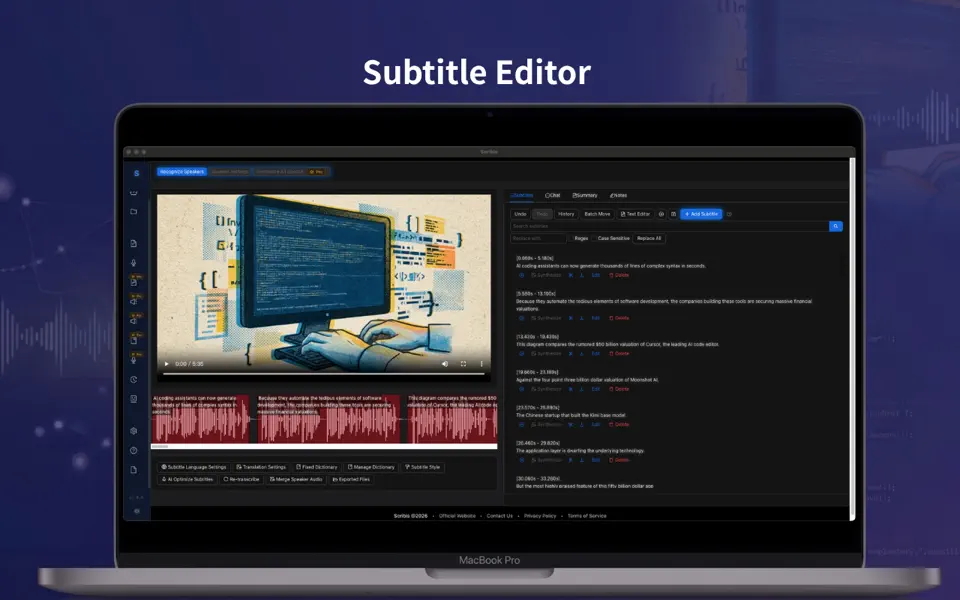
scribis.app
Scribis: Subtitle editing, audio transcription, and live transcription.
Learn More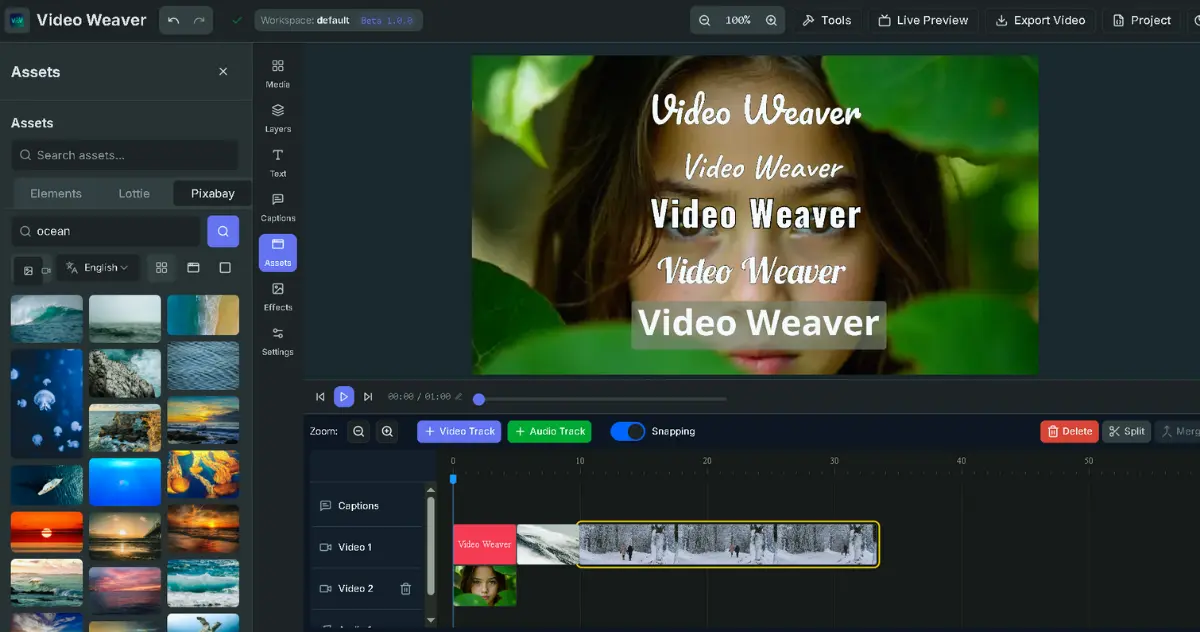
videoweaver.app
Video Weaver: Professional video editing directly in your browser. No downloads required.
Learn Morescribis.app
Scribis: Subtitle editing, audio transcription, and live transcription.
Learn Morevideoweaver.app
Video Weaver: Professional video editing directly in your browser. No downloads required.
Learn More