


AI Daily|Jev Decision Model Launch; Anthropic & Accenture $1B Evaluation Partnership; Grok Voice Transcribe 2.0
Model Releases & Updates
Jev — TypeSafe AI
- TL;DR: TypeSafe AI introduced Jev, a specialized “System 1” decision-making model designed strictly for structured binary, multi-choice, and probabilistic classification tasks rather than open-ended text generation.
- Key Highlights:
- Bypasses traditional text generation to output typed decisions, confidence scores, and probabilities (such as intent routing, tool selection, and boolean checks) with zero JSON parsing overhead.
- Achieved record-breaking initial adoption on Vercel AI Gateway and OpenRouter, running up to 200x faster and significantly cheaper than standard LLMs on classification workflows.
- Specs: System 1 Architecture / Non-Text Decision Engine / Probabilistic Structured Output / OpenRouter & Vercel Integration
- Links: Vercel Blog |
Jev by @typesafeai is now on OpenRouter, in beta.
— OpenRouter (@OpenRouter) September 18, 2026
Jev is a System One model. Instead of generating text, it takes your app's state plus a typed question and returns a typed decision with a probability attached. There is no JSON prompting, parsing layer, and nothing to validate… pic.twitter.com/O860XC55q4
Grok Voice Transcribe 2.0 — xAI
- TL;DR: xAI released Grok Voice Transcribe 2.0, a high-accuracy multilingual speech transcription model that claimed the top spot on Artificial Analysis streaming benchmarks.
- Key Highlights:
- Delivers state-of-the-art accuracy in customer support calls, spoken credentials, and short voice commands, doubling the performance of its predecessor.
- Achieved a 2.7% Word Error Rate (WER) with an ultra-fast 0.49-second latency post-speech on streaming evaluations.
- Specs: Multilingual Speech Architecture / Streaming & Batch Inference / Optimized for Edge & API Deployment
- Links: xAI Blog |
Introducing Grok Voice Transcribe 2.0. It’s the world’s most accurate speech transcription model. pic.twitter.com/7iXVmAEFW2
— SpaceXAI (@SpaceXAI) September 18, 2026
jina-ocr-v1 — Jina AI
- TL;DR: Jina AI open-sourced jina-ocr-v1, a compact 3.4B MoE document parsing model featuring built-in speculative decoding optimized for low-budget GPUs.
- Key Highlights:
- Activates only ~570M parameters per token while compressing high-resolution visual inputs into minimal tokens to drastically reduce prefill compute and KV cache overhead.
- Tops OmniDocBench v1.6 and olmOCR-Bench benchmarks in its class, operating at 2.57 pages per second on standard consumer hardware.
- Specs: 3.4B MoE (570M Active) / Native Vision Document Parsing / Speculative Decoding / Open Weights
- Links: Marktechpost Coverage | Hugging Face
Product Releases & Updates
Claude Code v2.1.277 (AGENTS.md Support) — Anthropic
- What’s New: Anthropic rolled out Claude Code v2.1.277, introducing native support for
AGENTS.mdconfiguration files. When a project lacks aCLAUDE.md, Claude Code automatically falls back to readingAGENTS.md, allowing engineering teams to manage specialized agent instruction sets cleanly without redundant rule maintenance. - Who It’s For: Software engineers and agentic coding practitioners.
- Try It: GitHub Release Notes
Industry News
Anthropic Partners with Accenture for $1B+ Independent AI Evaluation
- What Happened: Anthropic announced a major strategic partnership with Accenture (led by its AI unit Faculty) to establish embedded, independent safety evaluations for frontier models over the next five years, with both companies committing at least $1 billion in capacity.
- Why It Matters: Signals a significant milestone for enterprise AI accountability, shifting third-party red-teaming and alignment testing from ad-hoc reviews to deep, continuous institutional oversight.
- Source: Anthropic Blog
Security Researchers Expose OpenAI Account Takeover Chain
- What Happened: Security firm Hacktron disclosed that researchers utilized Claude and Codex instances to chain two high-severity vulnerabilities—including a heap overflow in libheif via Discourse—to take over OpenAI employee ChatGPT accounts and access internal repositories within 72 hours.
- Why It Matters: Highlights the emerging risks of agent-assisted vulnerability chaining and underscores critical security governance gaps in enterprise authentication pipelines.
- Source:
这个新闻也挺劲爆的,堪比当年 OpenAI 黑进 HuggingFace,不过这次是三名研究员用 Claude 黑进 OpenAI,用一张图片,拿下员工账号
— 宝玉 (@dotey) September 18, 2026
安全公司 Hacktron 的三名研究员在 7 月 25 日串联两个高危漏洞,接管了多名 OpenAI 员工的 ChatGPT 账号,攻击代码主要由 Anthropic 的 Claude 写出。… https://t.co/8kTxhyldnD
AI-Generated False Intelligence Report Nearly Triggers US Military Action
- What Happened: A CNN exclusive report revealed that during recent geopolitical conflicts, an AI-assisted intelligence report generated by a special operations analyst hallucinated that a Chinese vessel was carrying nuclear weapon components, nearly triggering an armed military boarding before being halted at the eleventh hour.
- Why It Matters: Exposes the profound operational dangers of unvetted AI-generated intelligence entering command-and-control pipelines and bypassing standard human verification protocols.
- Source: CNN Coverage
Research Papers
Context-Sharded Block Parallelism (CSBP) — Stanford AI Lab
- Motivation: Addressing the extreme training bottlenecks of diffusion large language models and speculative decoding drafters when handling long-context agentic workloads.
- Key Innovation: Proposed Context-Sharded Block Parallelism (CSBP), a novel distributed parallelism strategy where training efficiency gains scale directly with context length.
- Results: Achieved a 7.59x speedup in speculative decoding drafter training, 1.61x faster block diffusion fine-tuning, and superior performance on SWE-bench Verified.
- Paper:
Introducing Context-Sharded Block Parallelism (CSBP), a new distributed parallelism strategy enabling significant training efficiency for diffusion LLMs, with gains that grow with context length 🚀
— Stanford AI Lab (@StanfordAILab) September 18, 2026
⚡ 7.59× faster DFlash2 speculative decoding drafter training
⚡ 1.61× faster… https://t.co/biFeHoNOqa
Other Highlights
AgentCloak Privacy Extension
- Overview: AgentCloak introduced a free in-browser privacy extension designed to mask sensitive user data (such as names, addresses, and credentials) with realistic fakes before prompts are sent to LLMs like ChatGPT or Claude, automatically restoring the real data in the final response.
- Link:
AgentCloak is a free browser extension for handling personal details in AI prompts.
— elvis (@omarsar0) September 18, 2026
It replaces detected details with stand-ins before you send a prompt to ChatGPT or Claude, then restores them in the answer.
Useful when debugging logs or summarizing support tickets with AI. https://t.co/K4AgoCC8PD
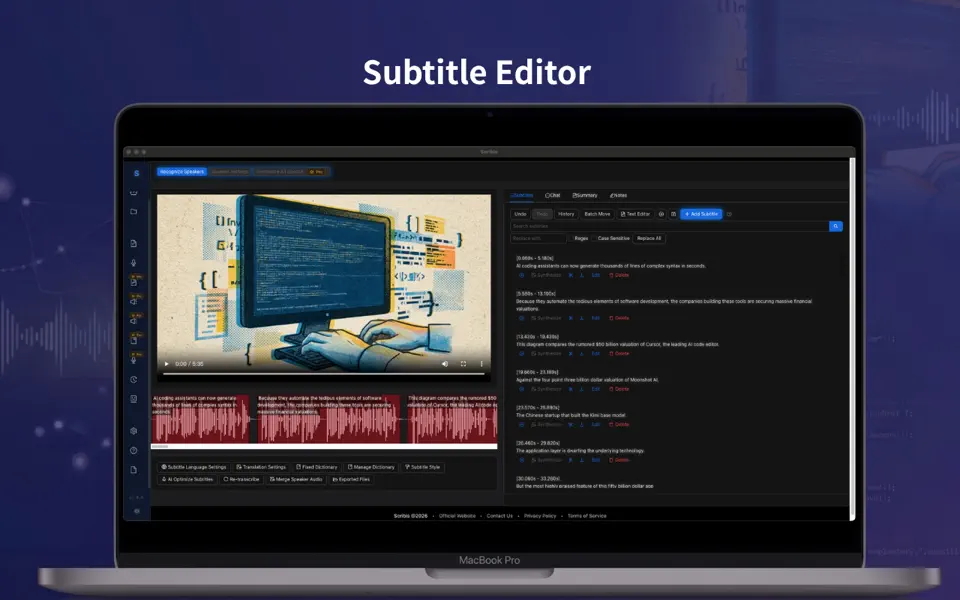
scribis.app
Scribis: Subtitle editing, audio transcription, and live transcription.
Learn More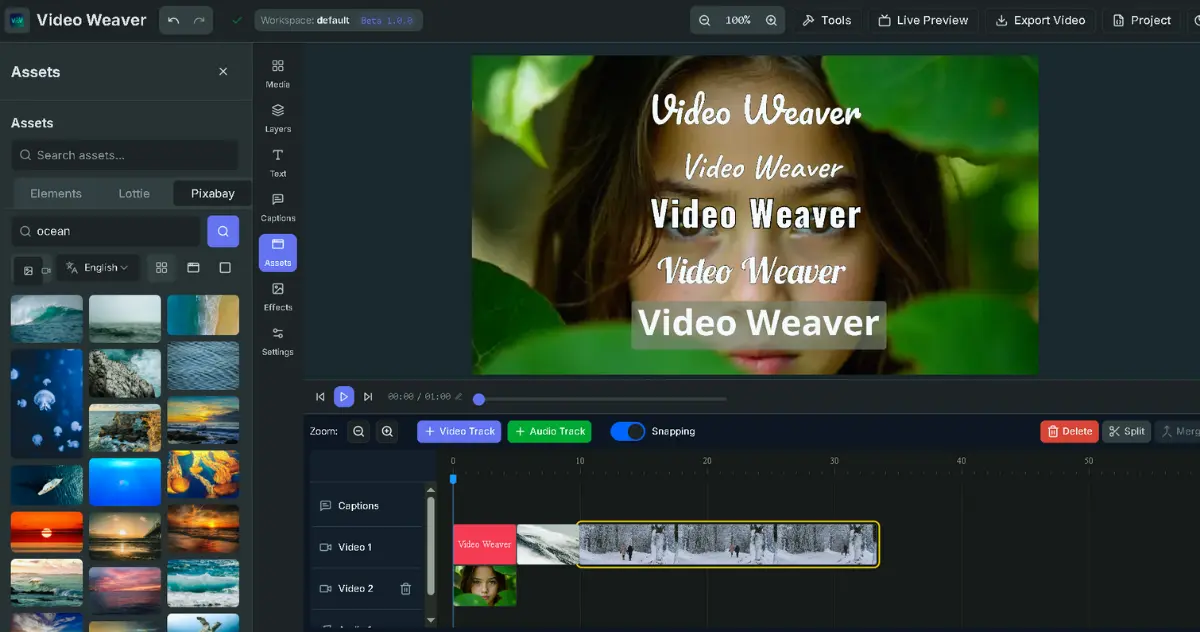
videoweaver.app
Video Weaver: Professional video editing directly in your browser. No downloads required.
Learn Morescribis.app
Scribis: Subtitle editing, audio transcription, and live transcription.
Learn Morevideoweaver.app
Video Weaver: Professional video editing directly in your browser. No downloads required.
Learn More