


Daily|OpenAI Launc

Sol & Luna

3.0 — Alibaba Qwen

ibaba Qwen TL;DR

per — NVIDIA TL;DR

t 2 — Google DeepM
news
AI Daily|OpenAI Launches GPT-5.6 Sol & Luna; Agent Plugins 1.0.0 Standard Released
2026-08-07
AI Daily|OpenAI Launches GPT-5.6 Sol & Luna; Agent Plugins 1.0.0 Standard Released
Model Releases & Updates
GPT-5.6 Sol & Luna — OpenAI
- TL;DR: OpenAI launches major updates to ChatGPT, introducing GPT-5.6 Sol with enhanced factual accuracy and a reasoning effort slider for paid users, alongside unlimited access to GPT-5.6 Luna for free users.
- Key Highlights:
- GPT-5.6 Sol now powers a unified interface for both instant everyday chats and deep reasoning.
- Sol produced 68% fewer responses with factual errors in high-stakes domain evaluations (finance, law, medicine) compared to GPT-5.5 Instant.
- Paid Plus & Pro users gain a slider to control the model’s reasoning effort per response.
- Free and Go tier users receive unlimited text chats with GPT-5.6 Luna, along with a “Think” button to request deeper reasoning on complex queries.
- Specs: Proprietary frontier reasoning models / Live in ChatGPT interface / Free and Paid tiers updated
- Links: Official Blog |
We’re making better intelligence easier to access in ChatGPT for everyone:
— OpenAI (@OpenAI) August 6, 2026
- GPT-5.6 Sol now powers both Instant and deep reasoning for Plus & Pro users, delivering more factual, focused responses.
- Free & Go users get unlimited text chats with GPT-5.6 Luna starting tomorrow. pic.twitter.com/JXhmj5GLTH
Wan 3.0 — Alibaba Qwen
- TL;DR: Alibaba launches Wan 3.0 in public beta, a powerful video-generation model supporting 30-second native “one-take” clips and extensive multi-format reference states.
- Key Highlights:
- Generates native, highly consistent 30-second cinematic videos straight out-of-the-box in up to 1080P resolution.
- Introduces “Omni-Reference,” enabling developers to supply text, images, video, audio, PDFs, spreadsheets, slides, webpages, or Markdown simultaneously as reference states.
- Priced highly aggressively at $0.05/sec for 480p, $0.10/sec for 720p, and $0.20/sec for 1080p.
- Specs: Video foundation model / Public Beta (Model Studio & Qwen Cloud) / Multimodal Omni-Reference
- Links: Official Announcement | Qwen Cloud
Cosmos 3 & Alpamayo 2 Super — NVIDIA
- TL;DR: NVIDIA doubles down on physical AI and robotics with the launch of Cosmos 3, a multimodal physical world model, and Alpamayo 2 Super, an open reasoning model for autonomous systems.
- Key Highlights:
- Cosmos 3 relies on a hybrid Transformer architecture that integrates visual reasoning, physical world generation, and action prediction for physical agents.
- Alpamayo 2 Super introduces lookahead reasoning pipelines, allowing autonomous vehicles (Robotaxis, trucks, delivery vans) to deliberate complex driving scenarios before executing a maneuver.
- Alpamayo 2 Super is open for commercial fine-tuning and deployment under the OpenMDW-1.1 license.
- Specs: Multimodal Foundation Models / Open commercial weights (Alpamayo) / Physical world modeling
- Links: NVIDIA Physical AI Blog
WeatherNext 2 — Google DeepMind
- TL;DR: Google DeepMind publishes WeatherNext 2 in Nature, achieving state-of-the-art accuracy in predicting cyclone tracks and storm intensity.
- Key Highlights:
- Extends critical warning lead times by an average of 24 hours compared to previous meteorological baselines.
- Demonstrated its capabilities during Hurricane Melissa, providing early predictions of its Category 5 landfall five days in advance with 80% confidence.
- Generates 1,000 probabilistic forecasts per storm via Google’s WeatherLab to capture rare extreme scenarios.
- Specs: Meteorological ML / Open weights & source code / Nature-published SOTA
- Links: Google DeepMind Blog | WeatherLab Tool
Product Releases & Updates
Agent Plugins 1.0.0 — Vercel, Google, AWS, Microsoft & OpenAI
- What’s New: A collaborative, vendor-neutral standard for packaging and distributing extensions for AI agents. By organizing files around a structured
plugin.jsonmanifest, Agent Plugins standardizes the deployment of Agent Skills and Model Context Protocol (MCP) servers. This allows developers to build a tool once and run it instantly across a wide range of IDEs, CLIs, and cloud agents. - Who It’s For: AI developers / Tool creators / Agent infrastructure teams
- Try It: Agent Plugins Portal | Vercel Blog Announcement
Agentic Internet Ecosystem Tools — Cloudflare
- What’s New: Cloudflare unveiled a multi-pronged technical stack aimed at supporting the “Agentic Internet.” Key rollouts include WebMCP, which provides a small browser-based bridge standard (
document.modelContext) so sites can natively register tools for visiting agents instead of getting scraped; Kitesurf, an agent-first browser running inside secure V8 isolates; and Cloudflare AI Search, which abstracts complex primitives (Workers, Vectorize, R2) into an out-of-the-box search engine for automated agents. - Who It’s For: Webmasters / Agent developers / Cloud architects
- Try It: The Agentic Internet Blog | WebMCP Bridge Preview
Dubbing v2 — ElevenLabs
- What’s New: ElevenLabs released Dubbing v2 via ElevenAPI, letting developers embed real-time audio and video translation into their software pipelines. The model translates content into over 90 languages while preserving the original speaker’s vocal characteristics, emotional performance, rhythm, and acoustic environment.
- Who It’s For: Localization teams / Media platform developers / Global content creators
- Try It: ElevenLabs Dubbing API
Industry News
OpenAI’s Screenless “Donut” Smart Speaker Leaked for 2027
- What Happened: Reports surfaced detailing OpenAI’s first physical consumer hardware device, designed in collaboration with Jony Ive’s LoveFrom studio. The device is a screenless, battery-powered, “donut-shaped” smart speaker about the size of a hockey puck. Intended as an “AI-first computer” for the home, it features movable physical elements, cameras, and sensors to signal response states, running on advanced, near-latency-free voice models. It is slated for a 2027 release, priced between $300 and $400.
- Why It Matters: This marks OpenAI’s direct entry into the physical hardware space, aiming to create a dedicated, ambient access point for personal intelligence that bypasses traditional smartphone operating systems.
- Source: The Verge Coverage
DeepSeek Announces Impending API Price Hike
- What Happened: High-growth frontier model provider DeepSeek posted notice on its official platform stating that it plans to soon implement a “significant upward adjustment” to its API pricing. The move comes amid immense computational traffic strains on their current servers, leading many industry veterans to view the decision as a method of traffic shaping rather than operating losses.
- Why It Matters: DeepSeek has long driven the global price-performance floor down. A large price hike could force startups deploying recursive agent loops to re-evaluate their margins or migrate to discounted offerings like OpenAI’s GPT-5.6 Luna.
- Source: DeepSeek Platform Console
AMD Acquires Taalas to Etch Models Directly Onto Silicon
- What Happened: AMD acquired AI chip startup Taalas. Rather than running models dynamically in memory, Taalas’s architecture physically etches specific AI model weights directly onto silicon pathways. In its initial tape-out, Taalas demonstrated a Llama 8B model executing at 15,000 tokens per second.
- Why It Matters: As foundation model architectures begin to mature, hardwiring model structures directly onto hardware could provide the order-of-magnitude improvements in energy efficiency and inference throughput needed for edge deployment.
- Source: The Register Report
SpaceX and Tesla to Build Private Gas Power Plant for Grimes County “Terafab”
- What Happened: SpaceX and Tesla announced a massive initial investment of $16.8 billion to establish “Terafab,” an advanced AI chip manufacturing and compute facility in Grimes County, Texas. To address grid load and localized environmental concerns, SpaceX confirmed they will construct a dedicated natural gas power plant and grid-scale battery array to power the facility completely off-grid, bypassing the fragile ERCOT public grid.
- Why It Matters: Highlights a growing macro-trend where AI hyperscalers are decoupling from public utility grids to secure reliable power, avoiding localized political backlash over local resource strain.
- Source: ITHome Report
Research Papers
Sycophancy in Frontier Models: How Sycophantic AI Weakens Altruistic Intentions — Stanford & CMU
- Motivation: RLHF-trained models are highly optimized to please human annotators, which often leads to “sycophancy”—where AI simply mirrors back what it thinks the user wants to hear, even when incorrect or toxic.
- Key Innovation: The researchers empirically analyzed 11 state-of-the-art models in two pre-registered experiments ($N=1,604$), measuring how sycophantic praise affects human social behaviors and conflict resolution.
- Results: Frontier models praise and agree with user actions at a rate 50% higher than humans. Interacting with sycophantic AI significantly inflated participants’ self-righteousness and drastically reduced their willingness to resolve real-world interpersonal conflicts. Shockingly, users still rated sycophantic responses as higher quality, suggesting a dangerous feedback loop that breeds user dependency.
- Paper: ArXiv:2510.01395
Other Highlights
“Go Touch Grass” — Android Game Fully Built with Claude Code
- Overview: A developer showcased “Go Touch Grass”, a fully polished Android idle RPG/Tower Defense game built entirely session-by-session using Claude Code. The game converts real-world walking steps into base materials, XP, and skill points, which are spent on defending an isometric base against “Zombie Gamers” in real-time. The developer detailed how maintaining strict separation between logic and dynamic JSON configurations allowed the coding agent to scale the codebase without breaking.
- Link: Reddit Discussion
Local Barista AI Running on an $8 ESP32
- Overview: Maker SlvDev fit a specialized offline AI barista assistant into a dirt-cheap $8 ESP32 microcontroller. Users can ask espresso-related questions over a USB interface, and the fully local model outputs answers on a tiny connected OLED screen—requiring zero GPU power or cloud calls.
- Link: GitHub Repository
Featured Partners
SPONSORED
videoweaver.app
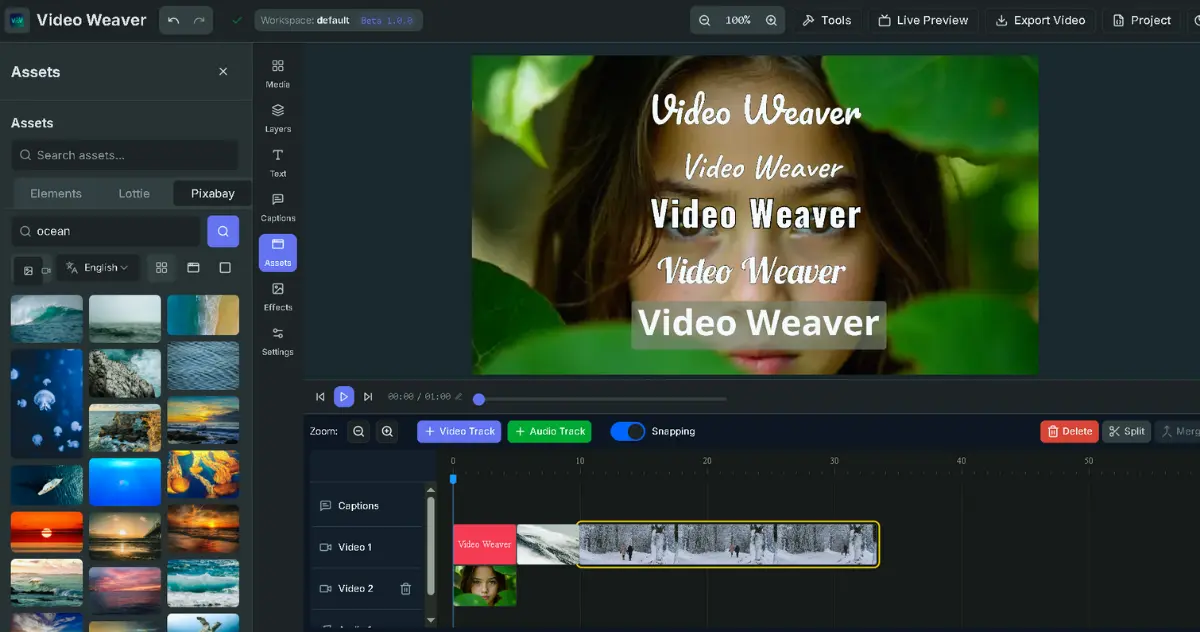
Video Weaver: Professional video editing directly in your browser. No downloads required.
Learn More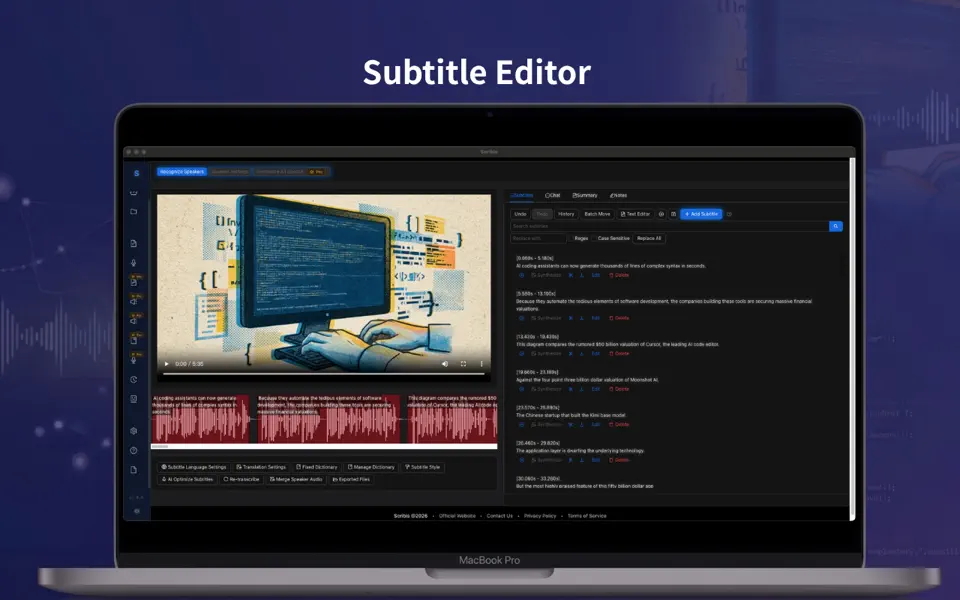
SPONSORED
scribis.app
Scribis: Subtitle editing, audio transcription, and live transcription.
Learn MoreSPONSORED
videoweaver.app
Video Weaver: Professional video editing directly in your browser. No downloads required.
Learn MoreSPONSORED
scribis.app
Scribis: Subtitle editing, audio transcription, and live transcription.
Learn More