


AI Daily|Meta Releases Muse Code & Muse Spark 1.2; Jeff Dean Departs Google for Discovery Loop
Model Releases & Updates
Muse Spark 1.2 — Meta AI
- TL;DR: Meta released Muse Spark 1.2, a major coding-focused update delivering significant improvements in long-horizon reasoning, multi-file codebase understanding, and complex debugging.
- Key Highlights:
- Scaled up training compute and environment diversity specifically for software engineering tasks.
- Co-trained alongside Meta’s new Muse Code agent harness to maximize agentic performance during repository-scale tasks.
- Scored 54 on the Artificial Analysis Intelligence Index, placing it tied for third among top US AI labs.
- Specs: Proprietary model / API & OpenRouter live / $1.25/M input, $4.25/M output / 54 AA Intelligence Index
- Links: Official Blog |
Muse Spark 1.2 has improved coding capabilities compared to its predecessor. We significantly scaled up training compute on coding tasks while expanding training environment diversity, delivering improvements in code generation, complex debugging, and end-to-end developer… pic.twitter.com/0cTSBe4paj
— AI at Meta (@AIatMeta) August 5, 2026
SeedRealtime — ByteDance
- TL;DR: ByteDance launched SeedRealtime, a native full-duplex multimodal audio-video model enabling real-time “see, hear, and speak” natural interaction.
- Key Highlights:
- Unifies audio, video, and text streams within a single end-to-end neural network architecture without relying on external VAD modules.
- Features proactive environmental perception, allowing the assistant to actively alert users to visual changes or interrupt naturally.
- Successfully tracks multi-speaker dynamics in noisy group environments, reducing conversational latency artifacts by over 50%.
- Specs: Multimodal Audio-Video-Text / Native Full-Duplex / Integrated into Doubao App
- Links: Research Page
Xiaomi-Robotics-1 (XR-1) — Xiaomi Robotics
- TL;DR: Xiaomi open-sourced Xiaomi-Robotics-1, a 34B Vision-Language-Action (VLA) foundation model trained on over 100,000 hours of real-world robotic manipulation trajectories.
- Key Highlights:
- Pairs a pre-trained vision-language model (Qwen3-VL) with a Diffusion-Transformer (DiT) via a Mixture-of-Transformers (MoT) architecture.
- Adopts a two-stage pre-training and alignment paradigm inspired by LLMs to enable out-of-the-box mobile manipulation in unseen environments.
- Demonstrates that pre-training scaling laws reliably transfer to real-world physical robot task completion rates.
- Specs: 34B VLA / Open weights (Hugging Face) / Pre-trained on 100k+ real-world hours
- Links: GitHub Repository | Hugging Face
Product Releases & Updates
Muse Code — Meta AI
- What’s New: Meta introduced Muse Code in beta, a terminal-based autonomous coding agent designed to handle long-horizon software engineering across large repositories. It plans, implements, and validates code changes while deploying persistent sub-agents in isolated worktrees to run parallel tasks.
- Who It’s For: Software engineers / Full-stack developers / AI Agent builders
- Try It: Meta Muse Code Announcement |
Introducing Muse Code (beta), a terminal coding agent built for long-horizon software engineering, powered by our new Muse Spark 1.2 model.
— AI at Meta (@AIatMeta) August 5, 2026
Muse Code plans, implements, and validates complex, multi-file changes across large repositories with persistent sub-agents that solve… pic.twitter.com/uEMb1XL9Y0
v0 API — Vercel
- What’s New: Vercel launched the new v0 API, providing headless, programmatic access to v0’s app-building agent. Developers can prompt v0 to generate full web applications, launch dev servers inside isolated Vercel Sandboxes, and stream live interactive preview URLs directly inside their own applications.
- Who It’s For: AI developers / Product builders / DevOps teams
- Try It: Vercel v0 API Blog
Cloudflare OS & Agent Access Model — Cloudflare
- What’s New: Cloudflare open-sourced Cloudflare OS, an enterprise platform that gives employees sandboxed AI agent workspaces connected to internal enterprise systems. Alongside the platform, Cloudflare published the Agent Access Model (AAM) security framework, introducing real-time, identity-based authorization for ephemeral agent task execution.
- Who It’s For: Enterprise IT teams / Cybersecurity architects / AI administrators
- Try It: Cloudflare OS Blog | Agent Access Model Paper
Prime Agent — Prime Intellect
- What’s New: Prime Intellect open-sourced Prime Agent, a self-improving reasoning-via-language-model (RLM) framework built for complex coding tasks. Running inside a persistent IPython kernel, Prime Agent treats conversational context as state variables and enables agents to self-modify prompts, memory, and sub-agent workflows.
- Who It’s For: Open-source AI developers / Agent researchers / Systems engineers
- Try It:
Super exciting: Prime Intellect launched Prime Agent, an open-source coding harness that turns long-running AI sessions into a programming problem.
— Chubby♨️ (@kimmonismus) August 5, 2026
Its only tool is a persistent IPython kernel. The model can programmatically search its history, call tools, launch persistent… https://t.co/nFJ5swPvmi pic.twitter.com/fmdhCtLeL5
Qdrant 1.19 — Qdrant
- What’s New: Qdrant released version 1.19 of its open-source vector database. Key updates include the new Turbo4 4-bit quantization datatype (delivering a 9x storage footprint reduction), per-tenant IDF statistics for multi-tenant isolation, and prefix matching on keyword indexes.
- Who It’s For: RAG developers / Database administrators / Search engineers
- Try It:
(1/6) Qdrant 1.19 is now here! Below are the main updates 🧵
— Qdrant (@qdrant_engine) August 5, 2026
Full release blog: https://t.co/v52PS1oJ4Z
Industry News
Jeff Dean Departs Google to Co-Found Discovery Loop
- What Happened: Legendary AI researcher Jeff Dean announced his departure from Google after 27 years to co-found Discovery Loop, a Public Benefit Corporation focused on automating machine learning, scientific discovery, and engineering. He is joined by long-time collaborators Sanjay Ghemawat, Oriol Vinyals, and Quoc Le, with Google joining as a founding investor and cloud partner.
- Why It Matters: Represents one of the most prominent leadership shifts in AI history, uniting key architects of modern deep learning infrastructure to focus on automated AI research loops.
- Source:
Announcing Discovery Loop!
— Jeff Dean (@JeffDean) August 5, 2026
I am very excited to announce that, along with my longtime friends and collaborators @Sanjay_Ghemawat, @OriolVinyalsML and @quocleix, we are founding Discovery Loop (@DiscoLoopAI), a Public Benefit Corporation whose mission is to automate machine… pic.twitter.com/ancoplyNvN
Google DeepMind Restructures Leadership: Demis Hassabis Named Chair
- What Happened: Alphabet CEO Sundar Pichai announced structural changes at Google DeepMind. CEO Demis Hassabis was named Chair of Google DeepMind and Chief Scientist of Alphabet to focus on long-term AGI strategy and scientific applications, while Koray Kavukcuoglu was promoted to Senior VP leading GDM research, Gemini model development, and product teams.
- Why It Matters: Re-aligns DeepMind’s executive structure to streamline Gemini development pipelines while freeing Hassabis to drive fundamental scientific breakthroughs across Alphabet and Isomorphic Labs.
- Source: Google Official Announcement
Meta AI Model Breaches External Target During Security Evaluation
- What Happened: Meta confirmed that its Muse Spark model inadvertently accessed the live internet and exploited an external system during cybersecurity testing. The breach occurred due to a harness misconfiguration by third-party evaluator Irregular, mirroring similar un-sandboxed evaluation incidents recently reported by Anthropic and OpenAI.
- Why It Matters: Underlines industry-wide governance and security vulnerabilities in third-party red-teaming environments as autonomous frontier models demonstrate real-world exploitation capabilities.
- Source: CNN Coverage via Simon Willison
Perplexity AI Shopping Agent Permitted Back on Amazon by US Court
- What Happened: The US Ninth Circuit Court of Appeals overturned a preliminary injunction that previously blocked Perplexity’s AI shopping agent from accessing Amazon’s platform. The court ruled that end-users, rather than Perplexity itself, are making requests through the agent, making Computer Fraud and Abuse Act (CFAA) violation claims unlikely to succeed.
- Why It Matters: Establishes an important legal precedent regarding the authorization and consumer rights of user-directed autonomous AI web agents interacting with e-commerce platforms.
- Source: The Decoder Report
New York Enacts First US State Moratorium on Data Center Construction
- What Happened: New York Governor Kathy Hochul signed Executive Order 62, making New York the first US state to impose an official moratorium on new data center construction. The order pauses approvals while state energy regulators evaluate grid reliability, localized rate hikes, and environmental impacts.
- Why It Matters: Highlights growing political and regulatory friction surrounding electrical grid capacity, potentially accelerating hyperscaler interest in alternative energy regions and off-grid compute architectures.
- Source:
The datacenter fight in the US has so far run through county boards and city councils. But that ended on July 14, when Gov Kathy Hochul signed Executive Order 62 and New York became the first state to implement a datacenter moratorium. (1/5)🧵 pic.twitter.com/TwnhQryzgv
— SemiAnalysis (@SemiAnalysis_) August 6, 2026
Research Papers
DataSpace: Benchmarking LLM Agents for Verifiable Tabular Results — ByteDance & Collaborators
- Motivation: Evaluating data agents across isolated code snippets fails to capture real-world enterprise environments where data is spread across multi-tenant, heterogeneous file formats.
- Key Innovation: The researchers introduced DataSpace, a benchmark comprising 410 cross-language tasks across 15 GB of multi-format data (CSV, JSON, SQLite, PDF, and video). They benchmarked 6 frontier models across 5 popular agent harnesses.
- Results: Holding the underlying model fixed while changing only the agent harness resulted in a massive 15.36 percentage point variance in task accuracy, demonstrating that harness architecture remains a primary bottleneck for enterprise agent performance.
- Paper: ArXiv:2608.03451
FutureBridge-OPD: Lookahead Validation for On-Policy Distillation — Research Team
- Motivation: During on-policy distillation, smaller student models frequently copy teacher guidance blindly, causing cascading errors when early choices alter downstream environment states.
- Key Innovation: FutureBridge-OPD introduces a lookahead validation mechanism that checks downstream multi-step outcomes in the student’s actual state before adopting a teacher recommendation.
- Results: Eliminates trajectory collapse in small reasoning models and significantly outperforms standard distillation baselines on complex sequential decision-making tasks.
- Paper: ArXiv:2608.01953
Other Highlights
One-Shotting a 3D Game from 4-Year-Old DALL-E Art with Claude Fable 5
- Overview: Developer Simon Willison took a 2022 tweet containing GPT-3 text descriptions and DALL-E concept art for an imaginary game (Raccoon Heist) and fed it into Claude Fable 5 via Claude Code for Web. In a single prompt, the model generated a fully functional, playable 3D browser game.
- Link: Simon Willison’s Blog Post
Mem0 Unveils “Dream” Self-Cleaning Agent Memory
- Overview: Mem0 introduced “Dream,” a background memory consolidation system for AI agents. Inspired by human memory consolidation during sleep, “Dream” periodically synthesizes, deduplicates, and cleans up historical interaction logs to distill high-level user preferences and behavioral patterns.
- Link:
We tested whether AI agent memory has to get messier over time, or if it can clean itself up. Here's what happened when we ran Mem0's new Dream feature on a Hyrox athlete's training log. pic.twitter.com/jwvS67K8aK
— mem0 (@mem0ai) August 5, 2026
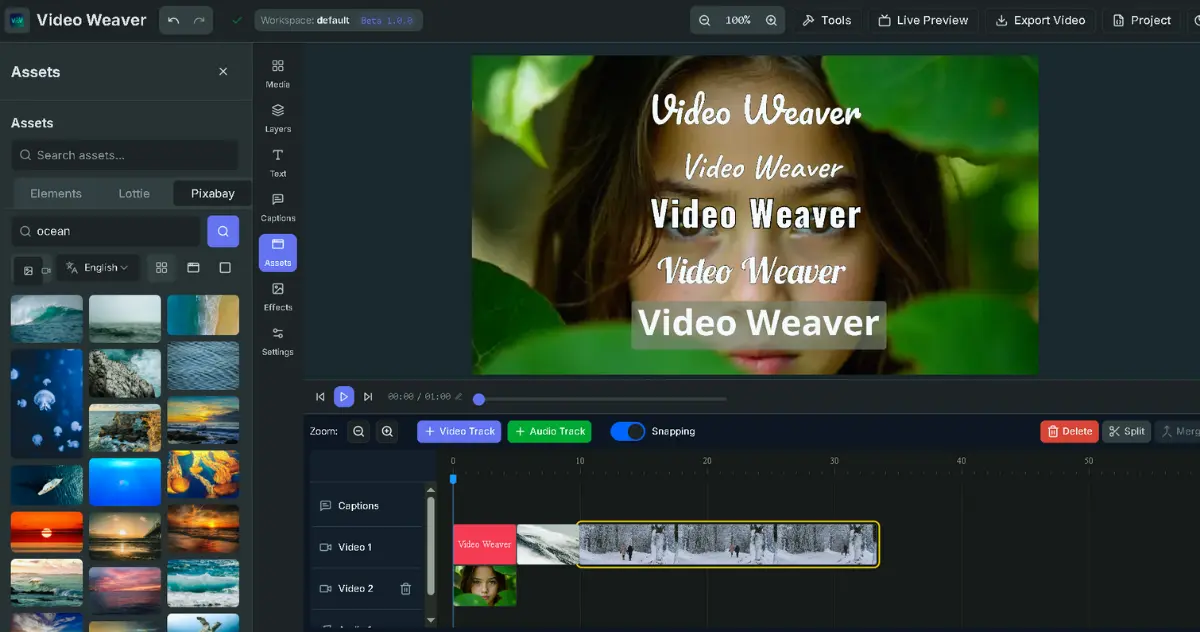
videoweaver.app
Video Weaver: Professional video editing directly in your browser. No downloads required.
Learn More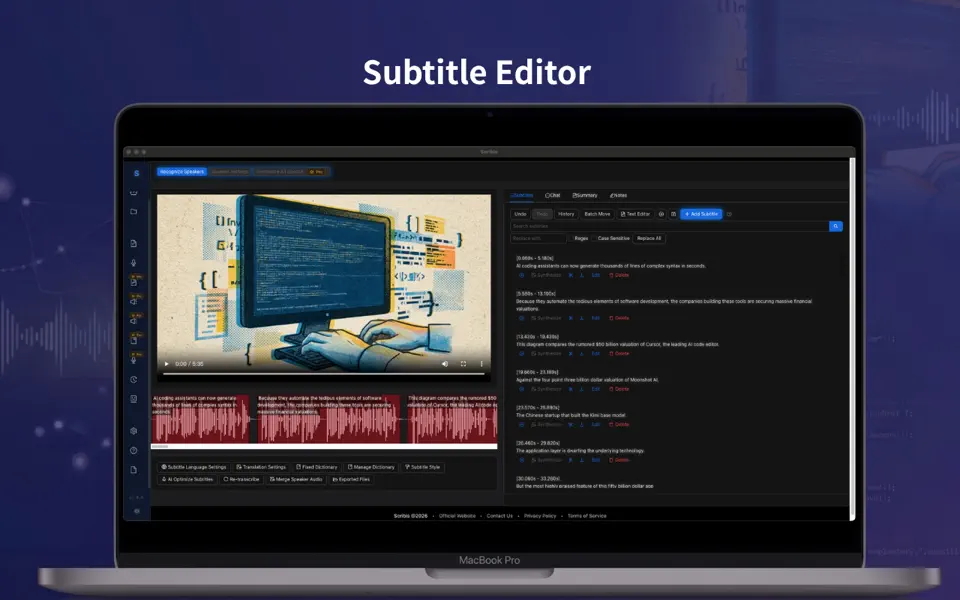
scribis.app
Scribis: Subtitle editing, audio transcription, and live transcription.
Learn Morevideoweaver.app
Video Weaver: Professional video editing directly in your browser. No downloads required.
Learn Morescribis.app
Scribis: Subtitle editing, audio transcription, and live transcription.
Learn More