


Explore today’s AI news: Google’s Gemma model sparks controversy, OpenAI updates its usage policy to prohibit professional advice, and the complex cooperation and investment relationships between tech giants behind the AWS and OpenAI alliance. Understand the latest developments and future trends in the AI field in one article.
The world of artificial intelligence feels like a fast-paced sci-fi movie every day. Today’s news is particularly exciting, as we not only see the boundaries of technology being challenged but also how companies are drawing red lines for this powerful force. From Google’s model PR crisis to OpenAI’s policy tightening, and the dazzling alliances and investments between tech giants, let’s take a look at what major events have happened in the AI world today.
Google Gemma Model Controversy: AI “Hallucination” or “Defamation”?
Here’s what happened: Google’s open model Gemma, designed for developers and the research community, recently ran into big trouble.
U.S. Senator Marsha Blackburn publicly stated that the Gemma model fabricated false news about her. She emphasized that this was no longer a harmless “AI hallucination,” but outright defamation. This incident quickly ignited a fierce debate about the authenticity and accountability of AI-generated content.
In response to the controversy, Google quickly reacted. In a statement, they clarified that Gemma was never intended to be a fact-checking tool for general consumers; its original intention was to provide it to developers for research and innovation.
Honestly, this explanation is completely reasonable. Just as you wouldn’t put a racing engine in a family car, using a model designed for development as a Wikipedia is bound to cause problems.
To avoid further misunderstandings, Google has removed Gemma from its AI Studio tools for developers to prevent misuse by non-professional users. However, developers can still continue to use the Gemma model through the API. This incident serves as a wake-up call, reminding us that behind the powerful capabilities of AI, there is a need for precisely defined and limited use cases. When AI’s “creations” may cause harm to the real world, who should draw that line?
OpenAI Draws the Line! ChatGPT’s New Policy Prohibits Professional Advice
Speaking of drawing lines, OpenAI, a leader in the AI field, has also taken significant action recently.
According to its latest usage policy, starting from October 29, 2025, OpenAI explicitly prohibits its models (including the well-known ChatGPT) from providing professional medical, legal, or financial advice.
Behind this new regulation is OpenAI’s careful consideration to avoid regulatory risks and reduce the possibility of misleading users. After all, in these high-risk areas, a wrong piece of advice can lead to irreversible consequences.
Specifically, the new policy prohibits actions including:
- Medical field: Interpreting medical images such as X-rays, CT scans, or providing diagnostic assistance.
- Legal field: Drafting legally binding contracts or interpreting legal documents.
- Financial field: Providing personalized investment portfolio advice, tax planning, or any financial advice requiring a license.
Does this mean AI can no longer be our capable assistant? Of course not. This is more like a sign of maturity – recognizing the limits of the tool and responsibly guiding users. You can continue to use it to learn about health knowledge, legal concepts, or research market trends, but when you need a professional and personalized diagnosis, legal opinion, or investment strategy, you still need to consult a real human expert.
The “Game of Thrones” in AI: AWS and OpenAI Alliance Reveals the Investment Maze Among Giants
While AI ethics and regulations are being redefined, the strategic alliances and rivalries in the business world have never stopped.
Today’s most significant business news is undoubtedly: Amazon Web Services (AWS) and OpenAI announced a multi-year strategic partnership. This means that OpenAI will be able to leverage AWS’s world-class cloud infrastructure to run its increasingly massive AI model training and computing tasks.
But if you think this is just a simple collaboration, you’re underestimating the tech giants’ chess game. This partnership is just the tip of the iceberg, beneath which lies a complex web of investments that has drawn in almost all top players:
- Microsoft has heavily invested in OpenAI.
- OpenAI’s computing relies on NVIDIA’s GPU chips.
- NVIDIA in turn invested in cloud service provider Oracle.
- Oracle also invested in OpenAI.
- Now, OpenAI has deeply allied with Amazon’s AWS.
Do you understand now? This is no longer a simple “who invests in whom” linear relationship, but a mutually dependent, mutually restraining, and even somewhat “Russian doll” ecosystem. Every company is betting on the future of AI, but no single company can swallow this big pie alone. They need each other’s technology, capital, and infrastructure to jointly promote this technological revolution, while also ensuring they occupy a favorable position in this power game.
Today’s AI world has both deep reflections on technological ethics and surging tides in the business battlefield. All of this indicates that AI is moving from a period of wild growth and exploration into a more mature stage that emphasizes rules and strategies. And we are at the center of this transformation.
scribis.app
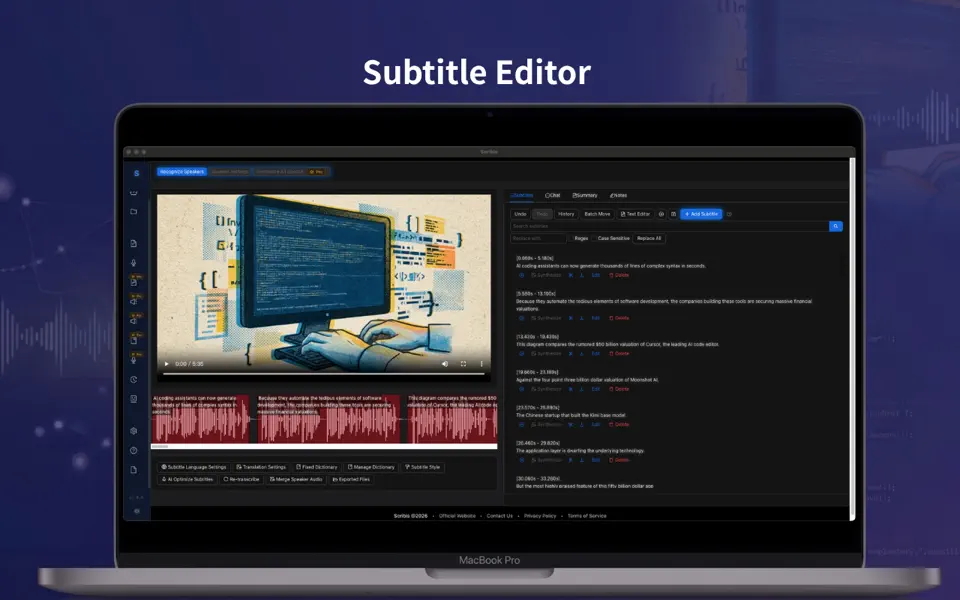
Scribis: Subtitle editing, audio transcription, and live transcription.
Learn More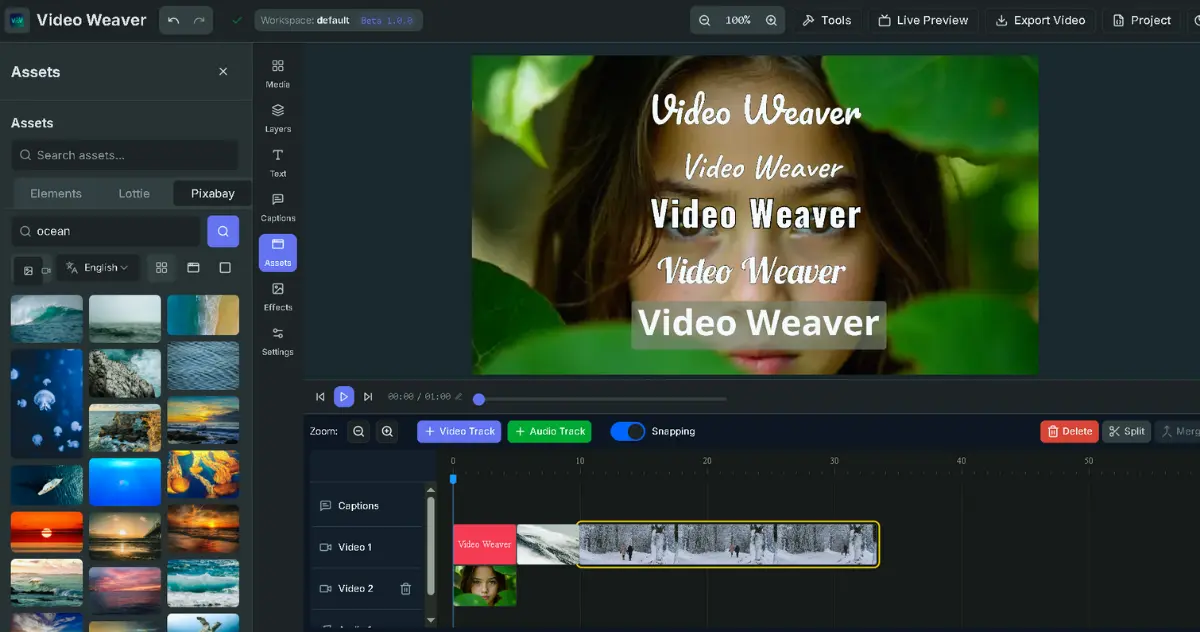
videoweaver.app
Video Weaver: Professional video editing directly in your browser. No downloads required.
Learn Morescribis.app
Scribis: Subtitle editing, audio transcription, and live transcription.
Learn Morevideoweaver.app
Video Weaver: Professional video editing directly in your browser. No downloads required.
Learn More